Weekend Mideast Attacks and Isaias Outages Push Brent Above $105
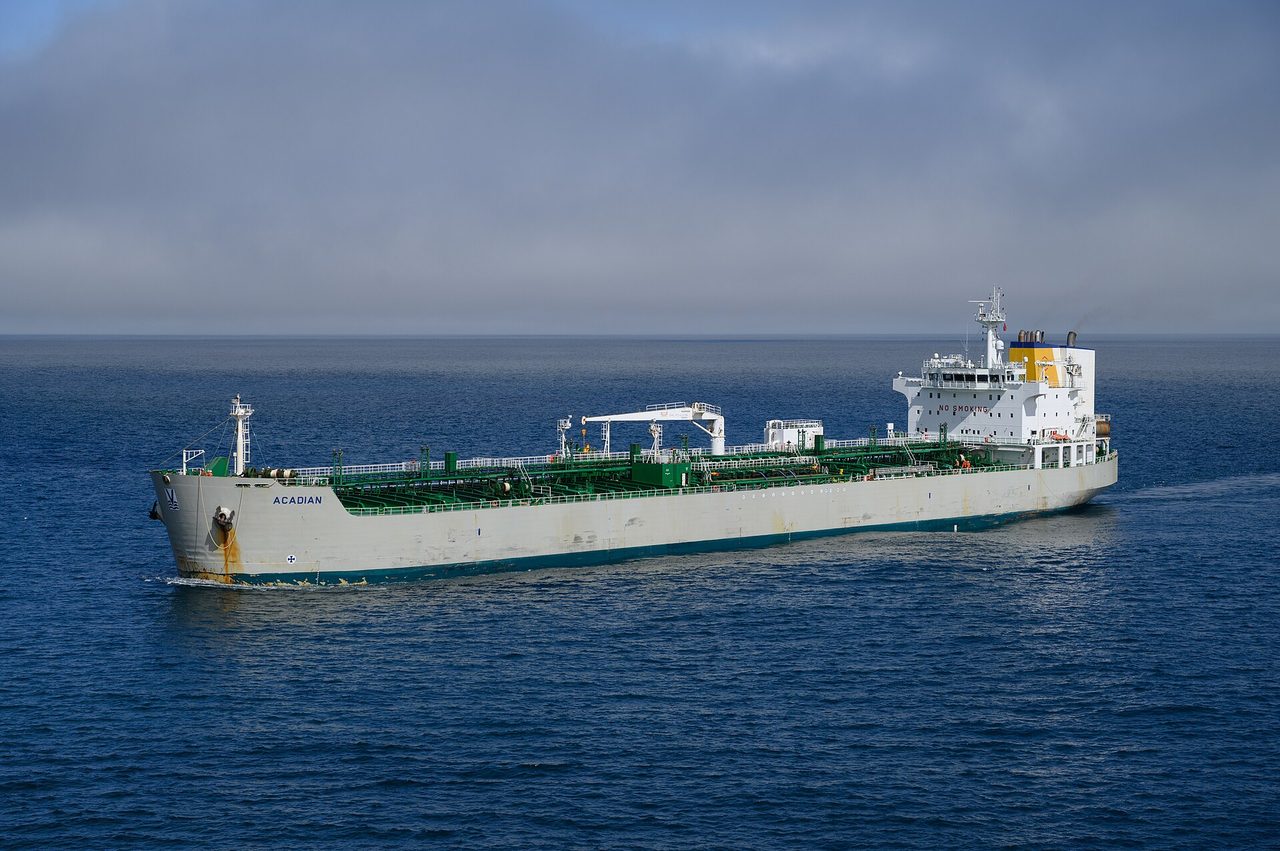
Photo: Gordon Leggett / CC BY-SA 4.0 · via Wikimedia Commons
Weekend Mideast Attacks and Isaias Outages Push Brent Above $105
The Middle East had a violent weekend: the Houthis claimed a Saturday attack on Riyadh's airport that killed 13 and injured more than 300, the same airport was hit again on Sunday, and two tankers were attacked. Combined with Hurricane Isaias shutting in Gulf of Mexico production, Brent crude climbed to $105.48 in early Asian trading Monday before giving back part of the gain.
Riyadh airport hit twice in two days
The Houthis claimed an attack on Riyadh International Airport on Saturday, Oct. 10. Reuters reported 13 dead and more than 300 injured. On Sunday, Oct. 11, the same airport was attacked again; Saudi authorities confirmed injuries, with no group claiming responsibility as of publication. On Saturday, Trump said the U.S. was considering joining Saudi strikes against the Houthis.
Two more tankers attacked over the weekend
It was rough at sea as well. The UK Maritime Trade Operations centre, via Reuters, reported that a tanker was hit by a drone near the Sohar anchorage in Oman over the weekend, while another was struck by an unknown projectile while transiting the Strait of Hormuz. Kpler data put crude flows through Hormuz at 2.72 million barrels per day on Oct. 7, far below the 12.26 million on Oct. 4; the weekly average of 10.3 million ran about 23% below the pre-war baseline.
Isaias shuts in 71.5% of Gulf crude output
Hurricane Isaias made landfall in Florida on the night of Oct. 9 as a Category 2 storm (it had peaked at Category 3 with 120 mph winds), hammering Gulf oil and gas production. Federal Marine Minerals Administration data for Oct. 9: 71.5% of Gulf crude output shut in, equal to 1.46 million b/d; 58.8% of natural gas output shut, or 1.26 billion cubic feet per day. Of 371 platforms, 129 evacuated personnel; 8 of 11 rigs evacuated. About 500,000 b/d of refining capacity was at risk. Chevron, BP and Shell shut in production. The U.S. Department of Energy approved an emergency exchange of up to 4 million barrels from the Strategic Petroleum Reserve.
Brent tops $105.48, then pulls back
Supply fears lifted prices. In early Asian trading Monday, Brent rose 76 cents (+0.73%) to $105.48 and WTI rose 59 cents (+0.64%) to $92.44; both later wobbled, with Brent falling 1.1% to $103.50 and WTI down 1.2% to $90.73. The dollar index rose 0.1% Friday to 102.23, its fourth straight weekly gain. AAA put the average U.S. gasoline price at $4.369 a gallon, up 39% from a year ago, and diesel at $6.315, up 72%.
Goldman lifts year-end Brent call to $90
Goldman Sachs analyst Daan Struyven raised the December Brent forecast from $85 to $90, estimating the risk premium at slightly over $20 a barrel. The IEA agreed to accelerate reserve releases, prioritizing diesel supply. GasBuddy's Patrick De Haan said diesel already above $6 could approach $7, and shut-in crude should return "within days."
What to watch: escalation risk and Gulf restart
Near-term prices hinge on two things: whether the Middle East escalates further — Trump has said no Iran strike before the Nov. 3 midterms — and how fast the Gulf restarts. "No one in Washington thinks this can go on for long... if the market thought it was sustainable, prices would be much lower," said Rapidan Energy president Bob McNally.
Sources
- Reuters
- Bloomberg
- Morningstar
- Associated Press
- EnergyNewsBeat