Pope Leo XIV to Enter Gemelli Hospital on Tuesday for Lung Nodule Surgery
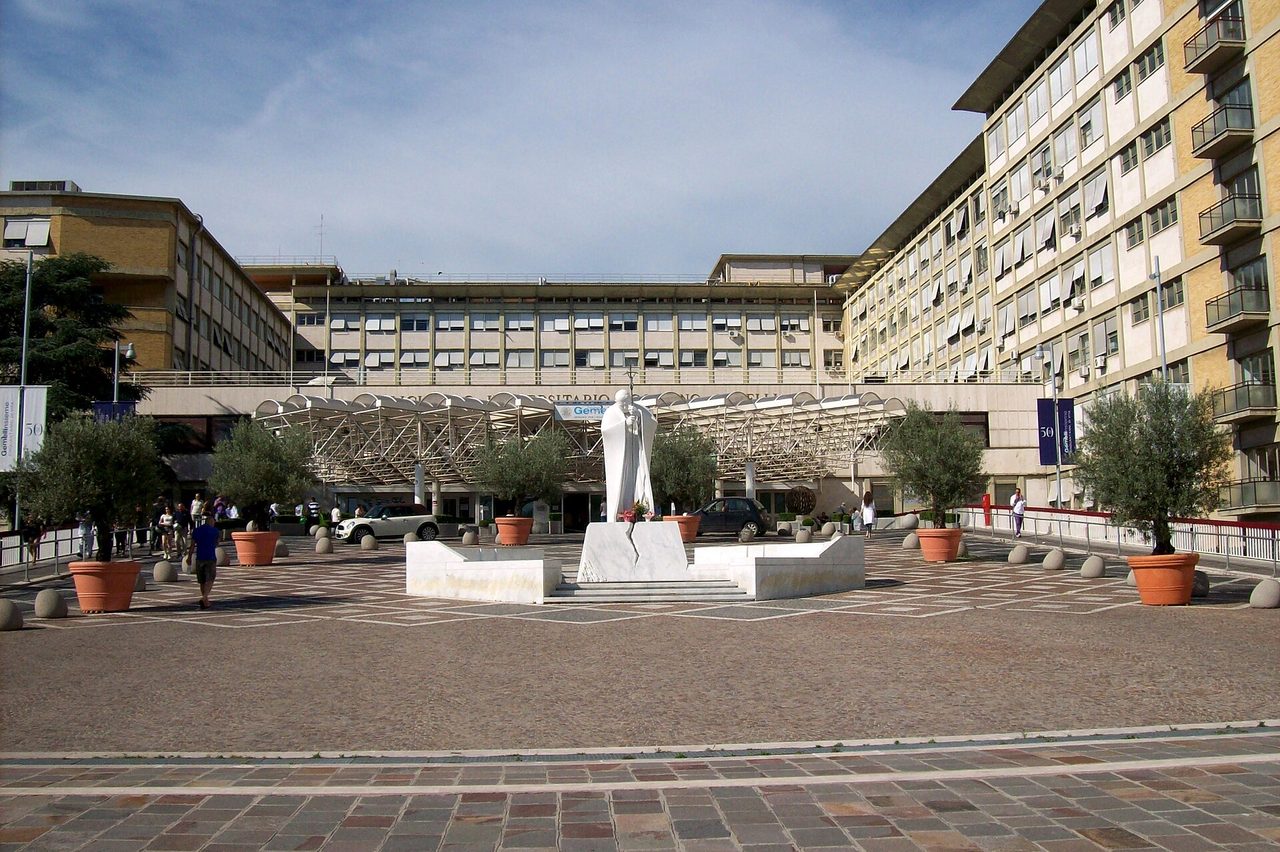
Photo: Blackcat / CC BY-SA 3.0 it · via Wikimedia Commons
Pope Leo XIV to Enter Gemelli Hospital on Tuesday for Lung Nodule Surgery
The Vatican sets a late-morning admission for Tuesday
The Holy See Press Office announced on Monday, October 12, that Pope Leo XIV will be admitted to Rome's Gemelli Hospital late in the morning on Tuesday, October 13, for surgery to remove a small, localized nodule in his lung. Director Matteo Bruni had already told journalists a day earlier that the operation is scheduled for "the first days of this week" and that estimated post-operative recovery is about one week. No precise time for the surgery was released, and officials did not say whether it would happen the same day; America magazine reported that various Vatican sources expect the procedure could take place on Tuesday itself. Even on Monday, the pope kept a full slate of private and group audiences at the Vatican.
Leo broke the news himself from the palace window
Appearing after the Sunday Angelus on October 11, the 71-year-old pontiff told crowds in St. Peter's Square that doctors had found "a small, localized nodule" in his lung during recent medical examinations. "It was detected at a very early stage and is well localized," he said. "The doctors believe it is best to intervene, so, following their advice, I have decided to undergo surgery to have it removed. I thank you for your spiritual closeness and entrust myself to your prayers." He gave no measurement, no location within the lung and no detail about the operation itself.
Officials reject reports that inflammation prompted the tests
The Vatican press office said Monday that no particular issue precipitated the medical checks, denying Italian media reports that an inflammation had led Leo to undergo the examination. The clarification was read as a deliberate pushback against two days of speculative coverage.
A nodule under three centimeters is usually benign
The American Cancer Society definition, widely quoted in coverage, describes a lung nodule as a small abnormal area measuring less than 3 centimeters, about 1.2 inches across, that often turns up on a CT scan performed for trauma, heart disease or a lung infection rather than cancer screening. Most are benign — frequently scar tissue or the residue of an old infection — which is why further testing is needed before anyone can call it cancer. Dr. Stephen Liu of Georgetown's Lombardi Comprehensive Cancer Center said that if a nodule proves malignant and is removed at an early stage, the prognosis is "excellent," and surgery alone may be sufficient treatment.
Doctors called the finding early and well contained
Leo's stated reason for surgery is purely medical advice: the nodule was caught early and remains circumscribed, and his physicians judged removal the right course. Oncologists not involved in his care told the AP that patients in such cases are often discharged after just a few days to finish recovering at home. The pope did not say whether he had symptoms or which test found the growth.
Monday passed with a full slate of meetings
Despite the announcement, Leo worked normally on Monday, holding several scheduled audiences and a group audience before his hospital visit. That routine reinforced the Vatican's message that this is a planned procedure rather than an emergency — the first major medical event of his 17-month pontificate. His predecessor Francis died in April 2025 after a long illness.
Audiences are cancelled through October 20
The Prefecture of the Papal Household cancelled all of Leo's audiences until Tuesday, October 20. He will also skip the inaugural "Pope Leo XIV Sustainability Medal" ceremony at Castel Gandolfo on October 13, an award created by his alma mater, Villanova University; the event will proceed without him. Participants at a week-long family ministry conference were told his absence came as a surprise, and the conference's final report will be delayed.
Cardinal Tagle will take over Wednesday's Mass
The October 14 Mass in St. Peter's Square will go ahead without the pope presiding. Cardinal Luis Antonio Tagle, Pro-Prefect of the Dicastery for Evangelization and new Dean of the College of Cardinals, will celebrate it instead, with participants praying for the Holy Father's health and for families. Quebec Cardinal Gérald Cyprien Lacroix said the news "comes as a surprise to all of us" but would not change what the conference is doing.
No rules exist for a pope who cannot act
The surgery touches the world's 1.4 billion Catholics. The Vatican has no specific rules governing who takes over if a pope becomes totally incapacitated; even while unconscious under anesthesia, Leo remains pope and retains his full authority. There is therefore no question of a substitute pope during the operation — the only variable is how smoothly recovery goes and when doctors clear him to resume duties.
The November South America tour stays on the calendar
The apostolic journey to Uruguay, Argentina and Peru from November 6 to 17 has not been changed: Uruguay from 6 to 8, Argentina from 8 to 11 with stops in Buenos Aires, Córdoba and Luján and a meeting with President Javier Milei, then Peru from 11 to 17 taking in Lima, Chiclayo, Cuzco and Pucallpa — 10 cities in all. It would be his first trip to the Americas since his election and the first papal visit to Argentina since 1987. The Holy See says the final decision depends on his progress after surgery.
The week ahead turns on three questions
Three things will decide the story this week: whether the operation goes ahead as planned around October 13, what pathology says about the nodule, and whether the roughly one-week recovery ends with a discharge on schedule. If all goes well he could be back at the Vatican within days, with the calendar resuming after October 20 — and the November 6 departure still reachable.
Sources
- BBC: Pope Leo XIV to have surgery after nodule found on lung
- NPR: Pope Leo XIV to undergo lung surgery this week
- CNN: What to know about Pope Leo's planned lung nodule surgery
- Pope Leo to be admitted to Gemelli Hospital on October 13
- CBS News: Pope Leo to go to hospital Tuesday for lung nodule surgery