IMF nudges 2026 growth up to 3.1%, then maps the fault lines under it
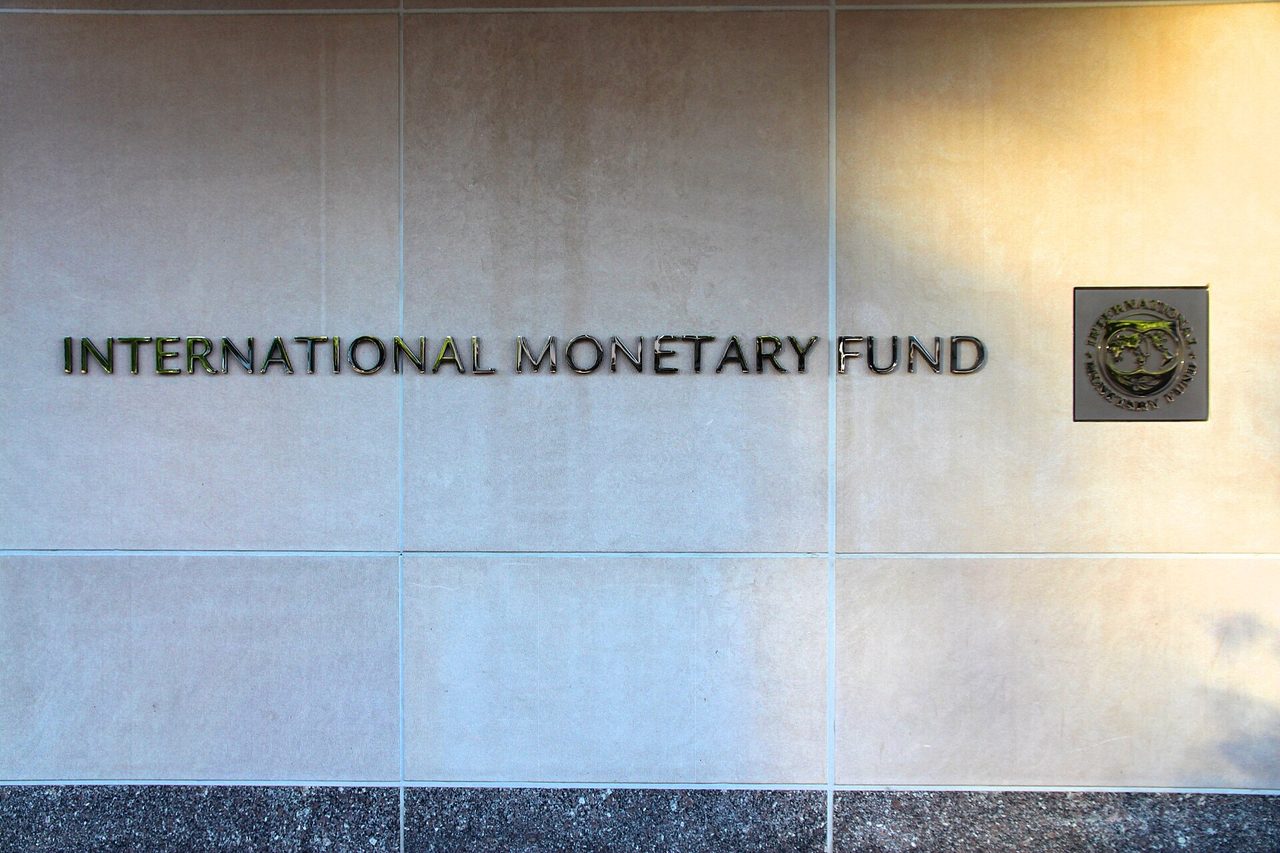
Photo: Marek Ślusarczyk (Tupungato) Photo portfolio / CC BY 3.0 · via Wikimedia Commons
IMF nudges 2026 growth up to 3.1%, then maps the fault lines under it
Growth nudged up to 3.1%, still a step below 2025
The International Monetary Fund on Tuesday raised its forecast for world growth this year to 3.1%, a tenth of a point above the 3.0% it projected in July and level with April's estimate. The world economy expanded 3.5% in 2025. For 2027 the fund left its projection at 3.4%. The World Economic Outlook landed as finance ministers and central bank governors gathered in Bangkok for the IMF and World Bank annual meetings, where more than 18,000 delegates are expected.
Resilience holding, but the buffer is thinning
"The global economy has been resilient, but that resilience is under strain, with risks to growth tilted to the downside," new IMF chief economist Silvana Tenreyro told reporters. The report puts it more bluntly: margins of adjustment are narrowing as inventories deplete and borrowing costs rise, leaving little room for error if another shock hits. Over the medium term, growth is seen averaging 3.2% in 2028-31, well below the 3.7% average of 2000-19.
War-shocked oil keeps inflation climbing
The forecast assumes oil and gas shipments through the Strait of Hormuz resume by March, yet prices are still expected to be up nearly 41% this year, averaging $96 a barrel. Global headline inflation is projected at 4.7% in 2026, up from 4.1% last year, easing to 4.1% in 2027 as energy and food costs feed through. Core inflation returns to 2% only gradually — mid-2028 in the euro area, end-2027 in Britain.
AI investment did the heavy lifting
AI-related investment delivered a "demand impulse" that kept first-half activity above expectations despite the Middle East war and trade tension, the IMF said. CNBC noted that financial markets stayed broadly calm, which the fund attributed in part to "AI-related exuberance." The fund estimates that if the technology is adopted well, AI could eventually add as much as half a percentage point to annual global growth.
A third of economies, 95% of the growth
The report's framing is that growth is not simply slowing or accelerating but being "reallocated across countries according to their exposure to the war-induced supply shock and AI-related demand strength." The concentration is stark: 32 countries now account for 95% of global growth, against 54 as of April. The IMF has downgraded 47% of economies since April, with the heaviest cuts falling on energy importers outside the AI value chain.
Winners and losers by region
Advanced economies grow 2.1% this year, up from 2.0% in 2025, then slow to 1.9% in 2027. Emerging and developing economies decelerate from 4.5% to 3.7% before regaining momentum at 4.4%. The US holds at 2.3% in both years. China is put at 4.5% for 2026 and 4.0% for 2027, each trimmed 0.1 point as higher oil prices aggravate weak domestic demand; India leads major economies at 7.0% in both years. The euro area manages 1.1%; Britain was upgraded 0.3 points to 1.3%, with growth edging down to 1.2% next year as energy prices and long rates weigh on consumption and investment. The Middle East and Central Asia contract this year before rebounding 6.3% in 2027.
Record debt meets a bond market on edge
Elevated public debt, especially in advanced economies, leaves governments exposed to sharp increases in borrowing costs that would raise debt-servicing bills, squeeze fiscal room and sap growth. The Financial Times reported that net borrowing among advanced economies reaches 5.2% of GDP this year, the highest since 2021, with deficits in China and the US at or above 8%. In a separate Global Financial Stability Report, the fund warned sovereign yields could rise "disorderly," noting that hyperscalers' share of global investment-grade bond issuance has climbed to 10% from less than 1% in 2024, putting AI borrowing in direct competition with government bonds.
Two AI scenarios, points apart in both directions
The upside: faster adoption and accelerated investment could lift global GDP a further 0.6% above baseline by 2029, with the bulk of the gains going to the US and China, which together account for more than three-quarters of net demand for AI-related equipment imports. The downside: if promised productivity and profit gains fail to materialise and investment falls away, global GDP runs 1.1% below baseline by 2028 and US output 1.8% below. The fund flagged an AI share correction, rising government borrowing costs and a large cyberattack as plausible near-term catalysts for a sharp tightening of financial conditions.
Forty per cent of jobs in the path of the wave
Managing Director Kristalina Georgieva called AI "a slow-moving tsunami, but a tsunami nonetheless." IMF estimates put roughly 40% of jobs worldwide in the path of being augmented, downgraded or eliminated — about 60% in advanced economies and 23% to 26% in low-income countries, where, she cautioned, lower exposure simply reflects that AI is further away. Her worry is young entrants who would normally start in routine roles and climb; the shift from labour toward capital also hits education and tax revenue.
Bangkok talks loom as fiscal repair stalls
At the meetings, IMF officials plan to press high-debt economies to rebuild fiscal buffers and publish credible medium-term plans rather than postpone hard choices. Few capitals are listening. "France, Germany, the US all need to do fiscal consolidation, but they're moving in the opposite direction," said Josh Lipsky of the Atlantic Council, who is attending. "I'm afraid that it's going to take some kind of crisis to wake up." The uncomfortable truth behind Tuesday's upgrade is that it rests on an oil assumption and an AI mood, neither of which ministers control.
Sources
- IMF raises its forecast for world growth this year but says economies will slow in 2027
- IMF says AI investment propping up global growth, but war and debt threaten outlook
- CNBC: IMF lifts 2026 global growth forecast as AI boom offsets war hit
- The Guardian: IMF warns global economy could soon test the limits of resilience
- Fortune: IMF raises 2026 global growth forecast to 3.1% as economic inequality widens