Taiwan to Bankroll a $4 Billion Texas Campus to Keep Nvidia's Supply Chain Close
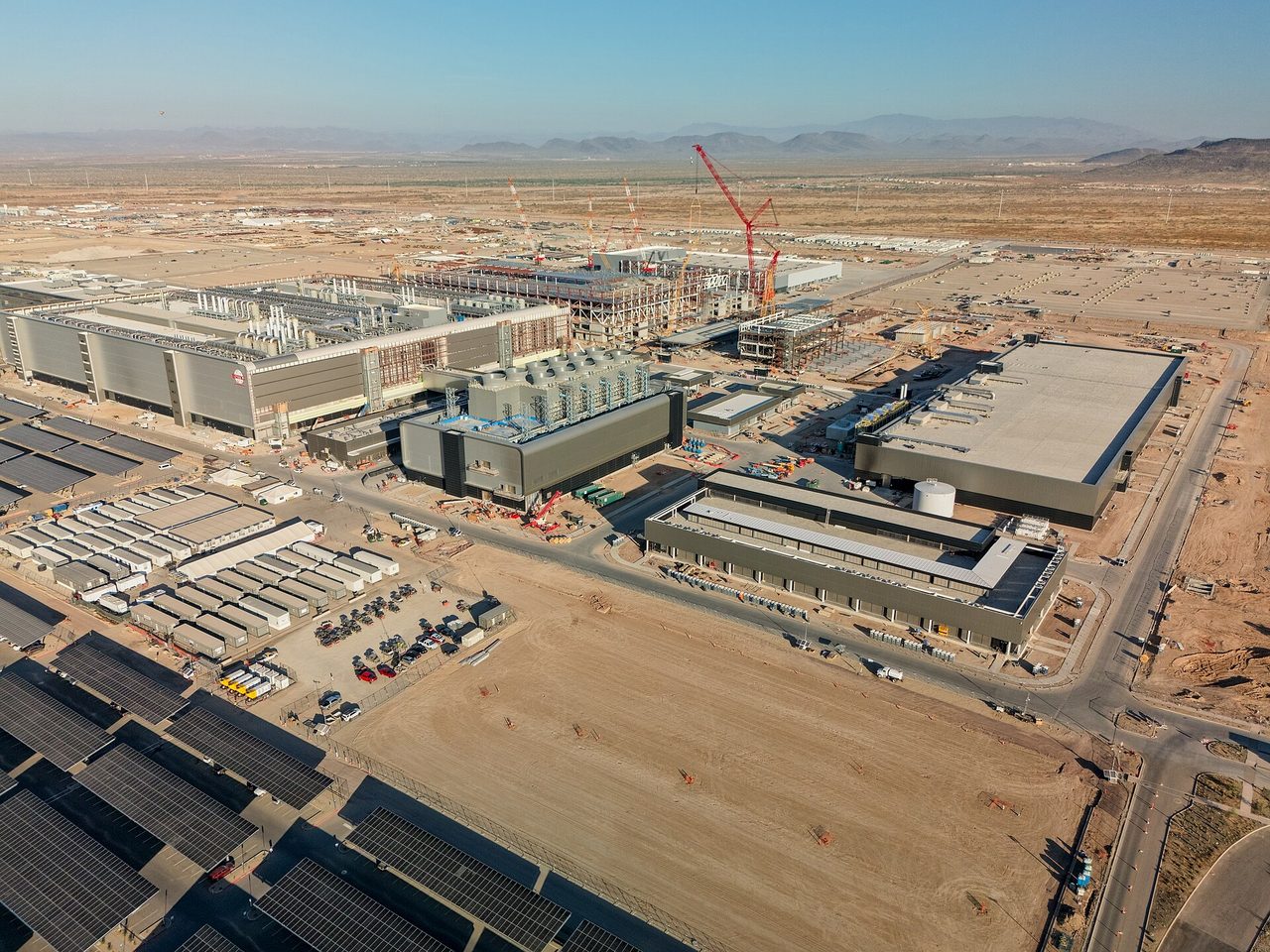
Photo: Hunter Trick (TrickHunter) / CC BY-SA 4.0 · via Wikimedia Commons
Taiwan to Bankroll a $4 Billion Texas Campus to Keep Nvidia's Supply Chain Close
The first park goes up in Texas
Taiwan plans to raise billions of dollars to build industrial parks in the United States, starting with a complex in Texas that could cost as much as $4 billion, according to Economics Minister Kung Ming-hsin. Kung outlined the plan in an October 12 interview with Bloomberg, which published it on October 16; Investing.com, Yahoo Finance, EconoTimes and TipRanks followed, while Techmeme summarised the figure as $2 billion to $4 billion per complex. The headline number is a ceiling, not an average.
The money comes from an industry association, not the treasury
The Taiwanese government is not writing the cheque itself. It is partnering with the Taiwan Electrical and Electronic Manufacturers' Association, which will raise the funding, while Taipei offers loan guarantees and helps suppliers work through federal and local regulation. The groundwork was laid in May, when the Ministry of Economic Affairs signed a memorandum with the association to develop overseas industrial clusters jointly and began surveying U.S. sites.
The real targets are the small suppliers
The parks are not for TSMC or Foxconn — they are for the second- and third-tier vendors that keep those companies running. Bloomberg described them as essential to the operations of TSMC, Nvidia's main manufacturing partner, and AI server assemblers including Foxconn, yet largely absent from U.S. soil. Crypto Briefing put it more bluntly: the firms most people have never heard of, but which every AI server quietly depends on. Land for the first Texas site has reportedly already been secured.
Move the vendors, unblock the line
Co-locating suppliers with their customers is the whole point. If chips are fabricated in Arizona and servers assembled in Texas while substrates, cooling, connectors and testing stay in Taiwan, cross-border shipping and tariffs become the bottleneck. Bundling those vendors into one campus shortens lead times and satisfies Washington's push for onshore supply chains.
A $500 billion trade deal sits underneath
The parks extend the U.S.-Taiwan trade and investment agreement reached in January, under which Taiwanese chip and technology companies committed at least $250 billion in new direct U.S. investment, backed by at least another $250 billion in credit guarantees — a $500 billion package aimed at semiconductors, energy and AI. In return Taiwan's baseline tariff was cut to 15% from 20%. Taipei estimates existing Taiwanese investment in the U.S. at roughly $75 billion, with about $20 billion more indicated.
Texas is already a Taiwanese factory floor
The state is familiar ground. Wistron opened its Fort Worth plant in July on an investment of about $700 million — the Fort Worth Report puts it at $761 million, with more than 800 employees expected — making boards and GB300 systems built on Nvidia's Grace Blackwell Ultra. Foxlink opened its first North American plant in Fort Worth the same month, targeting 900 jobs, and local reporting in early October flagged a possible $1.3 billion chip testing facility for the city. Foxconn's Houston AI server plant has put dual-arm robots on the line, with a disclosed success rate above 95% on busbar installation.
TSMC's Texas question is still open
The anchor tenant has not committed. TSMC lifted its Arizona programme to $265 billion, including $100 billion added in July, and its second Arizona fab is now slated for volume production in the third quarter of 2027, ahead of schedule. Third-quarter net profit rose 68.7% to NT$763.06 billion — a sixth straight record — on revenue of NT$1.494 trillion, with 2026 capital spending held at $60 billion to $64 billion. CEO C.C. Wei confirmed the company is evaluating sites beyond Arizona, Texas included, and is in talks over Elon Musk's "Terafab" project, while insisting a Texas plant must be run by TSMC. Musk replied that his side will build and run the fab, leaving TSMC at most subleasing part of the site.
Same week, chip smuggling becomes a crime
Alongside the parks, Taipei is preparing to add AI servers and cutting-edge semiconductors to its controlled-items list. Once in force, shipping restricted AI hardware to China without permission becomes a criminal offence under the Foreign Trade Act — a shift from Taipei's older blacklist approach, under which violating U.S. export rules was not itself a crime in Taiwan. In August prosecutors charged nine people over the illegal transshipment of 74 Nvidia B300-equipped AI servers to China via Indonesia, Japan and Hong Kong.
Critics call it hollowing out; Taipei says 85% stays
Offshoring is politically charged at home: opposition figures have accused President William Lai of selling TSMC to the United States, with one asking where Taiwan's security would be without its "sacred mountain". Officials counter that TSMC holds to a ratio of three fabs built in Taiwan for every one abroad, that 13 fabs are under construction locally with 25 expected within five years, and that about 85% of its capacity will still sit in Taiwan by 2030, with leading-edge process technology and core R&D staying put. Taipei has approved roughly $44 billion of TSMC U.S. investment since 2020.
What to watch
Three things remain unanswered: the exact Texas address and construction start, the list of first movers and who puts up how much, and the size of the loan guarantees. The model is also travelling — the association's overseas science park pipeline includes Arizona and Poland, where Taiwan's foreign minister inspected the planned site on October 14.
Sources
- Bloomberg: Taiwan to Fund $4 Billion Texas Complex for AI, Nvidia Partners
- Investing.com: Taiwan plans $4 bln Texas park to support Nvidia's AI supply chain
- Crypto Briefing: Taiwan plans up to $4 billion Texas industrial park for Nvidia suppliers
- EconoTimes: Taiwan Plans $4 Billion U.S. Industrial Parks to Boost AI Supply Chain
- TipRanks: Nvidia's AI Supply Chain Gets Support from Taiwan's Texas Plan