Cash and Turbulence: Lockheed's $59,500 Landed as the F-35 Sputtered
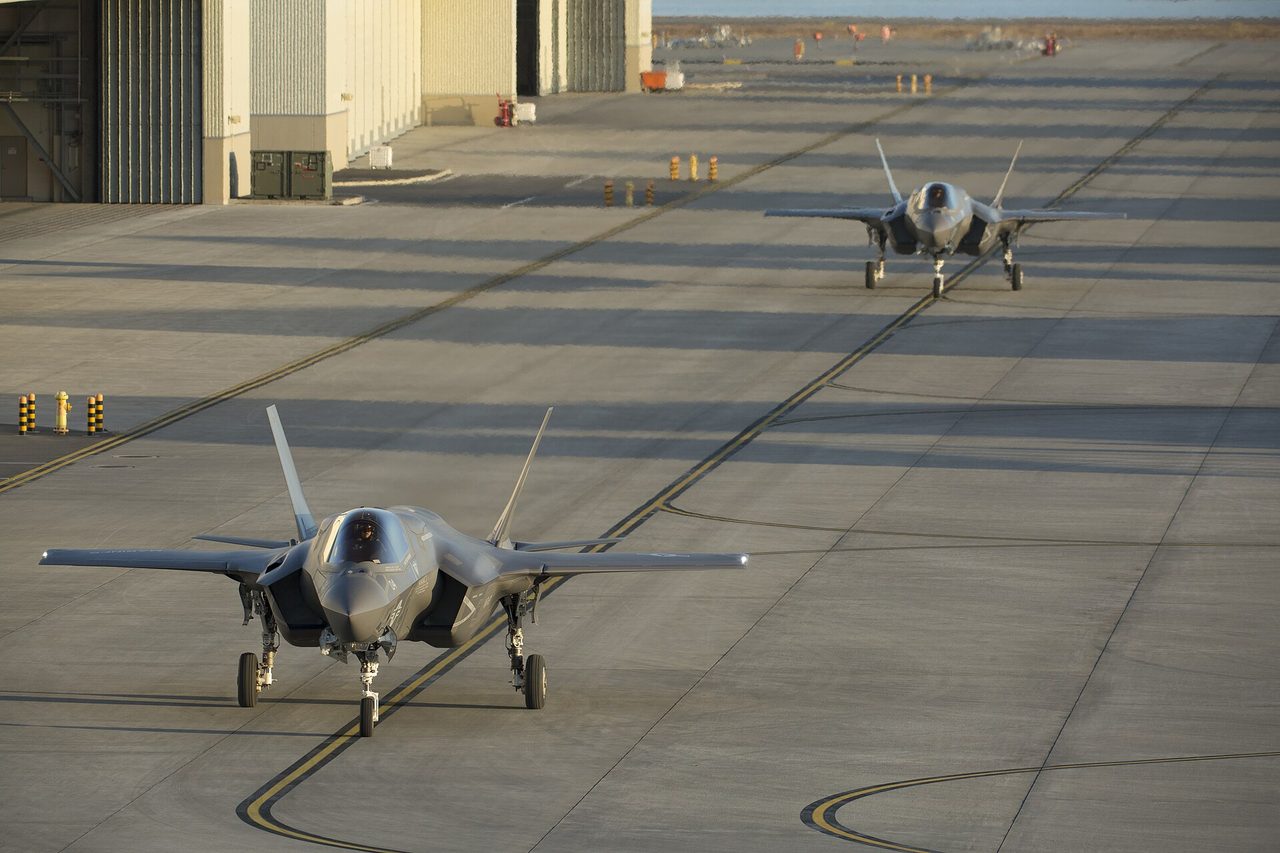
Photo: Cpl. Donato Maffin / Public domain · via Wikimedia Commons
Cash and Turbulence: Lockheed's $59,500 Landed as the F-35 Sputtered
Sixty days, $421,000 out the door
Between May 1 and June 30, 2023, employees and top executives at Lockheed Martin gave $59,500 to the campaign committee of Sen. Susan Collins, R-Maine, according to Federal Election Commission data published by The Intercept on October 15. In the same two months the company's corporate PAC distributed $421,000 in a bipartisan sweep across campaign committees, state parties and charitable foundations. Collins took more of that money than anyone in Congress. Fifty-six of the 60 donations of $1,000 or more in the window went to her; the company was her single largest donor that quarter; and Lockheed's giving accounted for a quarter of all money raised by Collins for Senator, her main fundraising arm. Charter Communications, in second place, accounted for 8 percent.
The senator's office says the cash changed nothing
Phoebe Keller, a spokesperson for Collins and for the Republican-run Senate Appropriations Committee, told The Intercept that Collins's backing for the jet had nothing to do with Lockheed's money or anyone else's. "Sen. Collins did not support the F-35 because of donations that she received," Keller said, adding that the program is "a longstanding bipartisan defense priority" supported by dozens of senators in both parties. A Lockheed spokesperson declined to answer specific questions about the 2023 spike, saying only that its employee PAC program follows long-standing principles of bipartisan political engagement in support of business interests. Senate Majority Leader John Thune called the allegations a political hit job.
The timing: a watchdog report, then the money
The context was ugly. The F-35 was already about a decade late and nearly $200 billion over its original cost estimate. In 2023, a Government Accountability Office report criticized the Pentagon for folding engine and cooling-system upgrade costs into the overall purchase of the jets, saying the practice would limit congressional insight into cost growth, and faulted the contractor for failing to deliver aircraft on schedule.
Less than two months later: 83 more jets
In July 2023, fewer than two months after that GAO report, Collins voted in favor of appropriating funds to buy 83 new F-35s. When the final version of the military budget became law later that year, she celebrated the economic boost she said it would bring Maine, where Lockheed claims the program has a nine-figure economic footprint. Collins was then the top Republican on the Defense Appropriations Subcommittee. She now chairs the full Appropriations Committee.
AM General and Textron followed the same pattern
Lockheed is not an isolated case. The Intercept reported in early October that employees of AM General and its private-equity parent KPS Capital gave more than $58,000 to Collins-linked committees after Congress added $345 million for Joint Light Tactical Vehicles that the Army had already called excess; roughly $50,000 arrived in the weeks after the February 3 appropriations bill passed. Collins's office said she was not involved in the decision, which it attributed to the defense subcommittee's chair and vice chair. Employees of Textron and its subsidiaries chipped in nearly $15,000 to Collins-linked PACs between September 2025 and October 15, 2026. Collins counters that she has secured $1.5 billion for 672 Maine projects over five years. OpenSecrets tallies $15.8 million raised this cycle through July.
A heavier cloud: Navatek and the FBI probe that never launched
ProPublica's September investigation added weight. Martin Kao, the imprisoned former CEO of defense contractor Navatek, told the FBI he had routed $150,000 to a pro-Collins super PAC through a shell company. Weeks after that check cleared, his team met Collins's office and won a new funding round; "Total of $32M will be supported," Kao wrote in an email, and Senate records show at least $10 million was allocated that year based on Navatek proposals. In 2024, FBI anti-corruption agents prepared to open a sweeping bribery inquiry into Collins's dealings with Kao; it never began after Donald Trump returned to office. Collins calls the allegations completely false. Her deputy chief of staff acknowledged the campaign had disgorged Kao's illegal contributions "without our knowledge."
Maine's race and a ten-year Lockheed deal
The political cost lands fastest in Maine. Collins is seeking a sixth term against Democrat Troy Jackson, who has called the arrangement "corruption of the highest order." Polls are tight: a New York Times/Siena survey put Collins ahead 49 to 46, while a Suffolk University poll had Jackson up 49 to 47. Jackson raised $20.4 million in the third quarter. Meanwhile, the Pentagon and Lockheed are negotiating a multi-year F-35 deal that could run up to a decade and cover both production and maintenance, potentially worth tens of billions of dollars — which makes the question of who speaks for Lockheed in the Senate sharper, not softer.
Complaints are filed, and the jet's books keep worsening
Pressure has moved into formal channels: a Maine attorney has asked the Senate Ethics Committee to investigate the pay-to-play allegations, a group of Maine veterans filed a Federal Election Commission complaint on October 15 against Collins's campaign, 1820 PAC and Kao, and about 250 Mainers, including a former chief deputy attorney general, want the state attorney general to step in. The F-35's own numbers keep sliding. A GAO report in June 2026 found the fleet's mission-capable rate fell from 67 percent in fiscal 2021 to 44 percent in fiscal 2025, with the fully mission-capable rate dropping from 38 percent to 25 percent; the Joint Program Office has begun a $13.7 billion support reset through fiscal 2031. Whether Collins cooperates with an ethics review, and whether the decade-long Lockheed deal closes, are the two things to watch.
Sources
- The Intercept: Lockheed Martin Showered Susan Collins With Cash as F-35 Program Hit Turbulence
- ProPublica: FBI Eyed Susan Collins Over Defense Contractor's Donations
- PBS NewsHour: Maine Dems hammer Collins over report of pay-to-play probe
- Portland Press Herald: Susan Collins gets more national scrutiny for campaign donations
- Central Maine / Sun Journal: Susan Collins' committee bought trucks the Army didn't want. Then campaign donations poured in.