Jackson Tells Collins to 'Shut Up' as Maine Senate Debate Erupts
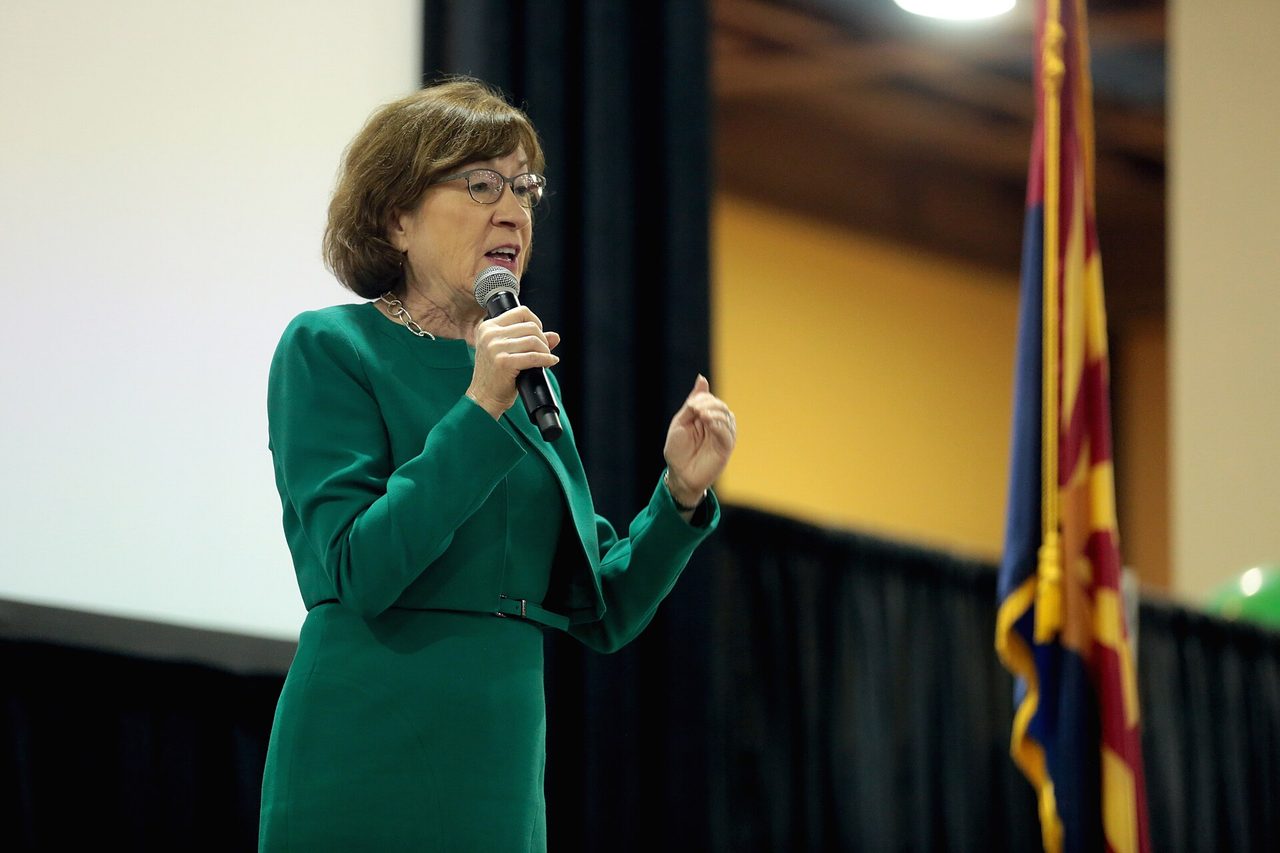
Photo: Gage Skidmore / CC BY-SA 2.0 · via Wikimedia Commons
Jackson Tells Collins to 'Shut Up' as Maine Senate Debate Erupts
A Heckler Fifteen Minutes In
The fourth and final debate of Maine's U.S. Senate race took place Thursday evening, Oct. 15, at the Gracie Theater at Husson University in Bangor, hosted by NEWS CENTER Maine, Maine Public and the Portland Press Herald. Unlike the first three meetings, it was held before a live audience — about 200 people, with each campaign allotted an equal number of tickets.
"Obviously One of Troy's Supporters"
About 15 minutes in, a young man protesting data centers stood up and shouted that artificial intelligence data centers were destroying the climate and poisoning the water. As security moved to remove him, he yelled, "30 years, for what?" — a reference to Collins's three decades in the Senate. Organizers later said the individual was not on the pre-registered media list but presented a press badge from the Bowdoin Orient, the college's student newspaper, and was admitted.
Maine GOP Calls It "Unacceptable Behavior"
Republican Sen. Susan Collins said the demonstrator was "obviously one of Troy's supporters." Democrat Troy Jackson fired back: "Oh, shut up. I don't even know that kid." The two candidates did not acknowledge each other when the debate ended. The Maine GOP said in a social media post that Jackson's remark was "unacceptable behavior"; Jackson's campaign declined to comment on the exchange.
Collins Leans on Appropriations Clout
Across the hour, Collins stressed her cross-party record, saying she had voted against her own party more often than any other senator on either side of the aisle, and noted she is the first Maine senator to chair the Appropriations Committee. She cited roughly $1.5 billion she has steered to the state in recent years. The 73-year-old, in the Senate since 1997, is seeking a sixth term.
A Clash Over Who Owns Whom
Jackson countered that "100% of the time when Donald Trump goes to Susan Collins for a vote, he gets it," calling her breaks with the president "managed votes" on outcomes already decided. He attacked her over the war in Iran, tariffs on Canada and high energy costs; heating oil in Maine recently topped $6 a gallon. Collins said she voted nine times to end the conflict under the War Powers Act.
Campaign Money Back on the Table
Collins also pressed Jackson on his campaign finances. The Washington Free Beacon has reported that the Maine Senate Democratic Campaign Committee, which Jackson led while serving as state Senate president from 2018 to 2024, took nearly $54,000 from corporate PACs, including ones tied to Cigna, Bank of America and Avangrid, Maine's dominant utility. On stage, Jackson acknowledged receiving $15,000 from the oil and pharmaceutical industries, breaking his pledge to reject billionaire and corporate PAC money; the audience reacted loudly.
Data Centers and the Price of Power
The two also clashed over data centers. Jackson said the buildout "is something that obviously we have to stop. We have to slow down," and suggested Collins was susceptible to her donors on the issue. Collins denied it — "Troy has repeatedly insulted my integrity," she said — and pointed to federal legislation she supports that encourages states to impose guardrails, including requiring operators to supply their own electricity and water. She blamed Augusta policies under Jackson for Maine's high electric rates.
Polls Tucked Inside the Margin of Error
The race remains tight. A Suffolk University poll of 500 likely voters, conducted Oct. 8–11, found Jackson ahead 49% to 47%, with a margin of error of plus or minus 4.4 points. A Washington Post–Schar School survey put it at 50% to 46%, while a New York Times/Siena poll had Collins up 49% to 46%. The same surveys found Trump's approval among Maine voters at 36%, with 58% saying Collins was too supportive of him; 51% viewed Collins unfavorably, against 43% for Jackson.
$115 Million Against $83 Million on TV
According to the ad-tracking firm AdImpact, groups backing Collins had spent about $115 million on television as of Oct. 13, compared with roughly $83 million for groups backing Jackson — a gap of about $32 million. AdImpact projects about $384 million in total ad spending on the race, nearly double the roughly $200 million spent when Collins last ran in 2020. That works out to about $166.51 per voting-age resident, the most expensive Senate race in the country by that measure.
Nov. 3 and Control of the Senate
Maine votes under ranked-choice rules on Tuesday, Nov. 3, with polling places opening as late as 10 a.m. and closing at 8 p.m. The Cook Political Report rates the contest a toss-up, and the outcome could help decide which party controls the Senate. Jackson became the nominee at a special Democratic convention on July 25, winning 566 votes to 5, after Graham Platner withdrew on July 10 amid a sexual assault allegation. With the debates over, both sides now turn to a final stretch of advertising and field work.
Sources
- The Hill: Troy Jackson tells Susan Collins to shut up during heated Maine Senate debate
- Maine Public: Key takeaways from the final fiery debate between Susan Collins and Troy Jackson
- Portland Press Herald: 4 takeaways from the final debate between Susan Collins and Troy Jackson
- Bangor Daily News: Live updates: Susan Collins and Troy Jackson meet in Bangor for final debate
- CNN: Takeaways from Thursdays Senate debates in Alaska and Maine