A Camera Trap in the Peruvian Amazon Caught a Giant Armadillo Pup — and Researchers Say They Never Dreamed of It
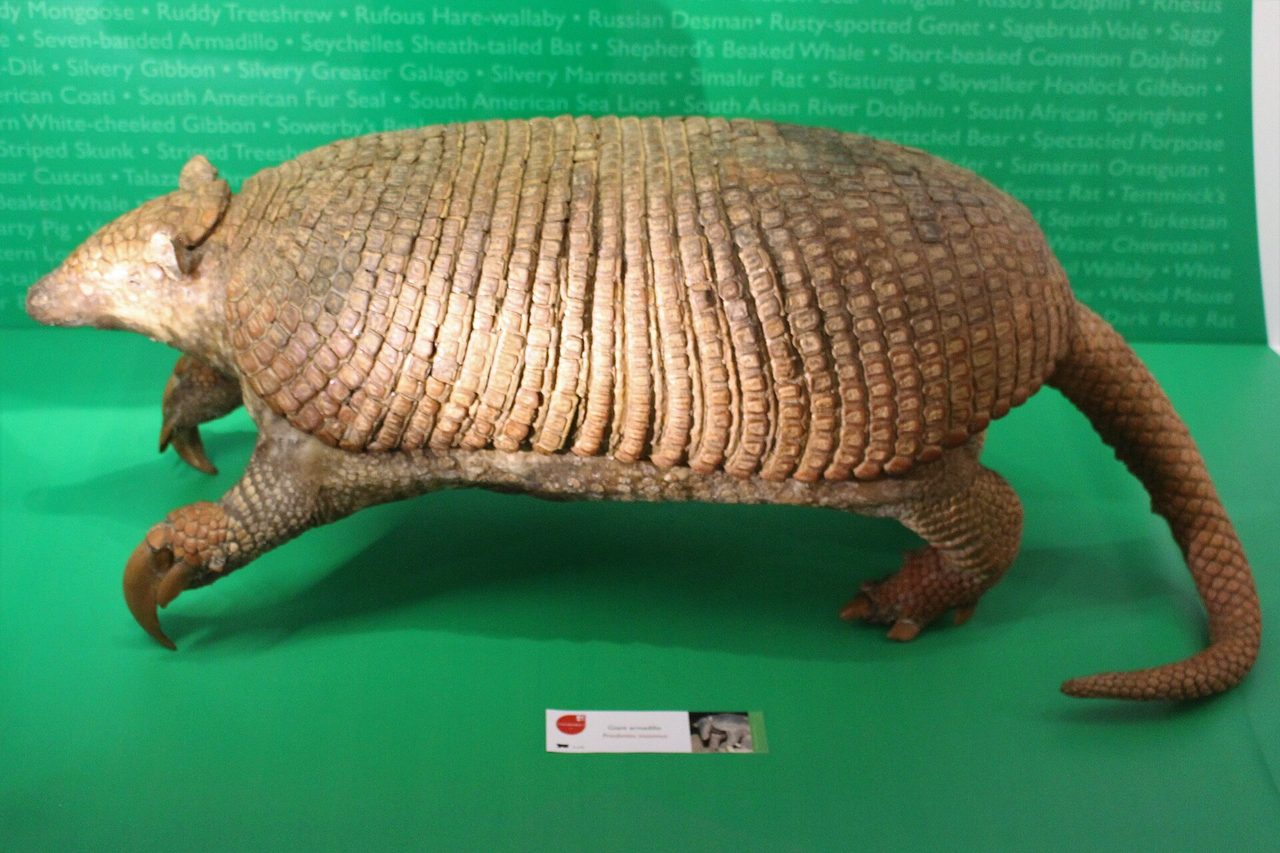
Photo: Emőke Dénes / CC BY-SA 4.0 · via Wikimedia Commons
A Camera Trap in the Peruvian Amazon Caught a Giant Armadillo Pup — and Researchers Say They Never Dreamed of It
A pup filmed in a Loreto community
In mid-October 2026, a camera trap set by the nonprofit Amazon Research Internacional recorded a baby giant armadillo playing in front of the lens, in the Native Community of San Francisco in Loreto, in the Peruvian Amazon. Discover Wildlife, a BBC Wildlife outlet, called the video "incredibly rare," and Popular Science and Animals Around The Globe picked it up within days as one of the season's rarest wildlife clips.
Even a year of cameras rarely finds one
"Giant armadillos are amongst the most difficult animals to see on a camera-trap," said conservationist Rosa Vásquez Espinoza, who founded Amazon Research Internacional, speaking on the BBC Wildlife podcast Wild Lives. Of the footage itself she said: "Seeing a baby giant armadillo is not something we ever dreamed of, and it just happened to be there ... just being playful. It's so hopeful for us, seeing all this wildlife."
No juvenile had ever been recorded in the field
The giant armadillo, Priodontes maximus, is the largest living armadillo: up to 150 cm from snout to tail tip, and up to 54 kg. Its reproductive biology is still largely a blank — the species is so poorly documented that no juveniles had ever been discovered in the field. Females are thought to gestate for about five months, to breed as rarely as once every three years, and to wean young at seven to eight months, sometimes sealing a burrow entrance to shield a pup.
Down 30 to 50 percent in three decades
The species is classified as Vulnerable on the IUCN Red List and sits in CITES Appendix I. Estimates cited in the research describe a population decline of 30 to 50 percent over the past three decades, with habitat loss and hunting for meat and the black market continuing even though the animal is protected by law in Colombia, Guyana, Brazil, Argentina, Paraguay, Suriname and Peru.
A burrow that dozens of species rely on
Rarity understates its role. Camera-trap work in the Peruvian Amazon that began in 2003 found dozens of mammal, reptile and bird species using giant armadillo burrows on the same day, including the rare short-eared dog. Ecologists treat Priodontes as a habitat engineer: lose it locally, and the fossorial habitat other animals depend on thins out with it.
The clip is now evidence for a regional law
Amazon Research Internacional intends to use the footage to push for a local law in Loreto protecting the giant armadillo and other large mammals on the IUCN Red List, which the organization describes as key indicators of forest health. It recently helped introduce a comparable law in Satipo, in the Junín province of Peru's central Amazon.
Stingless bees already guard the same forest
Part of that landscape is protected through the monitoring of stingless bees and their nesting trees — an effort in which tiny pollinators end up shielding large mammals. Peru's Law 32235, passed in January 2025, recognized native stingless bees as resources of national interest, and municipal ordinances in Satipo and Nauta went further, granting the insects legal rights.
This year's camera traps keep delivering
The pup is not an isolated surprise. Thirty-four camera-trap surveys across Bolivia and Peru over more than 25 years produced 594 photographs of the near-mythical short-eared "ghost dog"; eight canopy bridges at Alta Floresta in Brazil logged 15,000 safe crossings by arboreal animals over 15 months with not a single roadkill; and in September scientists described Leopardus tilcayo, the first new living cat species named in more than a century, from Bolivia's Yungas cloud forest.
A hundred-million-dollar monitoring net
Larger machinery is being assembled around such clips. Amazon.ia, announced in September, plans a network of 10 to 30 sites across the Amazon basin that fuses satellite imagery with camera traps, acoustic recorders and environmental DNA into continuously updated models of biodiversity.
What to watch: a vote, and the next frame
The immediate test is political — whether Loreto's lawmakers convert a fragment of video into enforceable protection, or leave it as a moment of awe online. In San Francisco, the cameras keep running either way.
Sources
- Discover Wildlife: Scientists set up camera trap in the Amazon
- Popular Science: Rare video of a baby giant armadillo in the wild
- The Guardian: Animals crossing: the simple solution to stop roadkill in the Amazon
- Mongabay: Researchers uncover hidden routes and patterns of Amazon wildlife trade
- UPI: Satellites, sensors and AI team up to monitor the Amazon