MSCI Wants Indonesia Out of Its Indexes — and Jakarta Paid More Than 11% in a Single Day
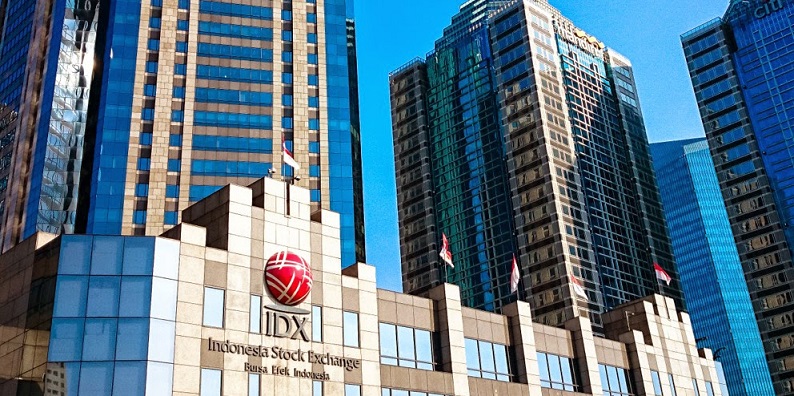
Photo: Bursa Efek Indonesia / CC BY-SA 4.0 · via Wikimedia Commons
MSCI Wants Indonesia Out of Its Indexes — and Jakarta Paid More Than 11% in a Single Day
MSCI proposes "standalone" status
MSCI launched a consultation on Thursday proposing to reclassify its Indonesia indexes from Emerging Market to Standalone Market status. The change would remove Indonesian equities from every MSCI global index, forcing index-tracking funds to sell. MSCI said a demotion to Frontier Markets "would not properly recognise the depth of the market problems." Standalone status currently covers Argentina, Lebanon, Palestine and a handful of others; Indonesia would be the largest economy ever moved there, and the only Asia-Pacific market in the group. A final decision is due by the end of June 2027.
A 30-minute halt, then a fall of more than 11%
On Friday the Jakarta Composite Index (JCI) opened 8% lower at 5,393.92, triggering a 30-minute trading halt. It closed down more than 11% — its steepest one-day fall since January 1998 and its lowest close since November 2020. Reuters calculated that roughly $65 billion of market value was wiped out in the session. The selloff pushed 2026 losses to about 40%, making Jakarta the world's worst-performing major equity market.
Foreign money was already leaving
Foreign investors had net-sold about $4.6 billion of Indonesian equities this year before the rout, according to LSEG data cited by Reuters; Bloomberg's tally put it near $4.9 billion. Banks now estimate the downgrade could trigger $3 billion to $6 billion in passive outflows — JPMorgan puts the figure at $4.8 billion — while UBS warned active managers could pull another $15 billion.
A bigger exit than Argentina's
Indonesia's weight in the MSCI Emerging Markets Index has shrunk from 1.2% at the end of 2025 to 0.46%, according to JPMorgan. That is still far above Argentina's 0.12% when it was removed, and MSCI's own data show the Indonesia index has fallen from 18 constituents to nine. Reuters' analysis concluded the exclusion would involve significantly more index-linked money than previous cases.
What MSCI says is broken
"Significant concerns remain around market dysfunction," MSCI said, citing continued suspected coordinated trading and a lack of evidence of meaningful enforcement, on top of investor complaints about opaque ownership structures and concentrated shareholdings. MSCI is keeping its existing freeze on Indonesia-related index changes, including additions and upward migrations between index segments, and will use 1% shareholder disclosure data to adjust free-float estimates while continuing to delete securities flagged under Indonesia's High Shareholding Concentration framework.
Jakarta's answer: "a big question mark"
Coordinating Economic Minister Airlangga Hartarto said there was "a big question mark" over why MSCI did not raise a standalone downgrade during a meeting in Bangkok this week, on the sidelines of the IMF-World Bank annual meetings. He convened the finance minister, the central bank governor and other officials. The Indonesia Stock Exchange said MSCI had asked only about the effectiveness of its reforms.
Same day, $117 million in fines
Hours after MSCI's announcement, Indonesia's Financial Services Authority (OJK) unveiled 2.1 trillion rupiah, about $117 million, in administrative fines: 1.5 trillion rupiah ($83.3 million) for Sinar Mas-linked coal miner Dian Swastatika Sentosa, 500 billion rupiah ($27.8 million) for Barito Renewables Energy and 100 billion rupiah ($5.6 million) for Petrindo Jaya Kreasi. Reuters reported the sanctions target beneficial owners and trading participants rather than the listed companies themselves. All three sat on the exchange's high-concentration list, and three of the six stocks dropped from the MSCI Indonesia Index in May were among them. OJK says 835 parties have faced sanctions or enforcement action since January.
Reforms the market does not yet believe
Indonesia's reform list is long: disclosure of shareholders owning more than 1%, more granular investor classification, an HSC early-warning framework, and a roadmap to lift the minimum free-float requirement from 7.5% to 15%. MSCI's response is that market participants have yet to see consistent evidence the measures materially improved how the market functions — a question of verifiable enforcement, not of published rules.
Retail investors, banks and the rupiah
More than 32 million retail investor accounts are exposed to the slide, and big bank stocks led the decline. The rupiah breached 18,000 per dollar and weakened to 18,070, its lowest since late July, leaving it about 8% weaker this year as Asia's worst-performing major currency. Bank Indonesia said it would keep intervening across markets through offshore non-deliverable forwards, spot and domestic NDF transactions, and secondary-market purchases of government bonds.
Two dates now decide Jakarta's fate
The consultation runs to April 30, 2027, with a final decision by June 30, 2027; MSCI will proceed with reclassification unless it finds clear evidence of improvement in market governance and function. Citi told clients a Bank Indonesia rate hike would be "pre-emptive" — meant to stop equity outflows from spreading into bonds and local capital flight — while keeping its base case that Indonesia retains emerging-market status. Some analysts argue the downgrade is already largely priced in; nine days earlier, FTSE Russell's decision to keep Indonesia in its emerging-market ranks had briefly calmed the market, before removing 29 Indonesian stocks from its indexes on September 18 and flagging negative sovereign outlooks from Moody's and Fitch.
Sources
- Reuters: Indonesia gets a 'wake-up call' as MSCI prepares to expel it from global indexes
- MSCI Launches a Consultation on a Proposal to Reclassify Indonesia from Emerging Market to Standalone Market Status
- Indonesia Stocks Suffer Worst Day Since 1998 on MSCI Downgrade Warning
- Bloomberg: Indonesia Unveils $117 Million in Fines After MSCI Warning
- Indonesia Fines DSSA, BREN and CUAN Rp 2.1 Trillion for Market Violations