Minnesota's Quiet Senate Race Is Democrats' Midterm Warning Sign
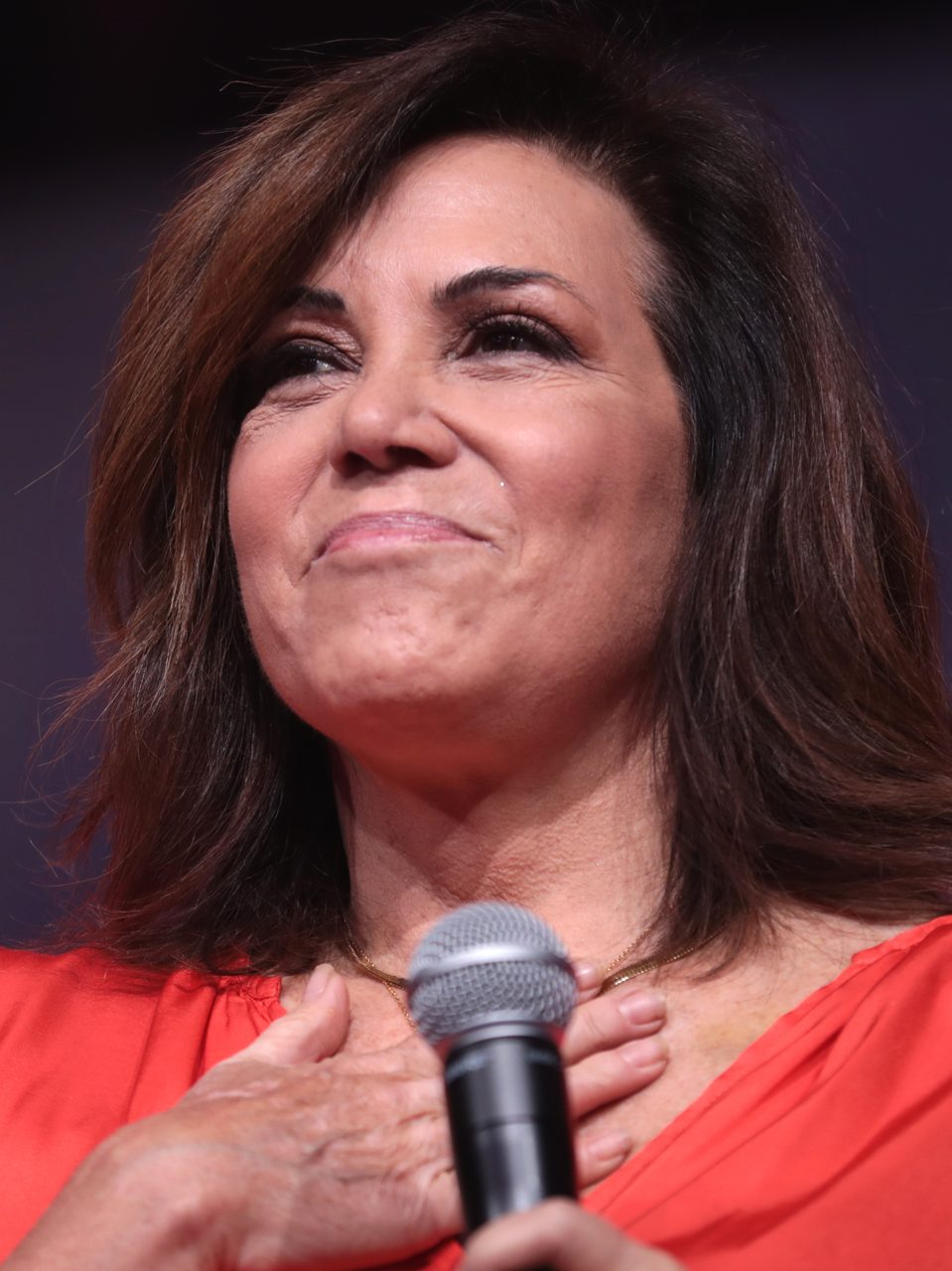
Photo: Wikimedia Commons / CC BY-SA 2.0 · via Wikimedia Commons
Minnesota's Quiet Senate Race Is Democrats' Midterm Warning Sign
A four-point lead that fits inside the error bar
The Star Tribune/KARE 11 Minnesota Poll, conducted by Mason-Dixon among 800 likely voters from Oct. 5 to 7 with a margin of sampling error of plus or minus 3.5 points, put Democratic Lt. Gov. Peggy Flanagan at 47% and Republican Michele Tafoya, a former network sportscaster, at 43%, with 9% undecided in the race for the seat Sen. Tina Smith is vacating. CNN reported on Oct. 16 that the contest has largely flown under the radar, and that neither candidate has broken 50% in recent surveys.
"Far too close for comfort"
A state Democratic official told CNN the race is "far too close for comfort." A top Democrat in Minnesota put it more sharply: "If Amy Klobuchar was not at the top of the ticket running for governor, this Senate race could be one of our biggest problems on the map." Democrats are counting on the popular senator's gubernatorial campaign to pull their voters out.
The Republican outraised her in the third quarter
Fundraising is one worry Democrats voiced openly. Alpha News reported that Tafoya raised about $4.32 million between July 23 and Sept. 30, against roughly $3.78 million for Flanagan. CNN reported that Tafoya entered October with about $2.1 million in cash on hand to Flanagan's $1.5 million, an advantage in the closing weeks.
Rural Minnesota is tilting away from her
Inside the Star Tribune poll, Tafoya led among men, voters without a college degree and those aged 50 to 64, and led Flanagan by 17 points across rural northern and southern Minnesota, while Flanagan led by 37 points in the state's two most populous counties and among voters aged 18 to 49, women and college graduates. Other surveys tell the same story: KSTP/SurveyUSA had the race tied at 42%-42% with 12% undecided, after showing Flanagan up 5 points in August (MinnPost); InsiderAdvantage, polling 1,200 likely voters Sept. 28-29 with a margin of about 2.95 points, had it 46%-45% (The Hill); Rasmussen had it 48%-45% with 7% undecided (Newsmax). RealClearPolitics' average put Flanagan only 1.6 points ahead (PJ Media, Oct. 4).
A top forecaster downgraded the race
On Oct. 14, the nonpartisan Sabato's Crystal Ball moved the seat from Likely Democratic to Leans Democratic. Managing editor Kyle Kondik told Newsweek the shift reflected Flanagan's "soft" polling and "uncertainty in Minnesota this year." Republicans, meanwhile, are treating the state's welfare-fraud scandal as their best opening in two decades.
One debate, and two unpopular men to answer for
Their first and only scheduled debate, an hour on Minnesota Public Radio, took place Oct. 16. Asked whether she bore any responsibility for the fraud that ran through state programs, Flanagan said, "The governor's been very clear that the buck stops with him," and pointed to areas such as school meals that she led (Star Tribune, MPR News). She cast Tafoya as a rubber stamp for President Donald Trump and pressed her on the federal immigration operation that left two Minnesotans, Renee Good and Alex Pretti, dead; Tafoya tried to put distance between herself and Trump. Days before the debate, Trump urged Minnesotans to vote for her.
A fraud scandal is the undertow
The backdrop is Minnesota's welfare-fraud scandal. The Justice Department announced charges against 15 defendants over more than $90 million in health care fraud in May, per the Daily Caller. The Centers for Medicare and Medicaid Services deferred $259 million earlier this year, including $243.8 million tied to unsupported or potentially fraudulent claims, and in June the Department of Health and Human Services deferred $1 billion from Minnesota and California. Vice President JD Vance referred Gov. Tim Walz and Attorney General Keith Ellison to the Justice Department for a criminal fraud investigation in June; Walz called it a campaign of retribution and abandoned his bid for a third term.
National money never really showed up
Compared with other battlegrounds, the race has been strikingly quiet. MPR News tallied roughly $2 million in outside spending after the primary, about $1.3 million of it on highway billboards supporting Flanagan, against more than $20 million spent by outside groups in the primary. The National Republican Senatorial Committee gave just $62,000 directly to Tafoya's campaign (Star Tribune). Senate Majority PAC communications director Lauren French countered that Republicans are "spending in deep red states" and called their late play for Minnesota a political ploy.
All 201 legislative seats are on the same ballot
Minnesota votes Nov. 3 not only for Senate and governor but for all 201 legislative seats: the House was tied 67-67, with 68 needed for a majority, and Democrats hold the Senate by one seat, 34-33 (MPR News). The state's eight congressional districts are split 4-4. Early voting is underway, and CBS News Minnesota reported more than 200,000 ballots already cast as of Oct. 16, with 519,813 absentee ballots distributed, more than 80,000 cast in person and 121,000 returned by mail. Turnout over the first three weeks ran about 29% ahead of the same point in 2022 (ABC 6 News).
Three weeks left, and nine percent undecided
Democrats have booked $1.8 million in television time for the final three weeks, $1.4 million of it for Flanagan (CNN). Two things will decide the race: how much of rural northern and southern Minnesota she can claw back, and where the 9% of undecided voters land. The governor's race remains her buffer: the Star Tribune poll had Klobuchar ahead of Republican House Speaker Lisa Demuth 50%-41%, and KSTP/SurveyUSA had her up 7 points, widening to 9 among less-likely voters. Democrats also led narrowly in the races for attorney general, secretary of state and auditor. Election Day is Nov. 3.
Sources
- CNN: Minnesota has signs of potential Democratic troubles in midterms
- Star Tribune: Peggy Flanagan leads Michele Tafoya in Senate race
- The Hill: Flanagan leads Tafoya by 4 points in new Minnesota Senate poll
- MPR News: Peggy Flanagan, Michele Tafoya Senate race stays under the radar
- MinnPost: As Senate race tightens, Flanagan and Tafoya make their final pitches