Drone Strikes on Black Sea Shipping Put NATO's Resolve to a New Test
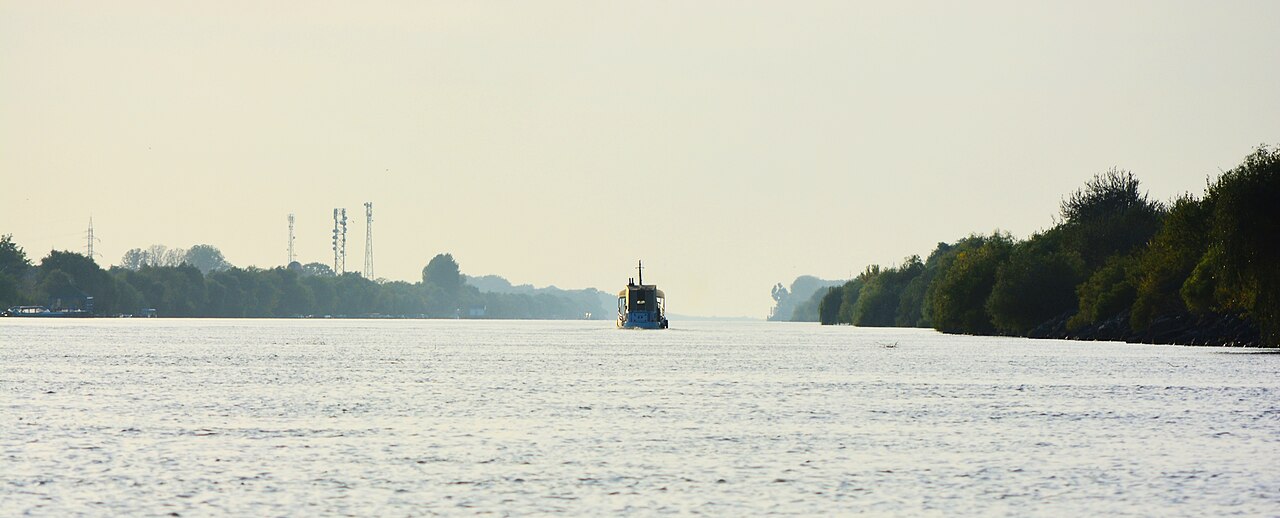
Photo: Jmabel / CC BY-SA 4.0 · via Wikimedia Commons
Drone Strikes Turn the Black Sea Into NATO's Hardest Test
Two tankers hit off Romania's Danube mouth
Two chemical tankers were struck by drones within 24 hours off Romania's Black Sea coast, Romanian President Nicușor Dan confirmed, without saying whose drones they were. The San Marino-flagged Wine Trader, sailing from Tunisia to Romania and empty of cargo, reported blasts and a fire on the morning of October 15 about 13 nautical miles (24km) east of the mouth of the Danube at Sulina. The Comoros-flagged Yara J was hit late the previous night just inside Romanian territorial waters. Ars Technica noted it was the first time Black Sea drone attacks entered a NATO member's territorial waters.
Seven of twelve crew missing, five rescued
Seven of the Wine Trader's 12 crew are missing and five were rescued; one survivor suffered scalp burns, another mild smoke inhalation. Romanian naval authorities initially reported eight missing, then revised the figure to seven, and search-and-rescue operations continued. All crew on the Yara J were safe. Romania's defence ministry said a group of air targets was monitored near Ukraine's Snake Island and that a drone briefly entered Romanian airspace at 1:34 a.m. southeast of Sulina before disappearing from radar.
A week, two sinkings in Bulgaria's waters
On October 13, the Maltese-flagged, Ukrainian-owned Chelsea 3 was hit by three drones 18 nautical miles from the Bulgarian coast; all 15 crew — seven Ukrainians and eight Azerbaijanis — were rescued, five with minor injuries. The Guinea-Bissau-flagged HS Dignity sank 17 nautical miles east of Krapets, with 11 sailors missing. On October 6, the Togo-flagged Alfa Watan went down roughly 70 nautical miles east of Byala, its crew lost and the search later called off, while the Palau-flagged Able caught fire and its 18 crew were taken off by a Bulgarian ferry.
Sofia summons Moscow's ambassador
Bulgarian Prime Minister Rumen Radev called the strikes "absolutely unacceptable," convened his security council and summoned Russian ambassador Eleonora Mitrofanova. She said she had no information from Russia's defence ministry about attacks on commercial vessels and did not rule out a provocation by a third party. Bulgaria's navy says it has destroyed more than 30 drones, missiles and pieces of debris this year.
Allies hedge, but point in one direction
Radev said there was no solid evidence to blame any party, though "logic suggests the outcome works to the advantage of the Russian Federation." Defence Minister Dimitar Stoyanov put it more plainly: "We assume the drones are Russian." Ukrainian Foreign Minister Andrii Sybiha blamed Moscow outright, calling the Black Sea a lifeline for global food security. Dan promised Romania would react, and admitted Bucharest was "not prepared" when drone incursions first began.
The Kremlin calls it retaliation
Kremlin spokesman Dmitry Peskov said Russia is responding to Ukrainian attacks on Russian merchant ships and tankers, and that Ukraine "will pay a price." President Vladimir Putin told the Valdai club that Ukraine knocked out 40 Russian vessels in the first 10 days of its campaign. Moscow has rejected US and European calls for a naval ceasefire, saying it targets only ships carrying weapons and dual-use cargo to Ukrainian ports.
Rutte promises to adjust the posture
NATO Secretary General Mark Rutte spoke with Radev on October 13 and met Radev and Dan in Brussels on October 15. He said the alliance has strengthened its eastern flank, including with more counter-drone capabilities, and will keep "adjusting our deterrence and defence posture as needed." NATO's top military commander is consulting defence chiefs. Bulgaria has asked NATO for combat aircraft and anti-drone systems and will join an alliance project on countering low-flying threats.
Bucharest wants a joint Black Sea command
Romania's acting defence minister, Radu Miruță, proposed a joint military command for NATO's Black Sea littoral states — Romania, Bulgaria and Turkey — backed by a joint letter to NATO leadership, with command and location rotating. Romania is ready to host it from 2028; until then it backs a headquarters on Turkey's Black Sea coast. The three countries already run a joint mine countermeasures group, operational since 2024, but it has no mandate against drones.
War-risk premiums and freight costs climb
London's Joint War Committee has expanded the Black Sea high-risk zone by nearly 2.4 times, covering the whole Black and Azov seas except the 12-mile territorial waters of Bulgaria, Romania, Turkey and Georgia. Bulgarian President Iliana Yotova warned the Black Sea is being turned into a military zone. Turkey says at least 25 Turkish-owned vessels have been hit since late June, four of them under the Turkish flag.
The grain corridor absorbs the shock
Turkey's IMEAK chamber of shipping counts at least 163 civilian and commercial vessels hit in the Black Sea in the first eight months of this year. The Black Sea carries about 17 percent of the world's traded grain, according to the Council on Foreign Relations, and Russia's Azov-Black Sea ports handle roughly 80 percent of its grain exports. Russian Black Sea grain exports fell to 1.7 million tonnes in September, down 77.8 percent year on year, while Danube barge freight from Giurgiulești to Constanța has risen to about $75 per tonne from $15 to $35. Traders in Romania's Constanța told the Associated Press that port operations are so far unaffected; insurance is the real pressure point.
What matters is whether NATO moves hardware
The AP counts at least seven cargo vessels attacked in the Black Sea this month, leaving two dead and at least 25 missing; Reuters puts the toll at 23 sailors killed or missing in the past 10 days. Romania shares a 614km border with Ukraine, much of it along the Danube, and the region's ports and energy supplies depend on this waterway. The question now is whether NATO actually moves counter-drone systems forward into the Black Sea, and whether the littoral command moves from proposal to deployment.
Sources
- BBC
- Associated Press
- Al Jazeera
- Reuters
- Dawn