Plug-In Solar Is Now Legal in Ten States: What the Savings Actually Look Like
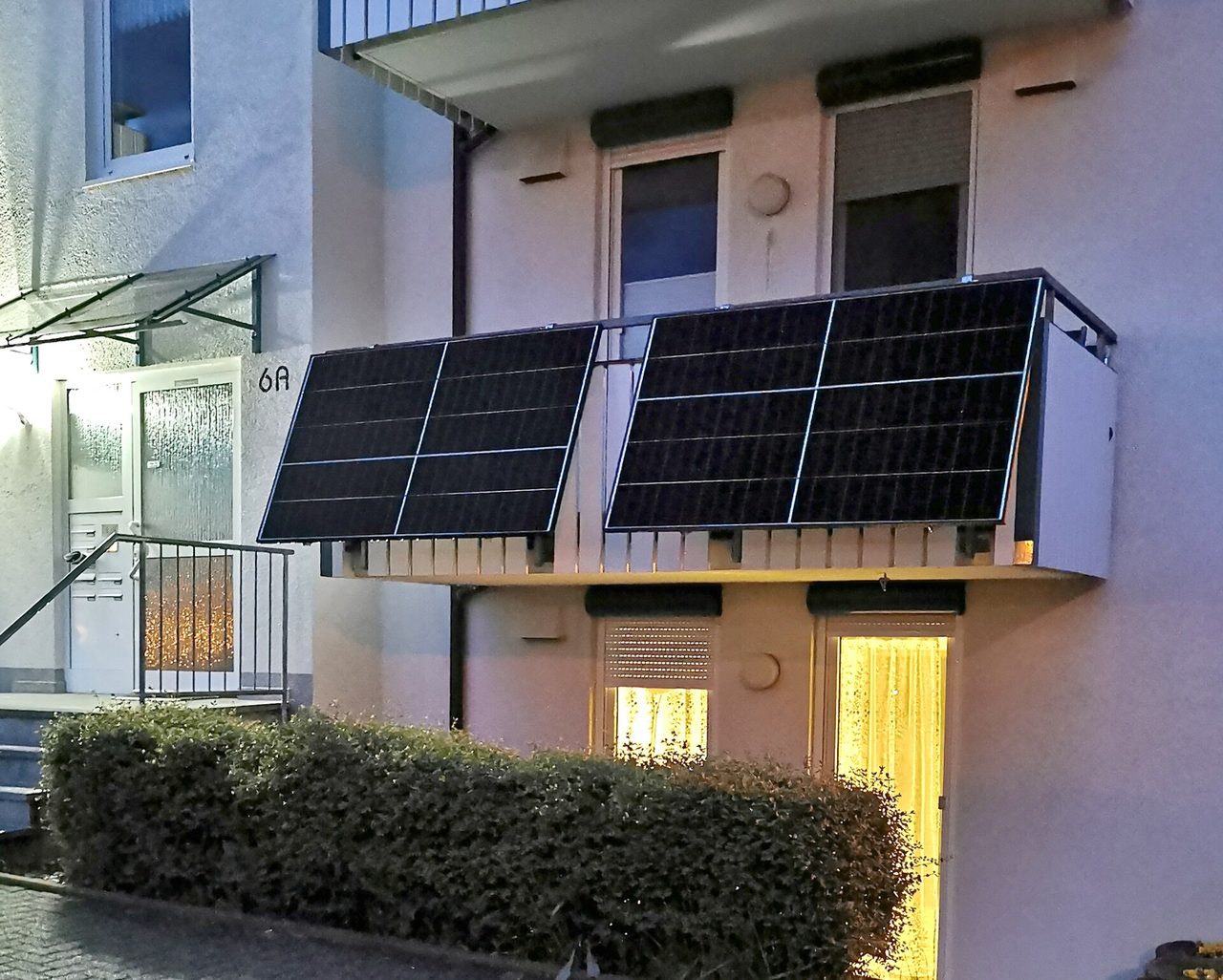
Photo: Triplec85 / CC BY-SA 4.0 · via Wikimedia Commons
Plug-In Solar Is Now Legal in Ten States: What the Savings Actually Look Like
Ten states let you plug solar into a wall outlet
Plug-in solar — also called balcony or backyard solar — is a kit of one to three panels, a microinverter and a cable that feeds a home through an ordinary 120-volt outlet. No roof, no electrician, no interconnection agreement. As of October 2026, ten states have passed dedicated laws allowing it: Utah, Virginia, Colorado, Vermont, New Hampshire, Maine, Maryland, Connecticut, New Jersey and California, according to ZDNET.
Utah moved first, California closed the set
The wave started in Utah after Republican state Rep. Ray Ward read about Germany's balcony solar boom and filed HB 340. It took effect on May 7, 2025, passed unanimously and became the first such law in the country (Stateline). California became the tenth: SB 868, the Plug and Play Solar Act, was signed by Gov. Gavin Newsom on September 30 and takes effect January 1, 2027 (Engadget, KQED). New Jersey's Garden State Balcony Solar Act was signed September 1 but does not start until March 1, 2027 (Gothamist).
Output is capped at 1,200 watts almost everywhere
Most laws cap a home at 1,200 watts AC — enough for a refrigerator and a few small appliances, far below the 6,000-plus watts of a rooftop array (Yahoo Tech). Colorado is the outlier at 1,920 watts (Plugshine). California requires UL or equivalent certification and registration, and lets utilities ask for an online notification form listing address, make, model and size — but that form cannot work as an approval, and no fees are allowed.
New Jersey's law overrides landlords and HOAs
New Jersey bars landlords, HOAs and municipalities from banning the devices or demanding permits; renters give 14 days' written notice with the proposed location (Becker, WPST). Vermont is the only state so far that limits when a landlord can say no; Virginia (landlords with more than four units) and Colorado add renter and HOA rules on January 1, 2027 (Can I Plug In Solar). That matters in New Jersey, where about 40% of residents rent apartments and Environment New Jersey estimates nearly 70% of residents cannot go solar the normal way.
Kits cost $300 to $2,200; rooftop averages $21,178
Current kits run about $300 to $2,200 depending on size (LAist/KQED), with battery-bundled systems around $1,600 to $2,400 (Greencore). A California rooftop system averages $21,178 for 8.41 kilowatts before incentives, per EnergySage data.
Expect roughly $85 to $520 a year, rate dependent
At the U.S. residential average of 18.34 cents per kilowatt-hour, a flat-mounted 800-watt kit saves about $137.73 a year, or 751 kWh (Plug and Sun). Modeling is sunnier in high-rate states: a south-facing railing setup in California produces about 896 kWh and saves $208 a year, while tilting it toward the sun reaches 1,504 kWh and $349 a year, a payback of about 4.8 years at 33.2 cents (Station Arena). Plugshine estimates $378 a year for California. Industry guidance ranges from $85 to $520 a year for an 800-watt system, with payback under three years at high rates and beyond ten years at low ones (On Demand Instant Solar).
Germany has a million systems and wrote the template
Germany is where the product grew up: the Federal Network Agency counts more than one million registered balcony systems totaling over 2 gigawatts, the equivalent of a large power plant (Stateline), with about 430,000 new registrations in 2025 alone (Bundesnetzagentur, via Brightvolt). Since May 2024 German rules allow up to 2 kilowatts of panels while limiting output at the plug to 800 watts, with no electrician or permit required (Wind Works).
The 30% federal credit is gone, so states are the only door
Bright Saver, the nonprofit driving the bills, aims for 60 million balcony panels by 2035 and sold thousands of its sub-$300 system in weeks (PV Tech). But the 30% federal residential clean energy credit, Section 25D, no longer applies to systems completed after December 31, 2025, so a 2026 installation gets nothing from Washington.
Utilities settled for registration; safety rules lag
California's largest investor-owned utilities opposed SB 868 on safety grounds, while Southern California Edison moved to neutral once registration language was added; a utility spokesman said operators need to know what customers are plugging in so they can track anything feeding back onto the grid (WebProNews). Certification is young: the UL 3700 standard was published in January 2026 and only one plug-in product holds it so far, and the next National Electrical Code revision is not due until 2029 (Stateline). Germany shows the risk: courts there this year upheld bans on plug-and-play solar batteries unless suppliers prove safety, citing overload risk above 960 watts (Indielux).
New York is one signature away; two dozen states wait for 2027
About two dozen states are still working: Massachusetts bills H.5175 and S3143 are in committee, and New York's SUNNY Act, passed in May with the same 1,200-watt cap, awaits Gov. Kathy Hochul — the New York Daily News editorialized for a signature on October 18. Thirty-five states introduced plug-in solar bills in 2026, and 21 are expected to try again in 2027 (Bright Saver, R Street).
Sources
- ZDNET: Plug-in solar is legal in these 10 states now
- Stateline: States OK solar panels for balconies
- Engadget: Balcony Solar Installations Are Now Legal In America's Most Populous State
- KQED: California Officially Legalizes Balcony Solar
- Gothamist: New Jersey lets renters and condo owners plug in solar