Cambridge Tested 39 Sweeteners — Gut Bacteria Did Not Stay Neutral
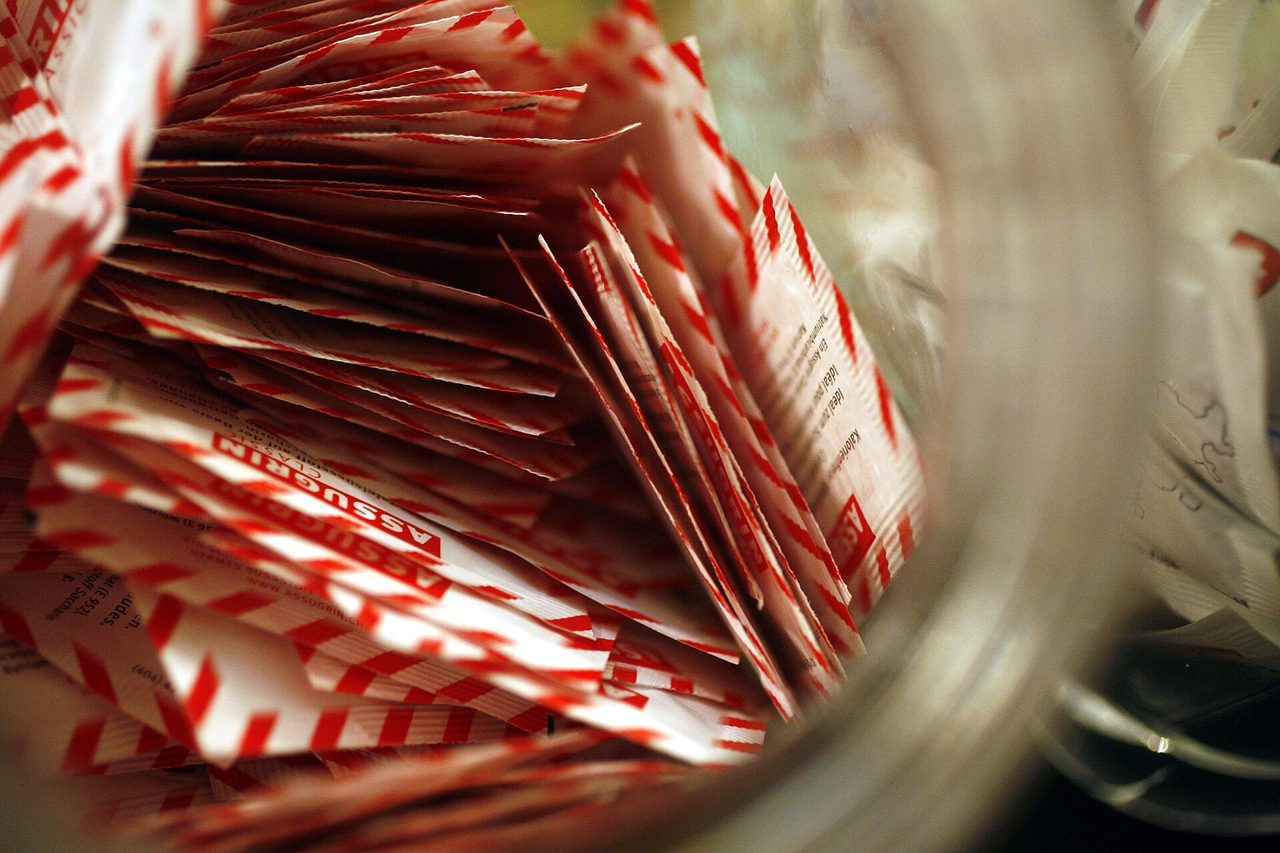
Photo: Rama / CC BY-SA 2.0 fr · via Wikimedia Commons
Cambridge Tested 39 Sweeteners — Gut Bacteria Did Not Stay Neutral
Researchers at the MRC Toxicology Unit at the University of Cambridge put 39 sweeteners used by the food and beverage industry up against 25 strains of gut bacteria representing a healthy human microbiome. The study, "Common xenobiotics modulate gut microbial responses to low-calorie sweeteners in vitro," was published in Molecular Systems Biology on June 25, 2026. Lead author Sonja Blasche and senior author Kiran Patil reached a blunt conclusion: sweeteners do not simply pass through the gut.
A petri-dish sweep of 39 sweeteners
The team tested 39 commercially used sweeteners — aspartame, saccharin, sucralose, acesulfame potassium, stevia compounds, monk fruit (mogroside V), erythritol, xylitol and ordinary table sugar (sucrose) among them — one at a time against 25 gut bacterial strains.
Roughly three-quarters changed bacterial growth
About three-quarters of the sweeteners altered the growth of at least one tested strain; by The Epoch Times' count, 26 of the 39 did. Isosteviol, a compound that can form when steviol glycosides break down under certain processing conditions, affected four bacterial species — suppressing three and boosting one — more than any other sweetener in the panel. How much isosteviol people actually ingest through food remains unclear.
The authors: sweeteners are not inert additives
"Sweeteners are often marketed as metabolically neutral, but our study challenges this idea," Blasche said. "We found that they can directly affect gut bacteria, particularly when mixed with other compounds such as medication and food additives. These common combinations could have unintended effects on our gut microbiome." She told The Epoch Times it may be more useful to view sweeteners "as biologically active compounds, not as inert additives that are automatically safer than sugar."
Pairing sweeteners with drugs and additives
The team then combined sweeteners with caffeine, vanillin, the sweetener advantame and eight widely used drugs — about 3,900 sweetener-compound-bacteria combinations in all — and found 102 significant interactions: 34 strengthened the sweetener's effect on bacteria, while 68 weakened or cancelled it.
Isosteviol plus duloxetine hit hardest
The sharpest result paired isosteviol with duloxetine, an antidepressant taken by more than 4.2 million people in the United States as of 2023. Together the two compounds strongly suppressed Roseburia intestinalis, linked to blood sugar regulation and protection against gut inflammation, and Parabacteroides merdae, a common resident of healthy guts. In a synthetic 25-species community built to mimic the gut, the pair reduced microbial diversity, increased toxicity toward host cells and interfered with cells involved in inflammation and immune response. Earlier Cambridge work showed some gut bacteria take up and store duloxetine; the new study found duloxetine changed how bacteria took up isosteviol, which helps explain why the two hit harder together.
Not every combination is bad news
Saccharin and vanillin cancelled each other out against one Bifidobacterium strain. Some sweeteners affected no bacteria at all, while a few affected several.
Who should pay attention
People taking duloxetine or similar drugs, and anyone who leans on zero-sugar drinks, gum and tabletop packets. The researchers stress this is in-vitro work — in a lab, not in the body — and no reason to stop a prescription or purge sweeteners. "Additional robust evidence is required," independent expert Dr Neill told FoodNavigator, "particularly from well-designed, long-term, randomised controlled trials."
Regulators never tested these pairings
Safety reviews focus on toxicity and cancer risk; effects on gut bacteria and sweetener-drug combinations are not part of standard approval testing. The WHO's 2023 guideline separately advises against using non-sugar sweeteners for weight control, citing a lack of long-term benefit.
What comes next
"Our study suggests that artificial sweeteners don't just pass through the body passively — they can interact with gut microbes, and these effects can be amplified or altered by other substances like medications," Patil said. Dose, real-world exposure and individual differences still stand between a petri dish and a person.
Sources
- ScienceDaily: Scientists tested 39 sweeteners and uncovered surprising gut effects
- The Epoch Times: How Do Common Sweeteners Affect the Gut Microbiome?
- FoodNavigator: Could sweeteners disrupt the gut microbiome?
- Scientific Inquirer: Sweeteners shown to slow growth of important gut bacteria in lab tests
- HealthcareOnTime: Should You Quit Sweeteners on Antidepressants?