Type B Blood Tied to a Modest Rise in Type 2 Diabetes Risk
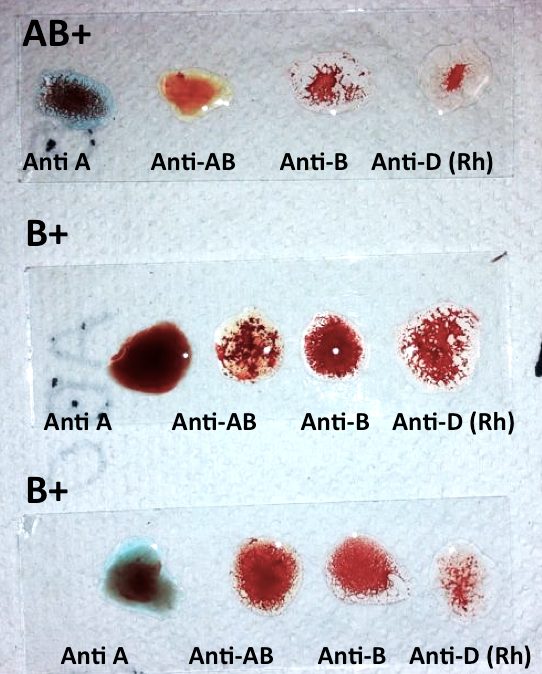
Photo: David Arqueas / CC BY-SA 4.0 · via Wikimedia Commons
Type B Blood Tied to a Modest Rise in Type 2 Diabetes Risk
A 28 percent edge for type B
People with blood type B — positive or negative — appear to run a slightly higher risk of developing type 2 diabetes than people with non-B blood types. The figure most reports settle on is about 28 percent on average. It comes not from a single new blood test but from a 2024 review that pooled and recalculated previously published systematic reviews. ScienceAlert, reporting the findings on October 18, called the effect "relatively small" and stressed that it is far outweighed by diet, weight and lifestyle.
Fifty-one reviews, one clear signal
According to Newsy Today and ScienceAlert, a team at Shengjing Hospital of China Medical University, led by a researcher named Liu, searched PubMed, Web of Science, Embase, Scopus, the Cochrane Library and several regional databases from inception to February 16, 2024. They ended up with 51 systematic reviews containing meta-analyses, covering roughly 270 associations between ABO and Rh blood groups and a wide range of health outcomes. Each association was recalculated, and findings skewed by small studies or unusually concentrated positive results were weeded out.
Only one link cleared the bar
Of those roughly 270 associations, exactly one — blood group B and type 2 diabetes — was graded "convincing." Another 18 were labelled "promising" but failed to meet every criterion. When the team applied the GRADE framework for certainty of evidence, no association reached the top level. In plain terms: the direction of the signal looks real, the strength does not. This describes a statistical tendency in populations, not a verdict on any individual.
A Saudi cohort adds a second data point
A separate study from Saudi Arabia points the same way. According to ScienMag, researchers at King Abdulaziz Medical City in Riyadh typed the ABO and Rh blood groups of 666 people — 350 with type 2 diabetes and 316 healthy blood donors as controls — between January 2019 and December 2023. The paper appeared in BMC Endocrine Disorders. ABO distribution differed significantly between the two groups (p=0.0005). In multivariable regression, only phenotype B was significantly linked to higher odds of diabetes (p=0.017), while group O was linked to lower odds (p<0.001). No association turned up for Rh.
Type O looks protected, cautiously
In that Saudi sample, group O made up 56.2 percent of controls but only 43.8 percent of patients with diabetes, which the authors read as a protective association. The caveats are substantial: it is a single-centre cross-sectional study with fewer than 700 participants, and the authors themselves wrote that the findings need validation in larger prospective studies and that the mechanisms remain unexplored. Treating it as permission for people with type O to ignore their diet would be a thorough misreading.
No mechanism yet — gut microbes are the leading guess
The 2024 review did not address mechanism. ScienceAlert and Total News both note that the researchers did not examine what might drive the higher risk in people with type B. A 2025 study raised the possibility that the gut microbiome is involved, but its authors said further work is needed before any causal pathway can be confirmed. TakeToNews adds that the review floated effects on gut microbial composition as a hypothesis without offering direct evidence for it.
Smaller than meat or a sofa
Put 28 percent in context. ScienceAlert reports that an extra 50 grams of processed meat a day is associated with roughly a 37 percent higher risk of type 2 diabetes, that a sedentary lifestyle is associated with about a 112 percent increase, and that being overweight is one of the strongest risk factors known. Blood type is a variable nobody can change; those three are variables people can. For someone who already carries a family history, excess weight or high blood pressure, the extra 28 percent is more likely to matter.
Who should actually pay attention
Type B is not rare in East Asia. A summary drawing on U.S. National Library of Medicine data puts group B at about a quarter of Asian populations, well above the roughly 9 percent seen in white populations. That is still no reason to seek blood-type-specific screening. According to readings of the American Diabetes Association's 2026 standards published by healthnewspapers and themetabolicjournal, screening is triggered by age — universal testing from 35 — and by excess weight plus at least one additional risk factor. Blood type is not on the list. The International Diabetes Federation's 11th Diabetes Atlas puts global diabetes at about 589 million adults aged 20 to 79 in 2024, or 11.1 percent of that age group, rising to a projected 853 million by 2050.
Three caveats before you worry
First, 28 percent is a relative risk, not an absolute rate of disease — a point TakeToNews makes explicitly. Second, the underlying data are observational, which can show that two things occur together but cannot establish that one causes the other. Third, an umbrella review is only as good as the studies beneath it, and no association in this one earned the highest certainty grade. For an individual with type B blood, the sensible response is to keep an eye on blood sugar, not to panic.
Prospective cohorts and mechanism studies are next
The authors' own next step is clear: larger prospective cohort studies, plus work on mechanism. Until that mechanism is understood, blood type will not enter any clinical risk score. What remains actionable is familiar — keep weight in check, get enough moderate activity each week, cut back on processed meat, and follow screening advice after 35. Blood type is one piece at the edge of the puzzle, not the picture.
Sources
- ScienceAlert: One Blood Type Seems to Carry a Higher Risk of Type 2 Diabetes
- Yahoo Health: One Blood Type Seems to Carry a Higher Risk of Type 2 Diabetes
- ScienMag: Blood Type May Shape Diabetes Risk: Group B Linked to Higher Odds, Group O to Protection
- Newsy Today: Blood Type B Linked to Higher Risk of Type 2 Diabetes
- Total News: One blood type appears to be associated with an increased risk of type 2 diabetes