Gold Climbs Back Above $4,200 as Oil Slips and Warsh Keeps His Cards Hidden
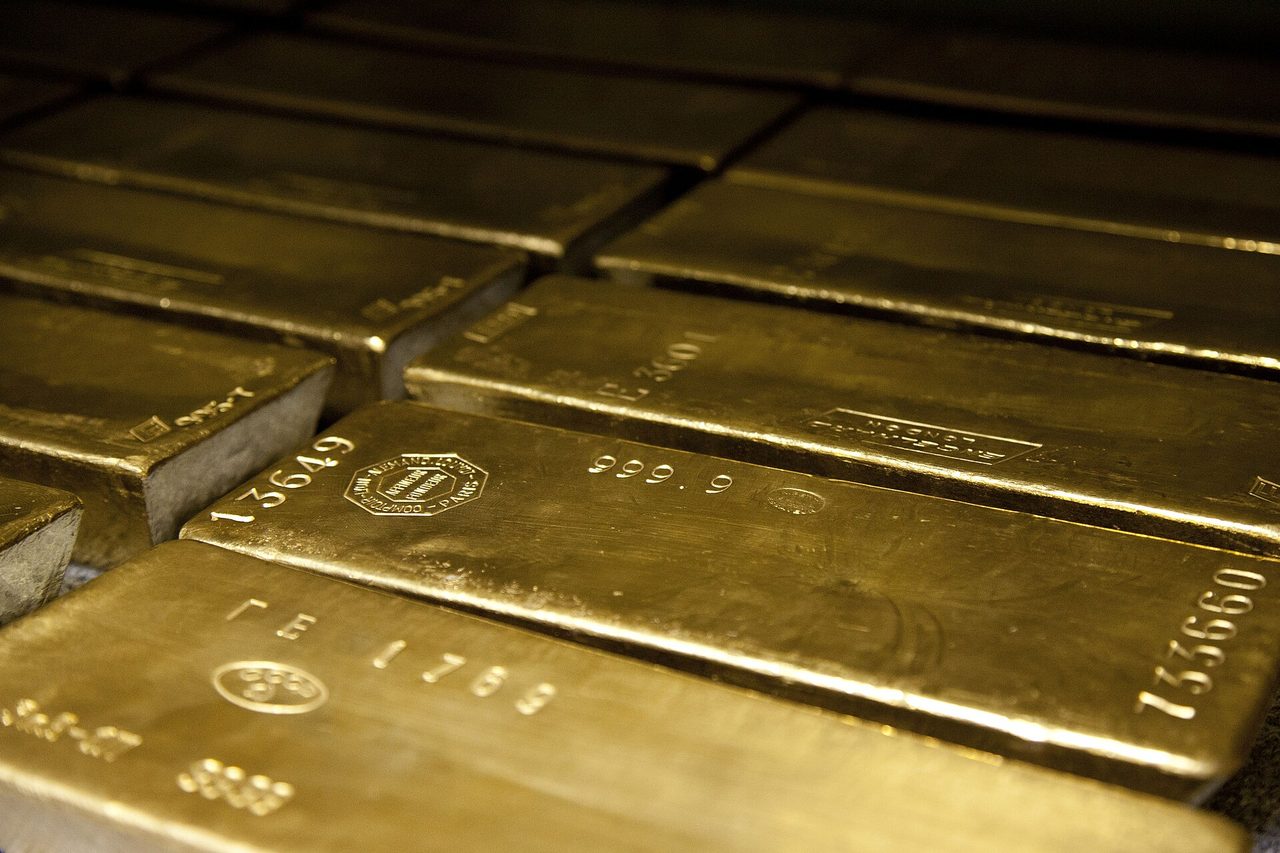
Photo: Chepry (Andrzej Barabasz) / CC BY-SA 4.0 · via Wikimedia Commons
Gold Climbs Back Above $4,200 as Oil Slips and Warsh Keeps His Cards Hidden
A modest bid, a familiar ceiling
Gold started the week with a small but symbolic gain. Spot bullion rose 0.3% to $4,175.60 an ounce by 02:59 GMT, while U.S. December futures added 0.4% to $4,196.40, according to Reuters. By 07:41 GMT the spot price had extended its advance to 0.4%, trading at $4,181.84, and futures were up 0.5% at $4,202.70. SMM put the most-active COMEX contract 0.57% higher at $4,204.9 by early afternoon in Asia, and AzerNews led its coverage with a round number: gold at $4,205. The move followed a 0.7% weekly decline, which helps explain the tone. This is a repair, not a breakout.
Oil retreats from a five-month high
The first prop came from energy markets. Brent crude fell 1.30%, or $1.43, to $108.43 a barrel, and West Texas Intermediate slipped 0.52%, or 53 cents, to $100.88, Reuters reported. Friday's settlement of $109.86 had been Brent's highest since May 19. The trigger was political rather than commercial: President Donald Trump waived the sanctions and tariffs on buyers of Russian oil that were due to take effect on October 18 under the Graham Act, a step that could allow more Russian fuel into global markets. Secretary of State Marco Rubio said the administration would take up to 60 days to assess the effect. Softer crude matters for gold because energy prices feed headline inflation, and inflation feeds rate expectations.
Warsh declines to pre-judge October
The second prop was monetary. Speaking in Bangkok alongside IMF Managing Director Kristalina Georgieva, Federal Reserve Chair Kevin Warsh refused to signal his intentions for the remaining meetings of the year. "I don't prejudge meetings," he said, adding that he did not believe in stating in advance what he might do. He restated that the 2% inflation objective is a firm, fixed target, but gave hawks no fresh ammunition after two hot inflation prints. The dollar index, which had fallen 0.7% to 101.82 on Friday, was little changed near 101.80 on Monday, according to Investing.com. A softer dollar makes dollar-priced bullion cheaper for overseas buyers, but the bigger effect was on rate expectations.
Hike odds fall from 28% to about 15%
That shift is visible in the futures market. CME's FedWatch tool showed traders pricing a 28% chance of a quarter-point hike this month on Friday, according to CNBC. By Monday, Reuters put the implied probability at about 15%, with December still near 89% to 92%. Goldman Sachs economists concluded that the FOMC is set to pause in October and to deliver a final hike in December, Business Times reported. For an asset that pays no interest, a lower probability of near-term tightening is a direct relief: the opportunity cost of holding gold falls with every basis point of hike expectation that is priced out.
Silver and platinum outrun the yellow metal
The industrial demand story — autocatalysts and hydrogen expectations — gives those metals a second engine that gold does not have, which is why they outperformed on a day driven by macro headlines.
Inflation is still the binding constraint
The bullish case has a hard limit. The Fed raised rates by a quarter point to 3.75%–4.00% on September 20, its first increase since 2023, and September core CPI and core PPI both came in above expectations, OANDA senior analyst Kelvin Wong noted. Cleveland Fed President Beth Hammack has warned that a notable deterioration in inflation expectations could require more aggressive tightening. Gold has consequently been trapped between $4,075 and $4,221, with $4,200 acting as a ceiling that sellers defend and buyers keep testing.
Geopolitics keeps a floor under prices
The Middle East has not gone quiet. An Iranian official said on Sunday that Tehran had prepared a fresh retaliation plan in case of another U.S.-Israeli attack, and maritime authorities logged several attacks on commercial ships near the Strait of Hormuz, TradingPedia reported. Friction between Russia and Ukraine remains unresolved. Any renewed spike in crude would light both the inflation fuse and the safe-haven fuse at once, which is why gold keeps finding buyers on dips even when the rate picture is unfriendly.
Record ETF holdings carry the load
Investment demand, not jewellery or coin buyers, is doing the heavy lifting. World Gold Council data show global gold ETF holdings rose 67 tonnes in September to a record 4,256 tonnes, with roughly $10 billion of inflows during the month, even as prices fell, Yahoo Finance reported. UK-listed funds attracted $7.5 billion in the third quarter, their strongest quarter on record. Central bank buying has become less of a marginal driver, but it remains the structural floor beneath a market where real yields are still close to 2.9%.
Two things to watch: the Fed and crude
The near term comes down to the October meeting and the direction of oil. Goldman Sachs keeps its end-2027 target at $5,400 an ounce, but warns that three more hikes could push gold toward $4,070 before a recovery to around $4,200 by the end of 2026, Investing.com reported. Forbes offers the longer perspective: bullion is still roughly a quarter below January's record above $5,600. On that measure, Monday's gain is a rebound inside a correction, not the start of a new rally.
Sources
- The Wall Street Journal
- Reuters
- Bloomberg
- CNBC
- Investing.com