Galaxy S27 May Break Samsung's February Habit With a January Launch
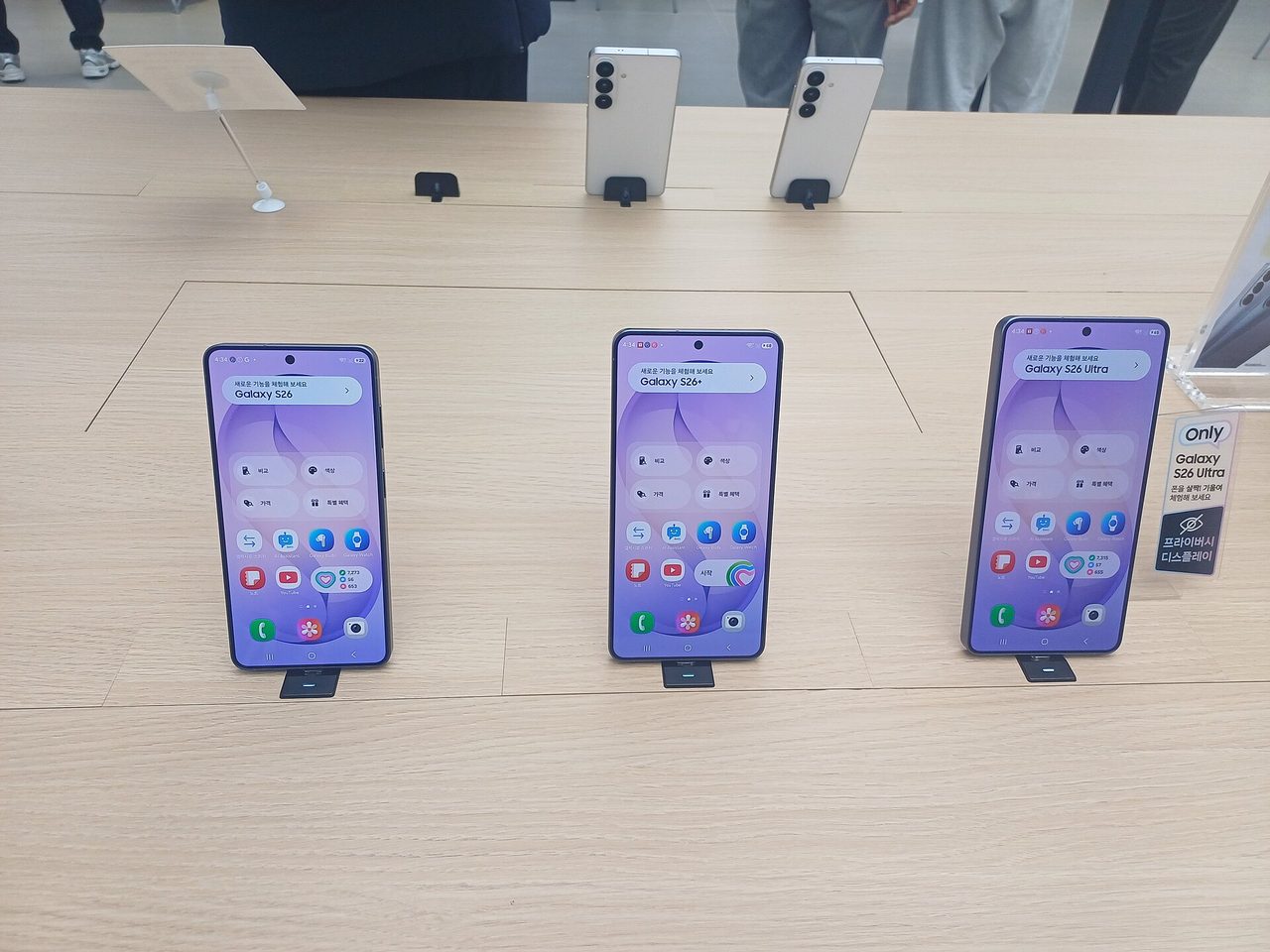
Photo: Striker9498 / CC0 · via Wikimedia Commons
Galaxy S27 May Break Samsung's February Habit With a January Launch
A January window, with February as the backstop
Samsung's next flagship lineup is being scheduled for a January 2027 unveiling, according to the Korean tipster Lanzuk, who posts on Naver as yeux1122. That would put the Galaxy S27 series a few weeks ahead of the company's recent cadence, with February described as the latest the launch could slip. Android Authority, SamMobile, SammyGuru, Notebookcheck and Digit all carried the same claim on October 19, and all of them framed it the same way: January is the plan, February is the cushion.
Samsung has said nothing on the record
The company has not confirmed a date, a model count, a chipset or a price. Everything here comes from tipsters and supply-chain reporting, which is normal for a phone that is still roughly three months from its announcement. Samsung has never pre-announced an Unpacked window before invitations go out.
Parts are locked, and the line starts in December
The leak says component selection is finished and the project has moved into schedule management, usually the last internal gate before mass production. Korean business daily MK reported on October 12 that Samsung Display is already running OLED panels for the S27 and that Samsung Electronics will begin finished-product production in December. ZDNet Korea said the first parts went into production last month, with a full four-model ramp set for mid-October.
Panel orders point to a bigger generation
Samsung Display is targeting 47 million to 48 million AMOLED panels for the S27 family in 2027, roughly 10 percent above the "low 40 million" target attached to the S26 generation, per ZDNet Korea. Most of the increase traces to the new Pro model: Samsung reportedly asked for 2 million to 3 million Pro panels this year and another 4 million to 5 million in 2027. Panel scheduling moving in step with assembly is the most concrete evidence behind the early-launch talk.
Four phones, four sizes
The lineup grows from three models to four: Galaxy S27, S27+, S27 Pro and S27 Ultra, internally labelled ON1 through ON4. ETNews puts the screens at 6.27, 6.66, 6.47 and 6.89 inches respectively. The Pro is the new tier, described in Korean coverage as an Ultra-flavoured device without the S Pen, filling the price gap between the Plus and the Ultra.
The chip split is still unresolved
Exynos 2700 has entered mass production, according to The Elec. The S27, S27+ and S27 Pro will use it in Korea and Europe and Qualcomm's Snapdragon 8 Elite Extreme Gen 6 in the US and China. The Ultra is the open question: GSMArena reported on October 11 that a Qualcomm-only Ultra was the likeliest outcome, then reported on October 16 that overheating issues with the Snapdragon part had pushed Samsung to reconsider Exynos as a fallback.
Memory prices are the real risk
Notebookcheck flagged the constraint that could undo the whole schedule: LPDDR6 memory and UFS 5.0 storage are scarce and expensive in the current DRAM crunch, and a shortfall would push the event back to February. Pricing leaks reflect the same pressure. An October 8 round of numbers put the four models at $899, $1,099, $1,299 and $1,399 in the US; on October 14 Android Headlines published a revised set at $999, $1,199, $1,399 and $1,499, each $100 higher.
Apple's calendar is the reason
Timing is not only a manufacturing question. SamMobile says Samsung is aligning the launch with rival release schedules, an apparent reference to Apple moving part of the iPhone 18 family into the first half of the year. ZDNet Korea makes the same point: Apple has shifted from one annual cycle to two, so Samsung needs to hold the premium shelf in the first half rather than cede it.
Who feels the change
Buyers get an earlier upgrade window and, probably, steeper S26 discounts before it opens — offset by more expensive storage tiers on the new phones. Suppliers have to deliver in the fourth quarter instead of the first, and a single late component cuts into launch inventory. Carriers and retailers would move their early-year marketing a month forward.
What to watch in December
Three checkpoints settle it: whether assembly actually starts in December, when the S27 appears in China's 3C and India's BIS certification databases, and when Unpacked invitations go out, historically about a month ahead. If mid-December passes quietly, treat the January date with suspicion. Final pricing waits on memory contract negotiations.
Sources
- Android Authority
- SamMobile
- SammyGuru
- Notebookcheck
- Digit