China's AI Export Boom Lifts Growth to 4.5% as Consumers Hold Back
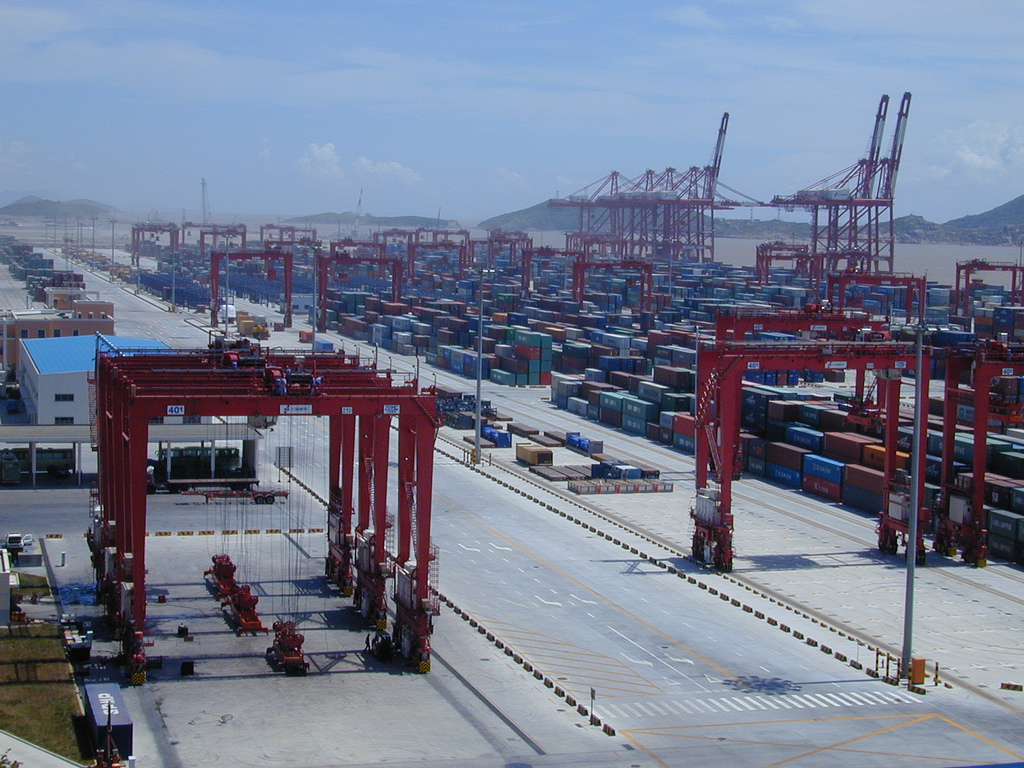
Photo: The original uploader was Alex Needham at English Wikipedia. / Public domain · via Wikimedia Commons
China's AI Export Boom Lifts Growth to 4.5% as Consumers Hold Back
Growth rebounds to 4.5%, beating forecasts
China's economy grew 4.5% year on year in the third quarter, the National Bureau of Statistics said on Monday, beating the 4.4% forecast in a Reuters poll and recovering from a three-year low of 4.3% in April to June. On a quarterly basis, growth came in at 1.2%, up from 0.9%. For January to September the economy expanded 4.6% — inside Beijing's 4.5% to 5% annual target, but at its lower end.
The statistics bureau points to "new growth drivers"
Mao Shengyong, deputy head of the NBS, said new growth drivers — high-end manufacturing, the digital economy and modern services — contributed more than 40% of growth in the first three quarters. The framing puts the emphasis on industrial upgrading rather than on consumption and investment, which remain the weak spots.
Exports did the heavy lifting: a 36.3% September jump
Customs data showed exports rose 36.3% from a year earlier in September to $447.18bn, the fastest pace since early 2021, with shipments to the United States up 39.6%. The January-September surplus reached $938.1bn, against $875.1bn a year earlier, putting China on course to beat last year's record of roughly $1.2tn.
Chip exports doubled in value, barely moved in volume
Integrated circuit exports surged 136% year on year in September to about $45bn, while volumes rose just 1% to 32.7bn units. Almost the entire increase came from prices: a global scramble for memory chips to power AI data centres has driven up quotes. In the first nine months, memory imports rose 150% and IC imports 56.6%.
Factories and shops both firmed
Retail sales rose 1.1% in September, faster than August's 0.4% and the quickest since March. Industrial output grew 5.5%, a six-month high, and the surveyed urban unemployment rate edged down to 5.2%.
Property is still the biggest drag
Property development investment fell 20.6% in the first nine months, steeper than the 19.9% decline recorded in January to August. Home sales fell 13.7% and new construction starts 24.9%. New home prices slipped 0.1% month on month and 2.8% year on year, extending a decline that has run since June 2023. Fixed-asset investment fell 7.2% and infrastructure spending 4.2%. Youth unemployment for 16 to 24 year olds outside education stood at 18.9% in August.
A two-speed economy: hot factories, cold households
Economists have settled on a two-speed description: an export engine powered by AI hardware on one side, and stagnant household spending on the other. CNN noted that a five-year-old housing downturn continues to drag, with roughly 70% of Chinese household wealth tied up in property — a direct brake on consumption and a push toward higher savings.
The IMF and Goldman Sachs: support is too small
The IMF last week trimmed its 2026 China forecast to 4.5% from 4.6% and its 2027 projection to 4% from 4.1%, saying weak consumption and investment were only partly offset by strong exports. Krishna Srinivasan, the fund's Asia-Pacific director, called Beijing's recent support "quite limited in size and scope" and said far more fiscal stimulus is needed until the economy reflates, describing a country "teetering on deflation". Goldman Sachs chief China economist Hui Shan told Bloomberg Television to expect "not a whole lot — just enough to get to 4.5% growth". This year's budget sets the deficit at about 4% of GDP, or 5.89tn yuan, with general public budget spending projected to top 30tn yuan for the first time.
A record surplus invites trade friction
The September surplus widened to $133.5bn, a 20-month high. The European Union and China struck a 16-point interim trade arrangement in early October covering electric and plug-in hybrid vehicle imports, while Beijing keeps pressing Brussels to unblock exports of advanced chipmaking equipment. Another record annual surplus would sharpen disputes with both the EU and Washington.
Market reaction was muted, the currency was not
The 10-year government bond yield rose one basis point to 1.65%. The offshore yuan added 0.1% to 6.6829 per dollar and has gained more than 4% against the greenback this year, outpacing most Asian peers on the back of strong exports and the central bank's tolerance of a firmer currency.
What to watch next
The focus now is whether the fourth quarter can hold the target, and what the year-end Politburo meeting and Central Economic Work Conference signal on policy. The consensus is that without a genuine pickup in domestic demand, more fiscal support will be needed in 2027 — and that China's export leg leans ever harder on the AI cycle, and ever more exposed to retaliation from trading partners.
Sources
- BBC: China's economic growth picks up as AI boom boosts exports
- CNN: China GDP growth picks up thanks to global AI boom
- Reuters: China's economic growth accelerates to 4.5% in third quarter
- Al Jazeera: China's economy grows 4.5 percent in Q3, beating forecasts
- Xinhua: China's surveyed urban unemployment rate falls to 5.2 pct in September