Indonesia's Worst Rout Since 1998: MSCI Threat Pushes Jakarta to a Six-Year Low
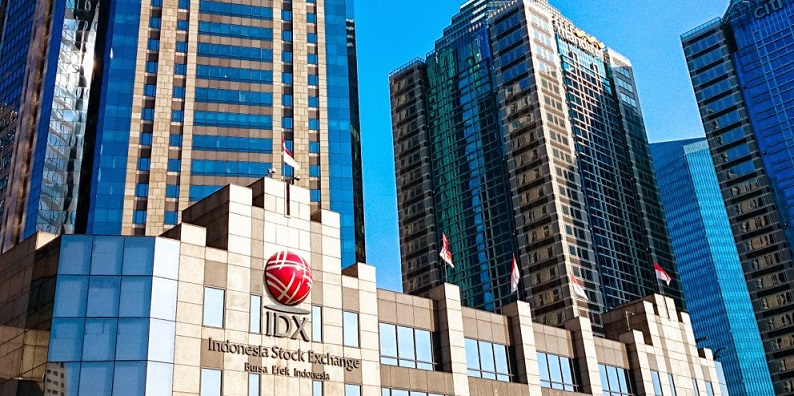
Photo: Bursa Efek Indonesia / CC BY-SA 4.0 · via Wikimedia Commons
Indonesia's Worst Rout Since 1998: MSCI Threat Pushes Jakarta to a Six-Year Low
A one-day fall of 11.57%
Indonesia's benchmark closed 11.57% lower at 5,185.10 on Friday, losing 678 points in its steepest single session since January 1998 and its weakest close in six years. The Jakarta Composite Index had opened 8.01% down, triggering a 30-minute trading halt. It has now shed roughly 43% in 2026, making it the world's worst-performing major market, after peaking at a record 9,134 in January. The rout continued on Monday, when the index fell more than 5% to its lowest level since October 2020. On Monday the exchange also narrowed the daily fall limit for shares priced above Rp 10 to 7% from 15%, and the index still opened down 4.31%.
What MSCI actually proposed
The trigger was an announcement from index provider MSCI. It said Indonesia's continued classification as an emerging market was "no longer appropriate" and launched a consultation on moving the country straight to "standalone" status, a harsher outcome than the frontier-market downgrade investors had been bracing for. Standalone markets sit outside both MSCI's emerging and frontier index families, placing Indonesia alongside markets such as Lebanon and Zimbabwe. Feedback runs until April 30, 2027, with a final decision due on or before June 30, 2027; MSCI may publish an interim read on investor responses.
Why: opacity, concentration, coordinated trading
MSCI's stated concerns are about market governance: opaque shareholding structures, highly concentrated ownership, suspected coordinated trading that distorted price information, and insider-dealing worries. Jakarta has tried to respond. The exchange cut the minimum share price to Rp 1 from Rp 50 in September and resumed short selling on October 1. It has not been enough. Indonesia's membership in MSCI's Indonesia index has shrunk from 74 stocks at the start of the year to 43 at the last rebalancing, while its weight in the MSCI Emerging Markets index fell from 1.13% to 0.46%.
The outflow math
Analysts are trying to size the forced selling. Goldman Sachs estimates a full removal could pull about $5.6 billion from passive funds, with another $2.7 billion at risk if FTSE Russell follows suit; in a separate estimate it put the worst case at up to $13 billion, against $7.8 billion in January. Mirae Asset Sekuritas Indonesia sees roughly $3 billion, and Citigroup puts it in the mid-single-digit billions. Citi argues standalone status would be "unambiguously worse" than a frontier downgrade, because there would be no frontier-index inflow to offset the exit of every remaining emerging-market-benchmarked passive dollar.
Rupiah, bonds and the central bank
The pressure has spread well beyond equities. The rupiah traded at 18,070 per dollar on Friday and 18,040 on Monday, close to June's record low of 18,190. A slide in government bonds pushed the 10-year yield to 7.4% from 7.169% on Friday. Bank Indonesia said it was intervening in the currency and bond markets, and pointed to foreign exchange reserves of $146.3 billion at the end of September.
A "big question mark" from Jakarta
Officials were visibly rattled. Coordinating economic minister Airlangga Hartarto said there was "a big question mark" over why MSCI did not raise the plan during this week's IMF-World Bank meetings in Bangkok, where Indonesian officials were present. He called for concrete reforms with a clear timeline and announced a high-level coordination meeting involving the government, the Financial System Stability Committee, the OJK, Bank Indonesia and the exchange. OJK said it respected the process and cited Indonesia's fundamentals; the Indonesia Stock Exchange said it respected MSCI's independence, would seek clarification, and admitted the announcement was "unexpected to us, causing a market panic." OJK also unveiled millions of dollars in sanctions against parties linked to alleged trading manipulation in three listed firms.
Who sells, and who gets hurt
The biggest lenders led the fall: Bank Central Asia, Bank Rakyat Indonesia and Bank Mandiri each dropped nearly 15% on Friday. Foreign investors sold a net Rp 3.34 trillion that session, according to the exchange, taking cumulative net selling for 2026 to Rp 88.19 trillion. If the downgrade proceeds, funds tracking emerging-market benchmarks become forced sellers, with no comparable frontier money stepping in. Rating agencies had already turned cautious: Moody's and Fitch both cut Indonesia's credit-rating outlook to negative this year, citing policymaking credibility. S&P Global's sovereign analyst said the MSCI warning is likely to cause additional outflows, but not of a magnitude that would materially increase financing costs.
Two dates to watch
For investors, the calendar now matters more than the sentiment. The consultation closes on April 30, 2027, and the verdict lands by June 30, 2027. FTSE Russell has already kept Indonesia in its secondary emerging-market group and off its watchlist, one of the few index signals running the other way. Until Indonesia's standing is clear, analysts expect foreign selling and currency and bond volatility to persist, with the JCI's 5,000 level now the line that matters most to confidence.
Sources
- CNBC: Indonesian stocks plunge to six-year low as MSCI downgrade fears mount
- Reuters: Panic selling hits Indonesian markets on MSCI expulsion threat
- Bloomberg: Indonesian Stocks Tumble to Lowest Since 2020 After MSCI Warning
- The Wall Street Journal: Indonesia Stocks Suffer Worst Day Since 1998 on MSCI Downgrade Warning
- NYT: Indonesian Stocks Plunge on Threat to Drop Market From Major Indexes