Chips Snap Historic Skid as Micron, Intel Reclaim Nearly $250 Billion
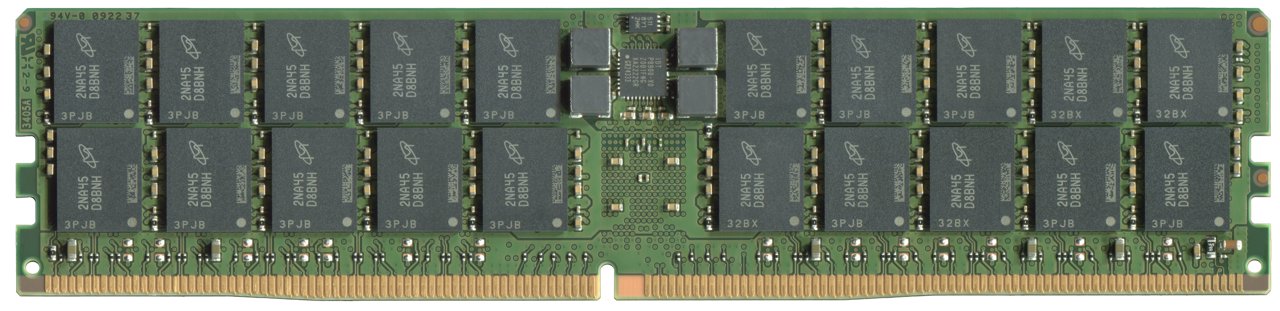
Photo: PantheraLeo1359531 / CC BY 4.0 · via Wikimedia Commons
Chips Snap Historic Skid as Micron, Intel Reclaim Nearly $250 Billion
A $250 Billion Bounce in 60 Chip Stocks
Chip stocks staged a sharp premarket rebound on Oct. 19 after one of the worst routs in years. A Yahoo Finance basket of 60 chip-related stocks recovered nearly $250 billion in market value, with gains spanning memory makers, designers and equipment suppliers. Micron and Intel each rose more than 2%, while SanDisk jumped nearly 5%. Advanced Micro Devices, Nvidia and Western Digital joined the move. Yahoo Finance featured the snapback as its Chart of the Day because the strength was so concentrated in semiconductors while most of Wall Street fell.
Futures Rise, but Breadth Stays Narrow
The broader market did not follow chips higher in lockstep. Bloomberg reported Nasdaq 100 futures up about 1.0% and S&P 500 futures up about 0.4% to 0.5% in early New York trading. One market recap put the Nasdaq gain at 0.9%, with fewer than half of U.S. stocks rising. Intraday, AMD gained 4.7%, Micron rose 4.3%, Broadcom added 2.5% and Nvidia gained 0.8%, accounting for much of the index lift. The pattern underscored Monday's split: semiconductors up, most other stocks still struggling.
JPMorgan Upgrade Turns Intel Into the Rally Leader
Intel was among the top gainers. Reuters reported Intel up 4.2% in premarket trading after tumbling more than 14% the prior week. JPMorgan analyst Harlan Sur upgraded Intel to Neutral from Underweight, keeping an $85 price target, saying increasing agentic AI workloads, which are CPU-intensive, and very tight supply for leading-edge silicon should support positive earnings revisions. Yahoo Finance added that Intel disclosed an agreement for Tesla to use its forthcoming 14A process as a foundry customer, with its 18A output running ahead of internal targets. The combination of a valuation reset and a customer win helped reframe Intel after a 36% pullback from its June peak.
After a $2 Trillion Rout, Oversold Chips Get Rate Relief
The bounce followed an eight-session losing streak that wiped out about $2 trillion in market value, according to the Economic Times and Moneycontrol. The Philadelphia Semiconductor Index fell 11.4% last week, its biggest weekly drop since March 2025. Bloomberg said the benchmark was set to snap its longest losing streak in 18 years, while another recap put the PHLX close at 11,137.29 after eight straight declines, the longest run since October 2008. Reuters cited lower Treasury yields and easing crude prices as near-term support for the battered AI trade. The prior week, the Nasdaq Composite fell 4.48%, its worst week since late June to close at 26,140.03, the S&P 500 fell 1.95% and the Dow rose 0.67%. Analog names participated Monday, with Texas Instruments up 2.4%, Analog Devices up 2.9% and ON Semiconductor up 3%. The iShares Semiconductor ETF, the largest U.S. chip ETF, climbed 3.6% premarket after falling almost 12% the week before.
Earnings Will Test Whether AI Spending Still Pays
What comes next is earnings. Virginia Business cited LSEG data showing analysts expect S&P 500 third-quarter earnings to surge more than 30%, fueled largely by AI-related technology companies. The test is whether capital spending still converts into returns. TSMC, the world's largest contract chipmaker, reported third-quarter revenue of $46.7 billion, up 41% from a year earlier, with gross margin above 66%, yet its shares still fell with the sector. Market commentary pointed to hot inflation raising the odds of Federal Reserve rate hikes, plus doubts about debt-funded AI infrastructure and competition from China's ChangXin Memory Technologies. If Big Tech guides hold, Monday's oversold bounce could extend; if spending plans wobble, the $2 trillion selloff may prove to be a recalibration rather than a bottom.
Sources
- Yahoo Finance
- Bloomberg
- Reuters
- Moneycontrol
- Economic Times Manufacturing