Florida Judge Signs No-Bond Warrant for Raúl Castro Over 1996 Shootdown
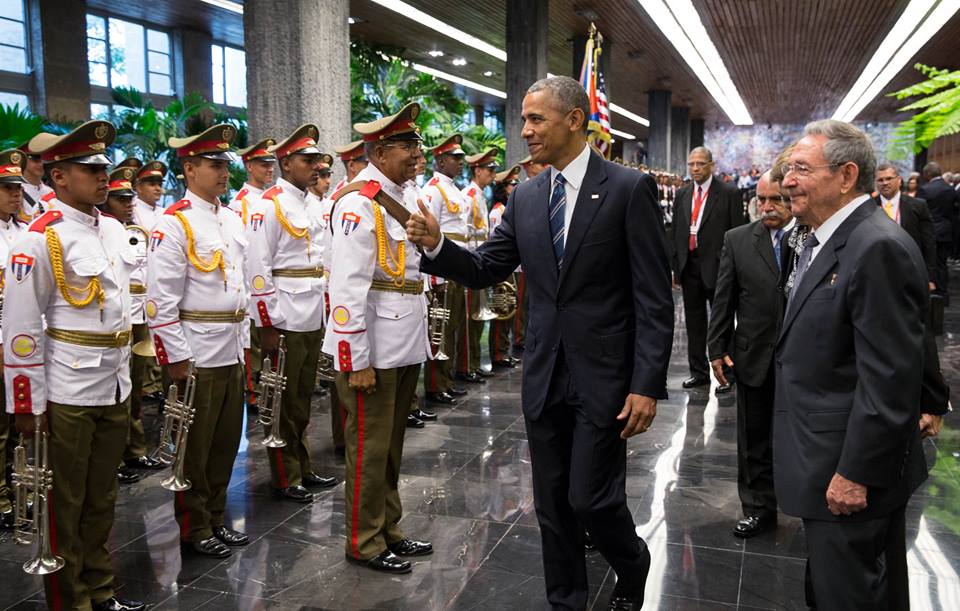
Photo: Pete Souza / Public domain · via Wikimedia Commons
Florida Judge Signs No-Bond Warrant for Raúl Castro Over 1996 Shootdown
Miami judge signs a no-bond warrant
A Miami-Dade County judge signed a warrant last Friday finding probable cause that former Cuban president Raúl Castro conspired to commit first-degree murder, and directing law enforcement to arrest him immediately. The warrant carries no bond and was approved by the chief judge of the 11th Judicial Circuit after an investigation by the Florida Department of Law Enforcement. The document was first reported by the Miami Herald and Tampa Bay Times.
The charge grows out of a 1996 shootdown
At issue is Feb. 24, 1996, when Cuban MiG fighters fired missiles at two unarmed Cessna 337 aircraft in the Florida Straits, destroying both planes. The aircraft belonged to Brothers to the Rescue, a Miami group that flew search missions for Cuban migrants lost at sea and, by the mid-1990s, had also dropped pro-democracy leaflets over Cuba. U.S. and United Nations investigations concluded the shootdown happened over international waters; Havana has said the flights entered Cuban waters.
Four men are named in the warrant
The warrant identifies the dead as Armando Alejandre Jr., Carlos Costa, Mario de la Peña and Pablo Morales. Reports note the first three were U.S. citizens and Morales was a legal permanent resident. "The investigation revealed evidence of a conspiracy to kill persons aboard BTTR aircraft," the warrant states. "The deaths of Carlos Costa, Pablo Morales, Mario de la Peña, and Armando Alejandre Jr. were the object of that conspiracy."
Investigators call Raúl Castro a final decision-maker
The warrant alleges that the 1996 plan by the Castro government's foreign intelligence service to shoot down the Brothers to the Rescue aircraft moved up the chain of command, with Raúl Castro and his brother, then-president Fidel Castro, as the ultimate decision-makers. Raúl Castro headed Cuba's armed forces in 1996, served as president from 2008 to 2018, and is now 95.
Two spies in Florida supply the jurisdictional hook
Florida claims jurisdiction based on two Cuban spies in Miami and Key West who "infiltrated" Brothers to the Rescue, surveilled the naval air station in Key West and transmitted the group's flight data back to Cuban authorities. Affidavits say the network told the operatives not to fly with the group between Feb. 24 and 27; one left Florida for Cuba on Feb. 23. Prosecutors argue those acts inside Florida are enough to establish a conspiracy there.
Washington already charged him once
This is Castro's second warrant over the same incident. Fox News Digital reports that federal prosecutors previously indicted Castro and three former Cuban military officials under the Aircraft Sabotage Act, a charge carrying a maximum penalty of life in prison or death. None of the defendants has been arrested. The state case is being described as a new front.
Havana calls the shootdown self-defense
The Cuban government has consistently rejected U.S. prosecutions, maintaining that Brothers to the Rescue repeatedly violated Cuban airspace and sovereignty and that its military acted in self-defense. With no extradition treaty between the United States and Cuba, Castro cannot currently be extradited — a point news reports raised as soon as the case surfaced.
Uthmeier announces at FIU on Monday
Florida Attorney General James Uthmeier is scheduled to announce the warrant at a Monday morning press conference at Florida International University. Initial reports said Gov. Ron DeSantis would appear alongside him; NBC6 and Telemundo 51 later clarified that Uthmeier alone is organizing and leading the event. Uthmeier announced a state-level criminal investigation into Castro's role in the 1996 episode in March.
Statewide prosecutors take the case
The warrant says Florida will seek Castro's full extradition if he is arrested outside the state, authorizing officials to pursue his return to Florida to face the felony charge if he is taken into custody in another U.S. jurisdiction. The attorney general's Office of Statewide Prosecution will assume jurisdiction over the multi-circuit conspiracy case.
A warrant with more symbolism than reach
For the foreseeable future, a 95-year-old Castro is unlikely to appear in a Florida courtroom: he is in Cuba, and there is no extradition arrangement. The warrant functions more as a legal and political gesture, pushing a 30-year-old case back onto Florida's judicial agenda and giving state officials their own mark on hard-line Cuba policy.
Sources
- NBC 6
- Fox News Digital
- Associated Press
- CubaHeadlines
- NewsFinale