Bangladesh's Measles Outbreak Has Killed 1,201 People, Almost All of Them Children
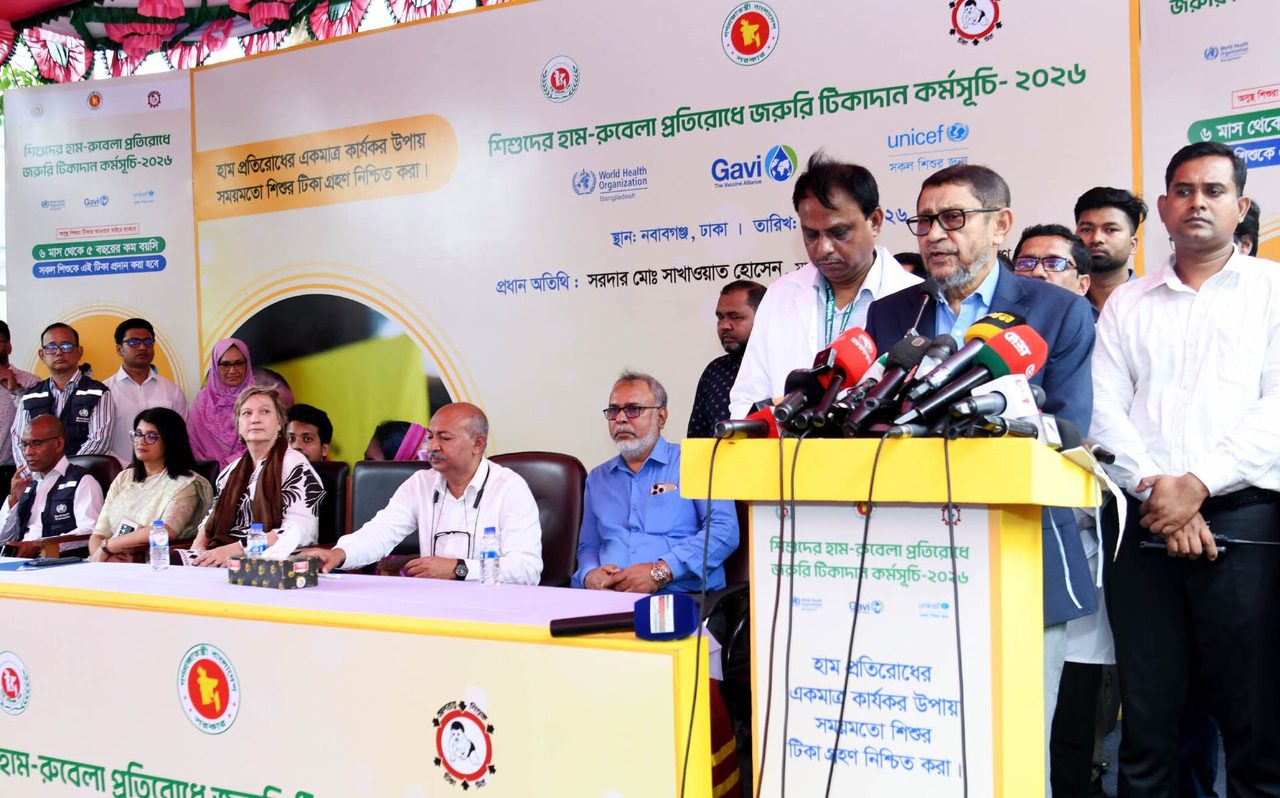
Photo: Press Information Department / Public domain · via Wikimedia Commons
Bangladesh's Measles Outbreak Has Killed 1,201 People, Almost All of Them Children
A preventable disease, back at national scale
Measles returned to Bangladesh in mid-March, spreading from dense urban wards and high-risk sub-districts until all 64 districts had reported cases by the end of June. By the morning of 19 October, the Directorate General of Health Services (DGHS) had logged 214,551 suspected cases since the outbreak began, including 1,307 in the previous 24 hours. In all of 2025, the country recorded 132 measles cases and no deaths.
The official count, and the official optimism
The DGHS splits its toll in two: 104 deaths laboratory-confirmed as measles, and 1,097 classified as deaths with measles-like symptoms, for a combined 1,201. The World Health Organization put the figure at 1,147 deaths and about 202,000 suspected cases between 15 March and 9 October, the most suspected cases reported by any country this year, with 94% of deaths among children under five. When the emergency vaccination drive began on 5 April, Health Minister Sardar Md Sakhawat Husain told reporters the situation was "under control" and there was "no reason for public panic." By September, Bangladesh was averaging 1,198 new cases a day, its highest daily figure since May. Former prime minister Sheikh Hasina called the deaths "negligence" and demanded an independent investigation into vaccine procurement and vaccination failures.
Coverage slipped below the herd-immunity line
WHO and UNICEF estimate that Bangladesh's first-dose measles coverage fell from 96% in 2024 to 90% in 2025, and second-dose coverage from 93% to 86% — both below the 95% threshold the agency says is needed to stop outbreaks. The country has held no nationwide supplementary campaign since 2020; a national measles-rubella drive planned for 2024 was cancelled, and stockouts were reported in 2024 and 2025. UNICEF found that 81% of cases were in children under five, 34% in infants under nine months, and 72% in children who had received no dose at all.
Villages where the vaccinators came after the funeral
Reuters interviewed 16 families in Sylhet in September. Eight said they had never seen a health worker offering vaccination; at least six said teams arrived only after a child in their community had died. Two-year-old Arman Hossain died in July, about 24 hours after he was admitted; his family sold its three-wheeled auto-rickshaw to pay for his care. His unvaccinated four-year-old sister survived. "They came only after I buried my son," said his father, Amin Mia, 26. Official records in Sylhet show 180 child deaths, and the 100-bed Shahid Shamsuddin Ahmed Hospital had 178 patients admitted on the day Reuters visited.
Almost all the dead are under five
Measles usually kills two or three people in every 1,000 cases, according to WHO, but malnutrition and delayed care push that ratio higher. At Dhaka's Infectious Diseases Hospital, 573 suspected measles patients were admitted in March 2026, against 69 in the same month a year earlier. In Cox's Bazar, an eight-bed isolation unit was handling 30 to 40 children at a time.
Dengue is competing for the same beds
Dengue has killed 348 people and put 112,400 in hospital this year, including 148 deaths in September, the deadliest month of 2026. The two outbreaks draw on the same clinicians, laboratories, beds and supplies. Public health specialists warn that shifting resources toward dengue can weaken routine childhood immunisation and prolong the wider emergency.
A catch-up campaign with a four-week lag
From 26 September to 31 October, the government is targeting 3.4 million children: 2.4 million previously missed and 1 million infants who have just turned six months old. About 18.5 million children have been vaccinated since the phased campaign began on 5 April. Mushtuq Husain, a public health expert, told The Daily Star that children need three to four weeks after vaccination to build immunity, so "the current wave of infections, hospitalisations and deaths may continue for at least another month."
Why the lesson travels
"This is a real warning to every country," said Mark Jit, a WHO vaccine adviser and professor at New York University's School of Global Public Health. Preventing an outbreak through vaccination, he argued, is cheaper and safer than responding to one: "The response will stop the outbreak eventually, but in the meantime, many will have had measles, and some will have died." The United States has confirmed 3,471 measles cases this year through 17 September, its worst year since elimination was declared in 2000, and could lose that status when the Pan American Health Organization reviews the data in November. Scientific American called Bangladesh's outbreak a cautionary tale for the United States. The virus has not changed; the ring of protection around it has.
Sources
- Reuters
- The Business Standard
- bdnews24
- NBC News
- Dawn