Halloween Candy Price Check: Walmart Wins on Price, Publix Wins on BOGOs
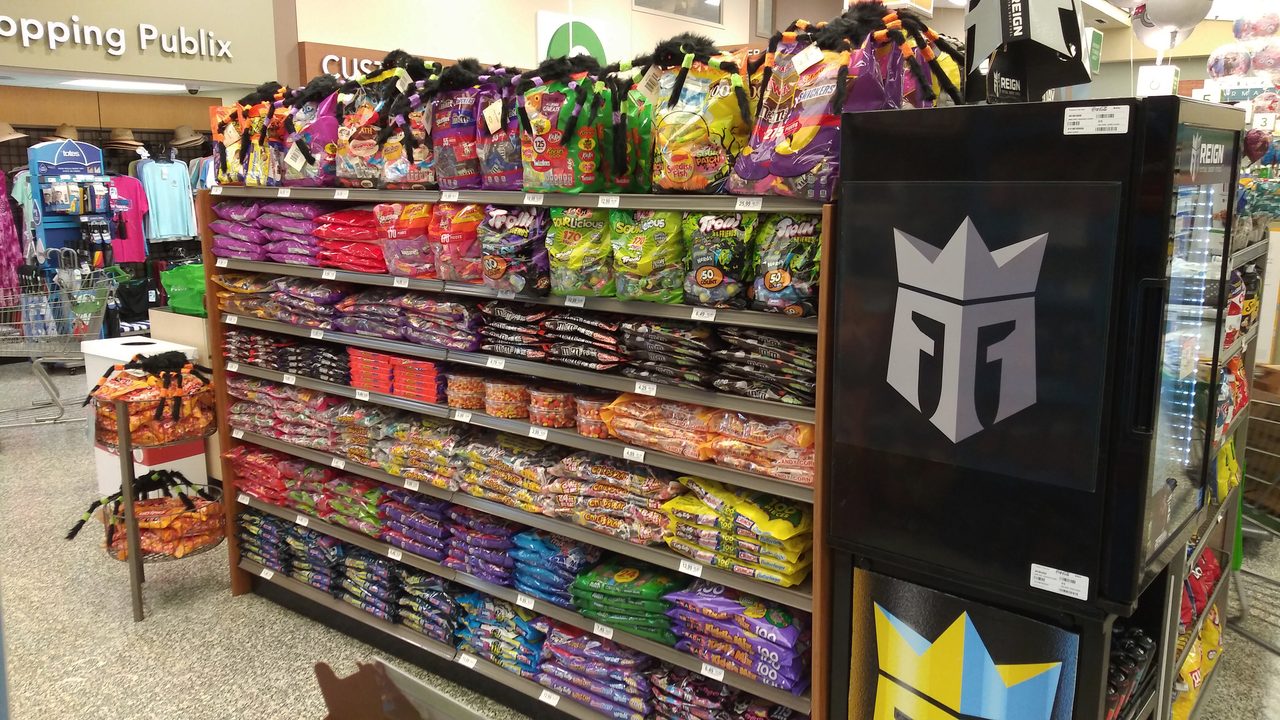
Photo: MatthewHoobin / CC BY-SA 4.0 · via Wikimedia Commons
Halloween Candy Price Check: Walmart Wins on Price, Publix Wins on BOGOs
TheStreet shopped three Florida stores
TheStreet's co-editor-in-chief Daniel Kline and senior editor Celine Provini walked into a Publix, a Target and a Walmart in the same South Florida neighborhood, writing down prices for the trick-or-treating favorites, then stopped at Dollar General and Dollar Tree. Walmart was the clear price leader, Target had a slightly broader selection, and Publix had obvious holes — including no single-serving M&M's. Neither dollar chain offered anything better than what the three bigger stores had.
A 100-piece bag costs $16.96, up 71%
FinanceBuzz tracked five years of bulk candy prices at Walmart, Target, Kroger and Albertsons. A 100-piece bag of assorted candy went from $9.91 in 2021 to $16.96 in 2026 — a 71% jump, against 22% national inflation over the same stretch, roughly triple the rate. Most of it came in the last three years: $2.45 from 2023 to 2024 and $2.34 from 2024 to 2025. From 2025 to 2026 the bag still rose 3.5%.
Candy is up 8.1% in a year; chocolate 15.5%
Bureau of Labor Statistics data show candy and chewing gum prices up 8.1% year over year in August 2026, more than double the 3.4% rise in overall consumer prices. The split matters: NBC News, citing PwC data, puts Halloween chocolate at an average $5.67 a package, up 15.5%, while non-chocolate candy averages $3.31, up just 1.8%.
Cocoa and tariffs are driving the bill
Extreme weather in West Africa hurt cocoa harvests and pushed cocoa to record highs in 2024; retail chocolate prices never came back down. David Branch of the Wells Fargo Agri-Food Institute told USA TODAY that families "may notice they're getting a little less for their money," and that shoppers will lean on value packs, promotions and alternative treats. In the National Retail Federation's survey, 79% of consumers expect tariffs to make Halloween items more expensive.
The NRF still sees a record $13.5 billion
The NRF's annual survey with Prosper Insights & Analytics expects $13.5 billion in Halloween spending, above last year's record $13.1 billion, at $115.14 per person versus $114.45. Candy remains the top category: 96% of shoppers plan to buy it, for $4.1 billion, followed by decorations at $4.3 billion and costumes at $4.4 billion. "Consumers continue to make Halloween a spending priority, but they are also approaching the season with affordability in mind," said Allison Zeller, the NRF's vice president of industry and consumer insights.
LendingTree's survey points the other way
Not every forecast agrees. A LendingTree survey found 80% of Americans plan a Halloween-related purchase, down from 90% a year earlier, and that those celebrating expect to spend an average of $162 — a 16% decline from $192 in 2025.
Publix BOGOs beat Walmart on two items
Publix, generally the more expensive stop, clawed back with buy-one-get-one deals: two bags of Butterfinger fun-size bars, 19.8 ounces each and about 30 bars per bag, for $11.59 total — 19 cents a bar — and two bags of 100 Grand, 18.7 ounces each, about 25 bars apiece, for the same $11.59, or 23 cents a bar. Dollar General had one bright spot of its own: roughly 26 snack-size Reese's cups for $9.50, about 37 cents each, undercutting Publix's 42 cents a cup.
Costco wins per ounce, if you pay the fee
On price per ounce, the warehouse clubs lead. A comparison across Smart & Final, Ralphs, Costco, Walmart and Target put Costco's all-chocolate mix lowest at about 27 cents an ounce, ahead of Walmart at 32 cents and Target at 34 cents, with Smart & Final at 41 cents and Ralphs dearest at 49 cents. The same Reese's Halloween shapes cost about 55 cents an ounce at Target and 41 cents at Costco. Non-chocolate is the cheaper route — an $8.99 bag of Tootsie Rolls works out to about 24 cents an ounce. A Ralphs club card takes 25% off bulk candy.
Who ends up paying for the bowl
By the bag, Walmart's 30-ounce Hershey's Miniatures is $14.84 and Target's is $14.89, though Target's buy-one-get-50%-off brings two bags to $22.34. Costco sells a 56-ounce pack for $24.99 and Sam's Club the same size, 180 pieces, for $20.98 — memberships start at $65 a year. An NBC affiliate in Connecticut, WVIT, found Costco's 90 ounces of chocolate at $23.99 the best of four retailers. The cost lands on the households with the porch light on and the kids holding the bucket: the Wells Fargo Agri-Food Institute expects less chocolate in the bowl this year, and a Mars Snacking survey found more than 40% of shoppers restock candy while about two in five buy a separate "buffer bag." The National Confectioners Association expects Americans to buy roughly 600 million pounds of candy for the holiday.
What to do before October 31
Halloween falls on a Saturday, and the NRF expects more people out trick-or-treating — but only 61% of those surveyed plan to hand out candy, down from 66%. The savings play is to wait for the pre-holiday promotions and BOGOs, compare price per ounce rather than per bag, and shop the leftovers: stores typically start marking down Halloween candy on Sunday, November 1.
Sources
- Yahoo Finance(TheStreet): Halloween Candy Price Check: Walmart, Target, Publix and more
- CBS News Los Angeles: Halloween candy prices soar
- Fox Business: Halloween candy prices jump 8.1% as Americans prepare to spend billions on treats
- Halloween chocolate prices rising 15.5% amid cocoa shock
- New York Post: The cost of Halloween candy spiked 71% in 5 years