China's Flagships Have Turned Into Power Banks
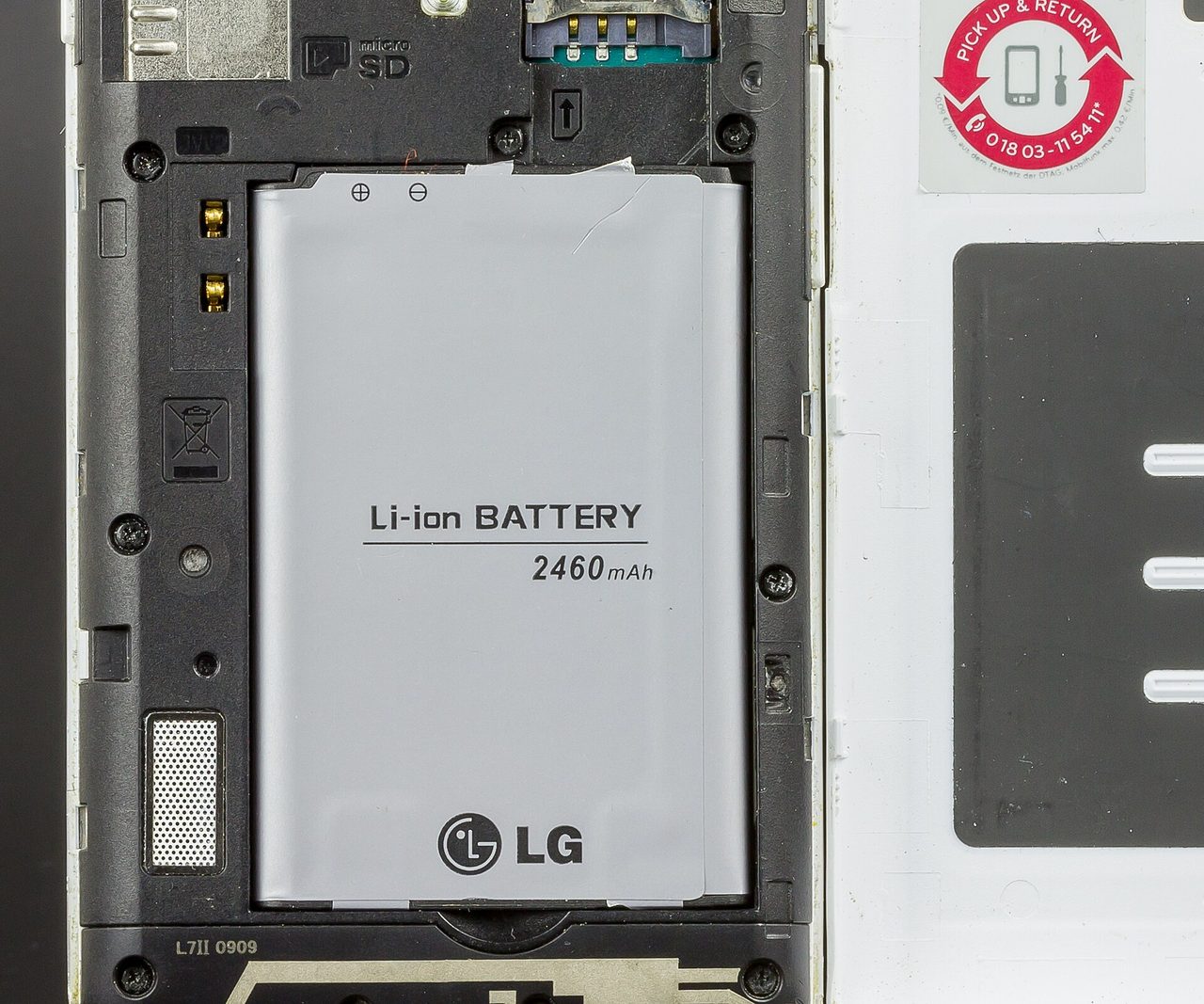
Photo: Raimond Spekking / CC BY-SA 4.0 · via Wikimedia Commons
China's Flagships Have Turned Into Power Banks
Redmi K100 puts a 10,000mAh cell in a flagship
The latest flashpoint is the Redmi K100. According to GSMArena and Gagadget, Redmi confirmed an October 27 launch in China with a 10,000mAh battery, a 6.83-inch AMOLED display with 3,500 nits peak brightness, and Qualcomm's Snapdragon 8 Elite chip. Gizmodo, in its report on the battery race, joked that the phone is basically a battery pack with a screen. The already announced K100 Pro and K100 Pro Max carry 8,580mAh and 9,070mAh respectively, while Memeburn reports the related global Poco F9 Pro and Poco F9 Ultra drop to 6,330mAh and 8,050mAh.
Every maker claims longer life in a thin body
The official message is the same everywhere: bigger and still thin. OnePlus announced the OnePlus 16 in China with a 9,000mAh battery, 100W wired and 50W wireless charging, plus reverse charging. GSMArena and 9to5Google report a 6.78-inch 185Hz OLED, a 200MP main camera, and Android 17 with ColorOS 17. The phone starts at CNY 5,999 and sold 70,000 units in its first hour in China, according to GSMArena's weekly roundup. Honor announced the Magic9 with 8,000mAh and the Magic9 Super Edition with 11,000mAh, both with 80W wired, 50W wireless and 27W reverse wired charging, according to GSMArena and Beebom. Xiaomi launched the 18 Pro with 7,000mAh and the 18 Pro Max with 8,500mAh, both with 100W wired and 50W wireless charging, according to India Today and Xiaomiui.
Silicon-carbon chemistry explains the thin bulk
The technical reason is silicon-carbon anodes. Techinkey, citing Samsung and OnePlus spec sheets, says the chemistry fits about 10% to 15% more capacity in the same volume. Vivo supply-chain analysis puts energy density above 400Wh/L. Phoonomo reports Xiaomi's silicon-rich "Jinsha River" cell in the 18 Pro Max runs at about 32% silicon content. The payoff is visible in dimensions: Notebookcheck reports Honor fits 11,000mAh into an 8.1mm body weighing about 227g, with a 6.81-inch 120Hz OLED and a built-in cooling fan. Xiaomi fits 8,500mAh alongside a 6.9-inch display and dual 200MP cameras. Handheld.guru reports a major Chinese maker is testing steel-cased stacked cells aimed at 9,000 to 10,000mAh.
Samsung and Google look stuck near 5,000mAh
The contrast favors China. Android Captain's comparison table lists the Samsung Galaxy S26 Ultra at 5,000mAh, Google Pixel 11 Pro at 4,850mAh, Pixel 11 Pro XL at 5,115mAh, and last year's Pixel 10 Pro XL at 5,200mAh. AndroidPolice notes Chinese flagships now sit at 7,000 to 8,000mAh, more than 50% above the Galaxy S26 Ultra. HotHardware calculates the OnePlus 16's 9,000mAh is roughly a 23% jump over the OnePlus 15's 7,300mAh cell, without a major increase in footprint. The standard Honor Magic9 uses a 6.37-inch display with its 8,000mAh cell, while the Super Edition steps up to 6.81 inches with 11,000mAh.
Global buyers will likely get smaller cells
The next question is what ships outside China. The precedent points to smaller global cells. Xiaomi's China models are 7,000mAh and 8,500mAh, while code findings cited by Android Captain point to 6,000mAh and 7,050mAh for the global versions. The OnePlus 16 is China-only for now, with no global version announced. The Honor Magic9 Super Edition starts at CNY 4,499, about $670, in China. For buyers elsewhere, the near-term choice is to wait for a cut-down international variant or import a Chinese model and live without local warranty and carrier tuning.
Sources
- Gizmodo
- GSMArena
- 9to5Google
- India Today
- Android Captain