Nigeria's First Ebola Patient Spent Two and a Half Weeks in Kampala; 44 Contacts Traced
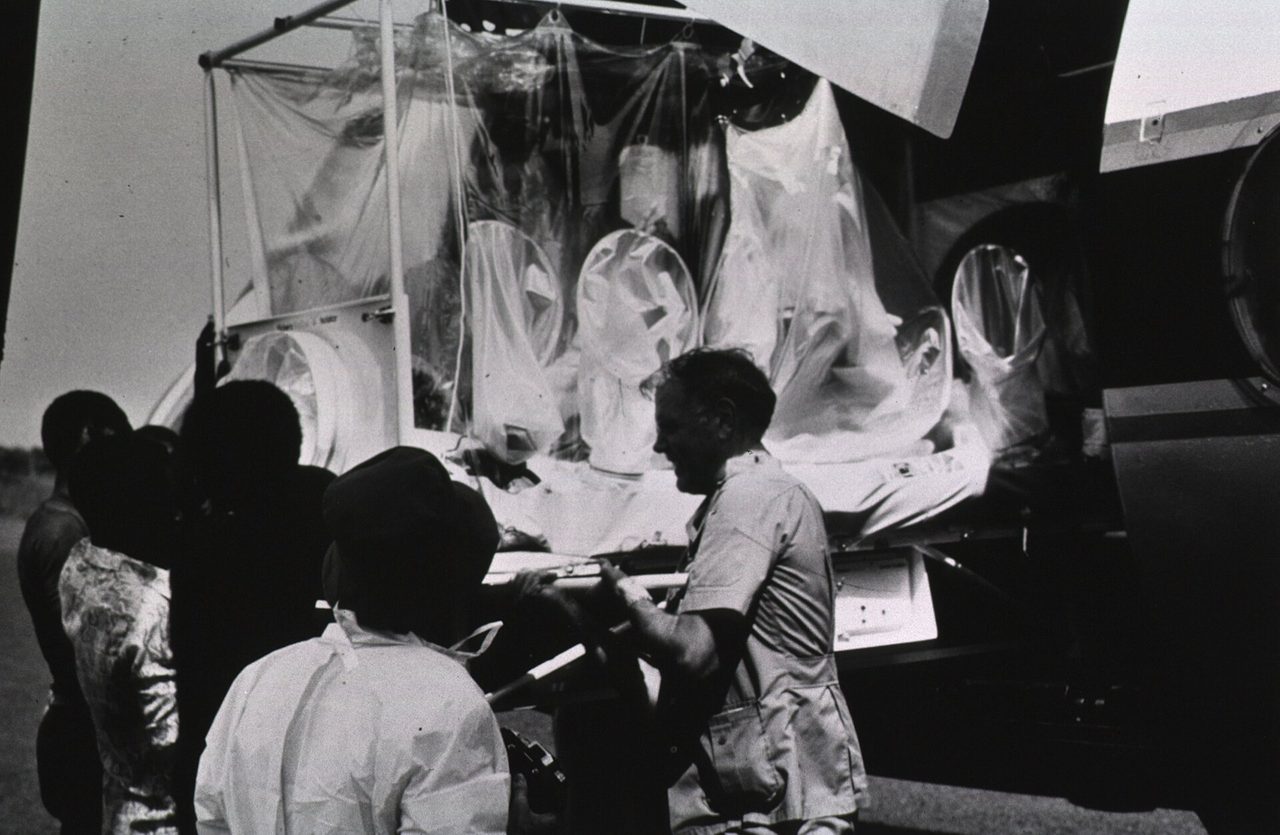
Photo: CDC / Public domain · via Wikimedia Commons
Nigeria's First Ebola Patient Spent Two and a Half Weeks in Kampala; 44 Contacts Traced
A case in Africa's most populous country
Nigeria confirmed its first Ebola case in the capital, Abuja, on 20 October, in a 42-year-old woman. The World Health Organization said on 21 October that Nigeria is the fifth country to detect the Bundibugyo virus disease since the Democratic Republic of the Congo declared an outbreak on 15 May 2026. Reuters reported that Nigeria has gone more than a decade without a case, and that health officials have described the outbreak as the fastest-spreading on record.
Two and a half weeks in Kampala
Muhammad Pate, Nigeria's Coordinating Minister of Health and Social Welfare, confirmed to the BBC that the woman spent two and a half weeks in Kampala before returning to Abuja, routing through Ethiopia with a two-hour stopover in Addis Ababa. Premium Times, citing the BBC, described her as the wife of a diplomat. Ebola's incubation period of two to 21 days means exposure could have taken place during business travel to eastern DR Congo, or during the holiday itself.
Unclear arrival date
Odianosen Ehiakhamen, an assistant director at the Nigeria Centre for Disease Control, told Arise TV that the patient is a foreign national who entered Nigeria on 5 October, was initially treated for malaria symptoms but failed to recover, which aroused the suspicions of the attending physicians. The date is not settled: Health Policy Watch, citing a WHO statement, says she entered Nigeria on 3 October, and NILE1 also reports 3 October, while an NCDC official told Arise TV 5 October.
From symptoms to diagnosis in two weeks
Kaseya told the BBC's Newshour programme that the woman first developed symptoms on 6 October, went to one private hospital believing she had malaria, then to a second private hospital, and was admitted on the 11th. WHO records 7 October as the symptom onset date. She was tested on 19 October after officials learned of her recent travel to Uganda, and the positive result was confirmed on 20 October, according to NCDC.
Kampala says transit does not equal infection
The Ugandan health ministry issued a statement describing the woman as a Nigerian national who travelled to eastern DR Congo for business and only transited Uganda on the return journey, saying transit through Uganda does not establish that infection occurred there and that the location of exposure remains under investigation. Government spokesperson Alan Kasujja told Reuters there is no Ebola in Uganda. RFI reported that Uganda declared its own outbreak over on 28 July and currently has no confirmed active cases.
Two accounts in conflict
The BBC noted that the comments by Pate and Kaseya contradict the earlier statement from Uganda's health ministry. Premium Times reported that Nigeria is working with Uganda, Ethiopia and the Africa CDC to establish the patient's complete travel history and determine where she may have contracted the virus. Kaseya also called for greater information-sharing among African countries and warned against imposing travel restrictions.
Forty-four contacts, mostly health workers
Pate told public broadcaster NTA that the patient is in isolation and receiving medical care, with 44 contacts already identified and contact tracing under way. WHO said the same in its press release. Ehiakhamen said the 44 are mostly health care workers but also include the patient's spouse, a Swiss national living in Abuja; the BBC reported that the spouse is a diplomat.
The scale in DR Congo
ECDC reported on 18 October that the DRC had reported a total of 9,455 confirmed cases including 4,561 related deaths, with 925 patients hospitalised in isolation and 2,530 recovered. Qazinform, citing WAM, said Kenya's case count had risen to eight, and TASS reported that Kenya's first case was confirmed on 6 October and the patient died on 5 October. TASS also reported 269 health workers have contracted Ebola in the DRC.
Africa CDC calls a crisis summit
U.S. News & World Report reported that the Africa CDC has called an Ebola crisis summit. Kaseya wrote on X: "Ebola is now affecting three regions of Africa. The situation demands urgent action and political leadership at the highest level."
No travel bans, but a push for screening
PM News reported that WHO advised against any restrictions on travel to, or trade with, affected countries on the same day Nigeria confirmed its first imported case. PM News and Punch also reported that Nigeria's Senate has urged the government to release emergency funds and introduce compulsory health screening at all international airports, seaports and designated land borders, following a motion sponsored by Senator Francis Faduyile.
The tools already in place
The BBC reported that Nigeria has stepped up disease surveillance since the outbreak began, with the NCDC issuing public health advice to travellers. Travellers from countries with active or relevant Ebola transmission may be required to complete a health declaration form, while those arriving from other countries are currently exempt, and travellers are urged to seek medical attention promptly if symptoms develop. NPR noted that Nigeria recorded 20 cases during the 2014 outbreak before it was declared over after three months.
Sources
- BBC: Nigeria's first Ebola patient holidayed in Uganda, officials say
- NPR: Nigeria confirms an Ebola case in Abuja as a woman arriving from Uganda tests positive
- The Guardian: Nigeria confirms Ebola case as outbreak spreads into western Africa
- Premium Times: Nigeria’s first Ebola patient is diplomat’s wife who holidayed in Uganda — Africa CDC
- U.S. News & World Report: Africa CDC Calls an Ebola Crisis Summit as Nigeria Records Its First Case