Soldiers Ring Milan as Europe's Youth Protest Wave Spreads
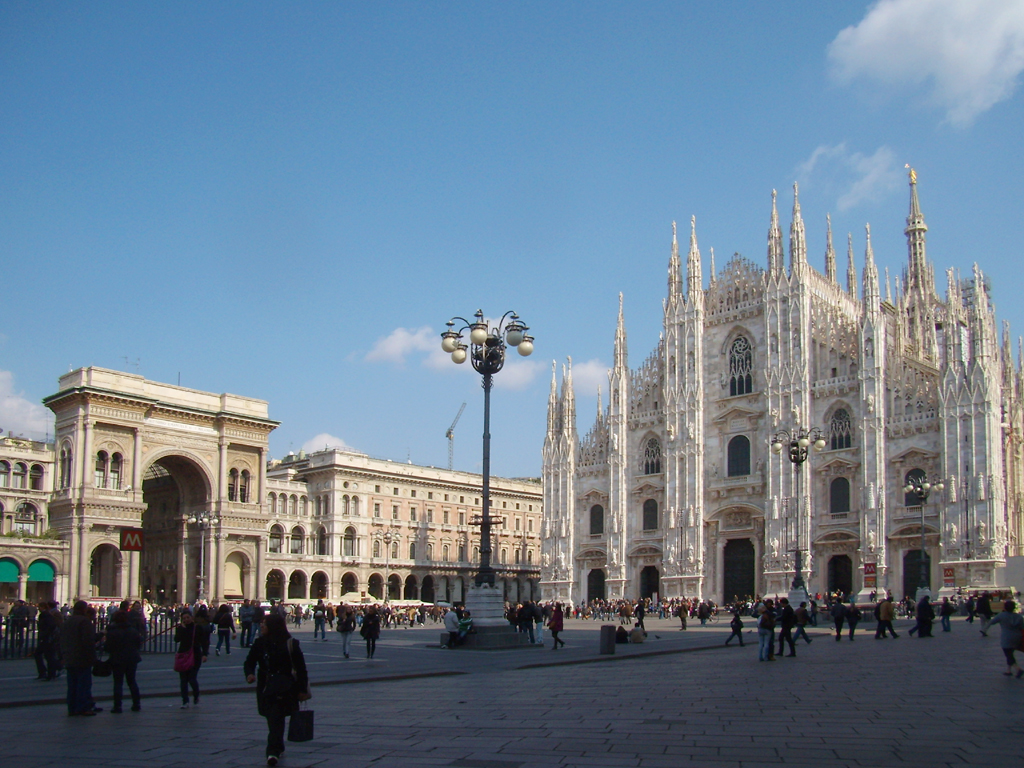
Photo: Arbalete / Public domain · via Wikimedia Commons
Soldiers Ring Milan as Europe's Youth Protest Wave Spreads
A peaceful march under heavy guard in Milan
Thousands of mostly young protesters marched through Milan, Rome and Turin on Saturday, October 24, under the watch of large numbers of police and soldiers deployed to prevent a repeat of the looting and clashes that hit Milan a week earlier. The Milan demonstration stayed peaceful, ending in the evening outside the Milan Polytechnic, more than 3 kilometers (2 miles) from the city center. As night fell, huge crowds of young people chanted insults aimed at Prime Minister Giorgia Meloni and held banners reading "No to lies of the state."
Brief clashes in Rome and Turin as shops board up
While Milan stayed calm, there were brief clashes between protesters and police in both Rome and Turin. In Milan, luxury boutiques boarded up their windows fearing fresh violence, though most shops had reopened by late afternoon. Demonstrations also took place in Naples, Bologna and Florence under tight surveillance, with checks at railway stations and preventive shielding of shopping districts.
500 extra troops back 5,000 police in Milan
The Meloni government sent an additional 500 soldiers to Milan, on top of several hundred already stationed there, supporting about 5,000 police and other law enforcement personnel. Authorities deployed drone surveillance, station checks, rapid-response units and online monitoring for calls to violence. Milan Mayor Giuseppe Sala said he feared a repeat of last weekend's violence and backed the deployment.
Soldiers' powers limited to ties near stations
Defense Minister Guido Crosetto said the soldiers deployed on Saturday were only recently authorized to use plastic restraint ties, and only in areas around train stations, not across the city. They are not authorized to carry pepper spray or tasers. The cabinet stopped short of granting soldiers broader policing powers, reportedly after opposition from President Sergio Mattarella.
Last week's riots left damage over 1 million euros
The heavy security followed the October 17 unrest, when a cost-of-living march of about 5,000 people in Milan turned violent around Piazza del Duomo. Masked youths threw fireworks and bottles at police and built barricades; officers withdrew to await reinforcements, then cleared the square with tear gas. About 50 young people were arrested, roughly half of them minors. According to ANSA, police detained 271 people on that Sunday alone and formally arrested 32, including 23 minors and 13 foreign nationals, with 28 more referred to judicial authorities and 14 officers injured. Damage topped 1 million euros.
New protest offence and a November 20 general strike
The government's new Public Security Decree creates an offence of "violent participation in public demonstrations": groups of more than five using potentially harmful objects such as stones, sticks and fireworks face up to five years in prison and fines of up to 20,000 euros ($22,440). Meanwhile, CGIL leader Maurizio Landini announced a general strike for November 20 at an October 17 rally in Rome, which the union says drew more than 100,000 people. The union proposes a 1 percent solidarity levy on net worth above 2 million euros, affecting 500,000 taxpayers and raising 25 to 26 billion euros for health, education and housing.
A continent-wide wave from France to Portugal
The anger extends well beyond Italy. France's Interior Ministry estimated 550,000 demonstrators on October 17; Eurostat put French September inflation at 3.4 percent, with fuel for personal transport up 37.0 percent, diesel up 44.1 percent and heating oil up 64.6 percent. In Belgium, police used tear gas to disperse hundreds of protesters on Saturday and made 10 arrests, after about 30,000 marched in Brussels during a national strike on October 9. Spain's harmonized inflation hit 5 percent in September, its highest since February 2023, and housing protests erupted after the eviction of 87-year-old Maricarmen Abascal, whose rent was raised 230 percent by an investment fund; she died a fortnight after being hospitalized. Tens of thousands also marched in Lisbon for lower housing costs and higher wages and pensions.
Sources
- NPR: Soldiers guard center of Milan as thousands of protesters march in cities across Europe
- The Guardian: Milan luxury shops close as Italy prepares to deploy troops in the city after days of protests
- Euronews: Italy deploys 500 troops to Milan under new security decree following violent clashes
- Al Jazeera: What are Italy's new measures against violent protests?
- DW: Italy: Clashes erupt at cost-of-living protests