Big Three Carriers Are Losing Their Pull as Cheaper Rivals Cash In
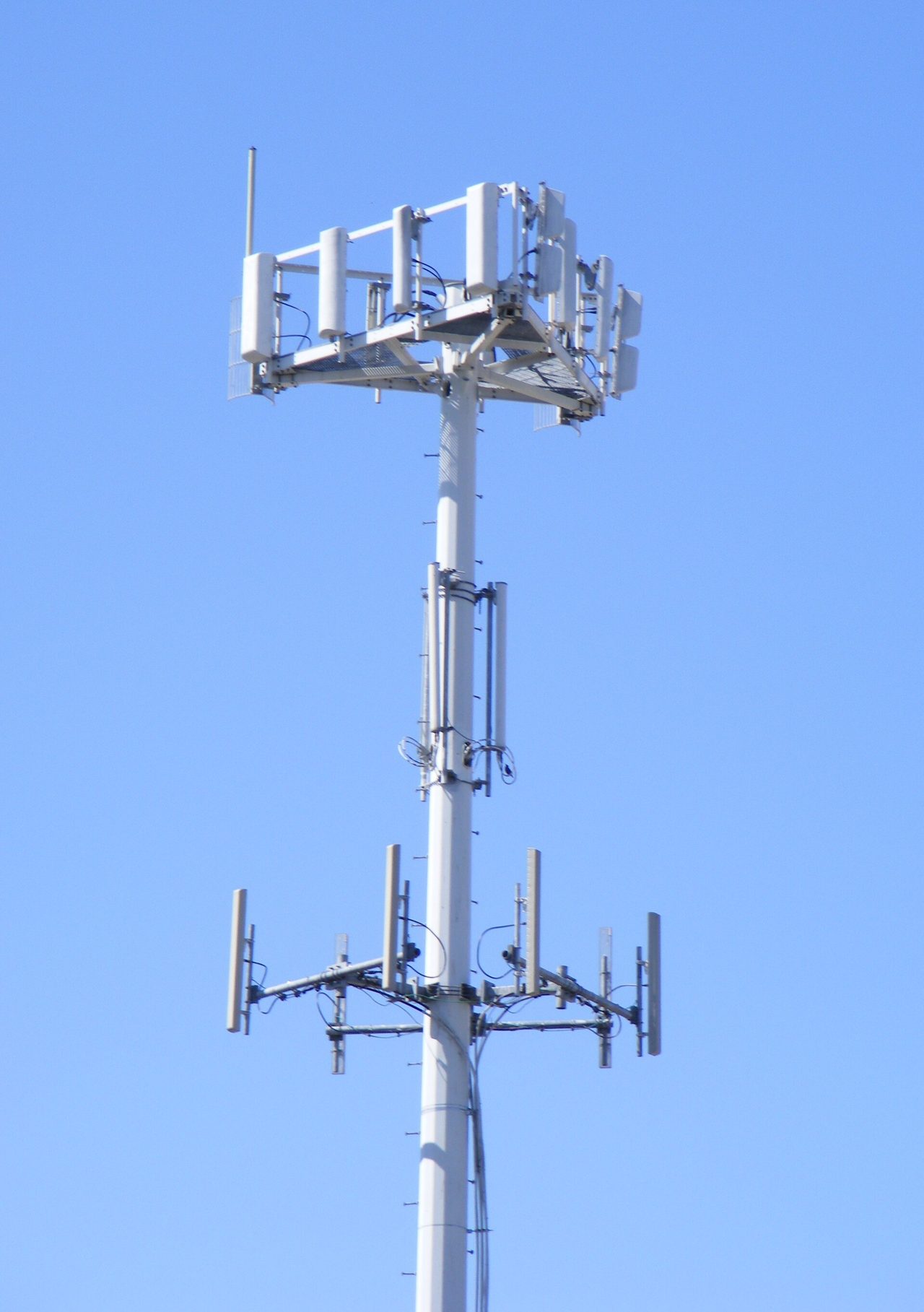
Photo: The original uploader was J.smith at English Wikipedia. / CC BY-SA 2.5 · via Wikimedia Commons
Big Three Carriers Are Losing Their Pull as Cheaper Rivals Cash In
Earnings Beat, Subscribers Miss, Stocks Punished
It was a strange earnings week for America's Big Three wireless carriers: solid numbers on paper, punishment in the market. AT&T added 379,000 postpaid phone subscribers in the third quarter, down from 405,000 a year earlier, a decline of about 6%. Despite beating earnings estimates and raising guidance, AT&T shares fell roughly 5% to 6%. Verizon added 184,000 postpaid phone subscribers in the second quarter, while T-Mobile had already warned that third-quarter net postpaid account additions would be only about 250,000. Verizon and T-Mobile shares fell alongside AT&T, making telecom one of the worst-performing sectors in the S&P 500 that day.
Carriers Point to Networks and Bundles
The official response from all three carriers followed a familiar script: the slowdown is temporary, and network quality plus converged bundles will win in the end. AT&T highlighted a record 769,000 Advanced Connectivity internet net additions, including 442,000 fiber and 327,000 fixed wireless customers, noting that nearly 43% of its advanced home internet customers also hold an AT&T postpaid wireless account. Verizon pointed to second-quarter postpaid phone churn falling to 0.92% and a record adjusted EBITDA margin of 40.1% on revenue of $34.25 billion. T-Mobile blamed temporarily elevated churn on its "rate plan modernization" and is quietly preparing new bundled perks to keep customers from leaving.
Price Fatigue Pushes One in Five Toward the Exit
The deeper problem is price. A Market Force Information study published on October 20 found that 19% of wireless customers are actively considering switching, with the cost of service the number one driver for the third consecutive year. About 12.0% cited monthly cost directly and 10.3% cited promotional deal-seeking as their reason for planning to switch. On the study's loyalty index, AT&T scored 3.90 and Verizon 3.96, both below the 25th percentile mark of 4.08. "The carriers with the largest subscriber bases are not delivering the experiences that create loyalty," said Market Force COO Sherri Weed. "That's not just a CX problem, it's a business risk."
Cable MVNOs Take the Spoils
The beneficiaries are easy to spot. Comcast's Xfinity Mobile added 368,000 wireless lines in the third quarter, down from 414,000 a year earlier, bringing its base to 10.6 million lines, while wireless service revenue grew 14.7% to about $1.1 billion. Charter added 406,000 mobile lines in the second quarter to reach 12.54 million, or 12.94 million on a pro forma basis including Cox's 400,000 lines. Together, Comcast and Charter added roughly 854,000 mobile lines in the second quarter, more than four times Verizon's second-quarter 184,000 postpaid phone net adds. Low-cost names such as Mint Mobile, Metro by T-Mobile, Straight Talk and Tracfone are also picking up switchers.
Starlink Looms as the Wild Card
The bigger threat may be coming from orbit. On October 8, SpaceX agreed to buy nationwide 800 MHz spectrum from Grain Management for Starlink Mobile, reportedly worth about $8 billion, covering 14 megahertz of paired spectrum, with up to 15,000 next-generation satellites approved. The next day, Verizon fell 8.75%, AT&T fell 9.81% and T-Mobile fell 13.27%, with T-Mobile down more than 10%. A TD Cowen consumer survey found about 30% of T-Mobile customers would consider switching to Starlink Mobile; on brand perception Verizon scored 1.92 (with 1 the best) while AT&T and T-Mobile tied at 2.04. AT&T CEO John Stankey dismissed the threat, arguing terrestrial networks already handle 98% of mobile use cases and satellites are "solving the last 2%."
Sources
- PR Newswire: Market Force Information® Study Reveals Widening CX Gap Between Legacy Wireless Carriers and Challenger Brands
- PhoneArena: Fed up with Verizon, AT&T, and T-Mobile? You're not alone, but this MVNO might be a great alternative
- Business Insider: AT&T Stock Falls 5% on Slower Postpaid Subscriber Growth Despite Q3 Beat
- Fierce Network: AT&T beats Q3 estimates but SpaceX threat looms
- Ars Technica: Comcast loses more customers, claims other ISPs' cheap prices are "irrational" - Ars Technica