Machado Comes Home to a Venezuela Ruled Without Her
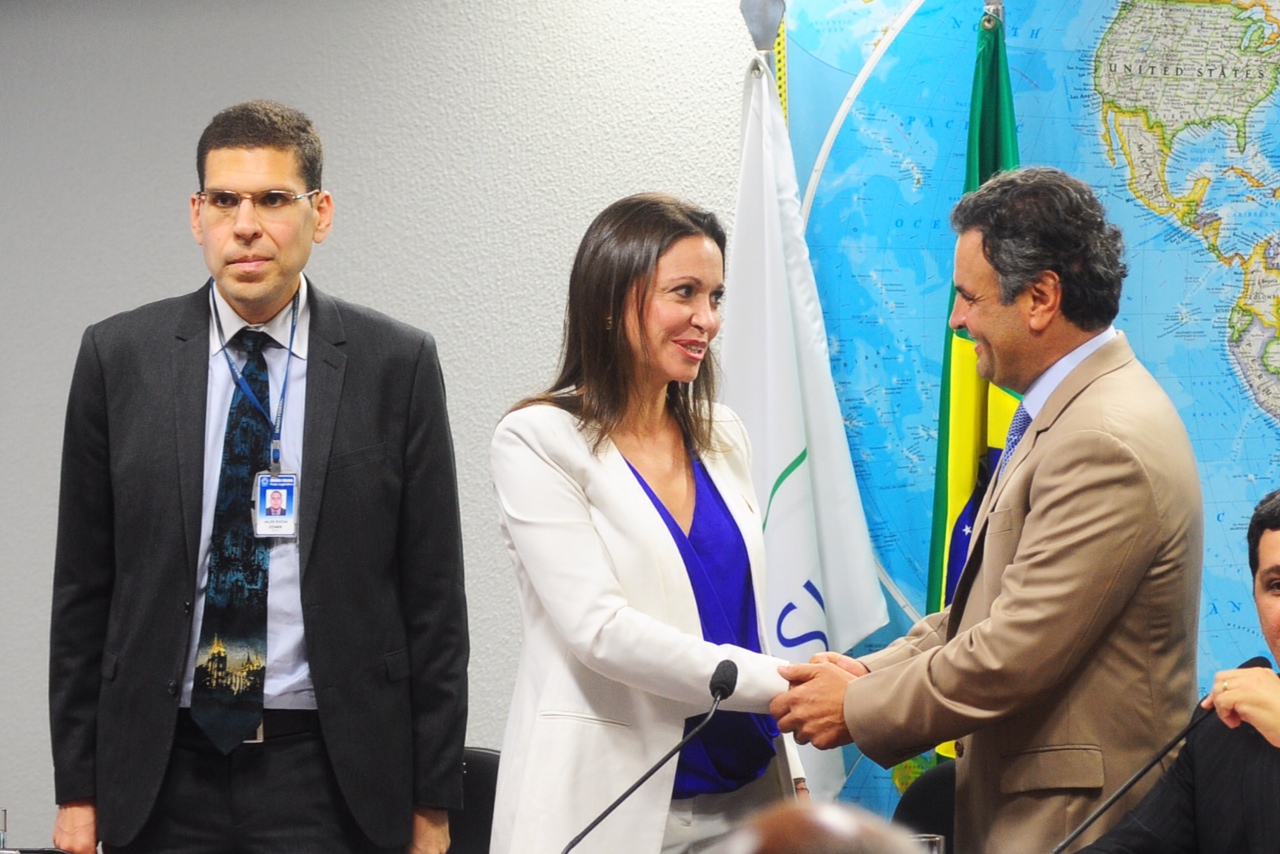
Photo: Aécio Neves from Brasília, Brasil / CC BY 2.0 · via Wikimedia Commons
Machado Comes Home to a Venezuela Ruled Without Her
A Sunday Mass Becomes a Homecoming
Venezuelan opposition leader and 2025 Nobel Peace Prize laureate María Corina Machado is back in Venezuela after more than 10 months abroad. "I'm here. With you," she posted in Spanish on X on Sunday morning, October 25. Her team said her first appearance was among worshippers at the Church of Santa Rosa in Lara state, in western Venezuela, where photographs showed the 59-year-old embracing tearful supporters. Her party, Vente Venezuela, shared images from the square of the town of Santa Rosa, near Barquisimeto.
Seven Failed Attempts Before This Return
Advisers say Machado tried at least seven times in recent months to re-enter the country without success. Her first attempt came in late June, when she sought to help with reconstruction after two powerful earthquakes devastated the northern coast and claimed the government blocked her return by closing its airspace. She tried again in late September while acting President Delcy Rodríguez was in New York for the United Nations General Assembly, and was denied entry three times in a single day, according to her advisers. U.S. officials had also asked her to delay the trip, adding friction with Washington.
Eleven Months in Hiding, Then Oslo
Machado went into hiding inside Venezuela for 11 months after being briefly detained following a protest in January 2025. She slipped out of the country in a clandestine escape last December and reappeared in Norway to receive the Nobel Peace Prize for her peaceful challenge to Nicolás Maduro's authoritarian rule and her defense of democratic rights. During her months abroad she lobbied allies around the world, including U.S. President Donald Trump, to whom she later gifted her Nobel medal.
A Country Reshaped During Her Absence
About a month after she left, the U.S. military captured then-President Nicolás Maduro in a January operation, and Delcy Rodríguez took over as interim president. Rodríguez has promised eventual new elections but has set no date, and Machado's party has been shut out of U.S.-backed talks on how and when Venezuelans will vote. Asked about her return on Sunday, Trump said he knew nothing about it but hoped she was safe, calling her "a very nice woman" and noting "she gave me the Nobel Prize." The pro-government-controlled National Assembly said on X that restoring political guarantees should let all exiles return and that current talks would yield concrete results toward recovering democracy.
Oil Deal and an Awkward Alliance
In late August, Trump announced that the United States had reached an agreement to take majority control of more than 65 billion barrels of proven oil reserves in Venezuela. Machado questioned in a video statement why the deal was being signed by a government she called an "illegitimate regime." The episode underlines her awkward position: dependent on Washington's support yet excluded from the deals Washington now cuts with Caracas. Her foreign-affairs adviser David Smolansky said she returned to stand with Venezuelans in pursuit of freedom, democracy and justice, and to press for free, fair and verifiable presidential elections. Exiled opposition presidential candidate Edmundo González Urrutia celebrated her return and said he would be at her side "very soon."
What Her Return Will Test
Machado plans to meet victims of the deadly June earthquakes, families of political prisoners, and leaders of the democratic movement, Smolansky told Reuters. Her immediate test is whether street-level enthusiasm can be converted into leverage: a firm election date, the release of political prisoners, and a seat at the transition talks. If the interim government keeps stalling on a vote or restricts her movement, a symbolic homecoming could quickly become a fresh confrontation.
Sources
- NPR: Venezuela's opposition leader María Corina Machado returns after months in exile
- CNN: Opposition leader Machado returns to Venezuela from exile
- France 24: Opposition leader Machado returns to Venezuela after 10 months in exile
- The Guardian: Exiled Venezuelan opposition leader announces her return
- Miami Herald: María Corina Machado makes surprise return to Venezuela after months of failed attempts