Ninth Circuit Lets California Count Disputed Ballots as DOJ Fight Returns to Trial Court
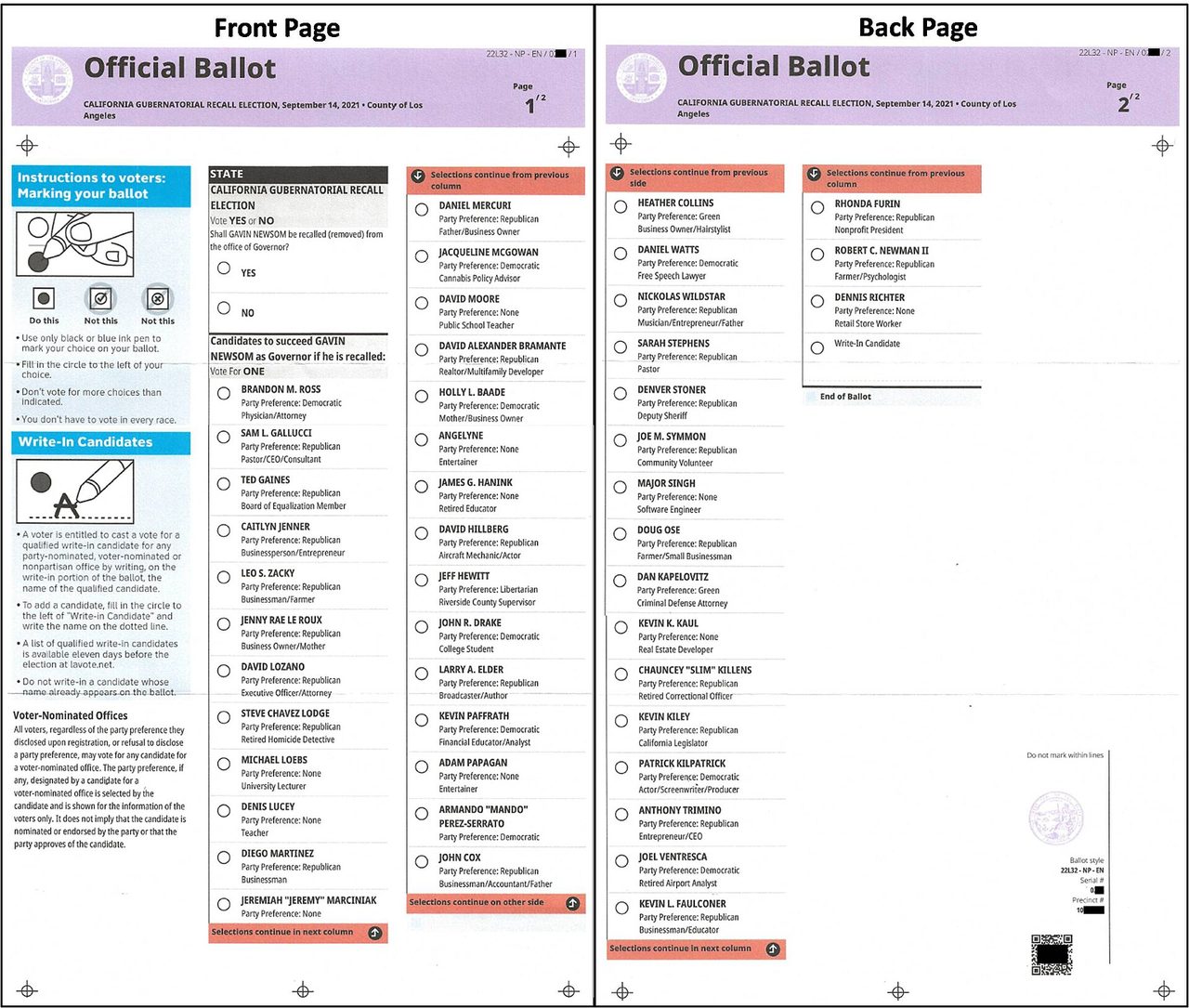
Photo: State of California / Public domain · via Wikimedia Commons
Ninth Circuit Lets California Count Disputed Ballots as DOJ Fight Returns to Trial Court
Appeals court says no jurisdiction over emergency ballot freeze bid
A divided three-judge panel of the U.S. 9th Circuit Court of Appeals on October 26 denied the Trump administration's emergency request to force California to segregate about 20,000 mail ballots and withhold them from counting. Voting 2-1, the panel held it lacked jurisdiction because the district court had not yet ruled, sending the dispute back to the trial judge for a hearing scheduled October 27.
Justice Department targeted 20,000 voters it called likely noncitizens
The Justice Department sued California on October 15 in federal court in Los Angeles. It said it had sent state officials a list of more than 20,000 registered voters the federal government believes are likely noncitizens who were sent vote-by-mail ballots, and asked the state to set aside any ballots received from those voters until citizenship could be confirmed. The department argued that once mail ballots are removed from their envelopes, there is no way to re-associate a ballot with its voter, so segregation had to happen first.
Majority calls the emergency self-made and warns of electoral chaos
Circuit Judge Mark Bennett, appointed by President Trump, joined Circuit Judge Gabriel Sanchez, appointed by former President Biden, in the majority. The majority wrote that the administration failed to give the district court adequate opportunity to consider its temporary restraining order request, calling the claimed emergency at least partly self-constructed. Sanchez wrote that the proposed injunction would have a federal court dictate how California administers its own election, transforming the rules of an election already underway and causing widespread confusion among voters and officials, diverting election resources and ushering in electoral chaos.
California calls federal data suspect and warns of mass disenfranchisement
California officials say state safeguards against noncitizen voting are robust and that the Justice Department relied on suspect data. Lawyers for Secretary of State Shirley Weber wrote in an October 20 filing that at best the litigation is a reckless political stunt and at worst it threatens to disenfranchise thousands of Californians. Weber said her office was given just 48 hours to obtain the list, investigate, and act, and that the department initially did not even provide the list itself, instead demanding the state fetch it.
Thumb drive, handwritten password, and a disputed 190,000-voter claim
The backstory includes a thumb drive with a handwritten password sent to Los Angeles County officials purporting to hold the names, plus an earlier administration claim in July that California had 190,000 noncitizens on its voter rolls. Weber said the administration refused for months to share its methodology or data sources, despite high-profile cases of citizens being purged on the basis of federal SAVE-database comparisons. She also argued the demand may rely on a policy a federal court vacated in an October 9 order governing voter-roll comparisons with federal databases.
One dissent, one Tuesday hearing, and November 3 approaching
Circuit Judge Patrick Bumatay, also a Trump appointee, dissented forcefully, writing that federal law bars California from commingling ballots likely cast by noncitizens with legitimate ballots and that blocking their counting is the bare minimum. He conceded unlawful votes could theoretically be prosecuted after the fact but said that remedy comes too late to protect the election. The Justice Department can now press its case before U.S. District Judge David Carter on Tuesday, or seek further review from the full 9th Circuit or the Supreme Court, where Justice Elena Kagan handles emergency matters from the circuit, with the November 3 midterms only days away.
Sources
- AOL: Trump administration loses push to block California votes from alleged noncitizens
- Los Angeles Times: 9th Circuit denies feds' appeal over 20,000 ballots; district court hearing to proceed
- CNN: Appeals court rejects Trump DOJ demand to set aside 20,000 California mail ballots
- The Hill: Appeals court declines to block 20,000 California mail ballots
- The Guardian: US justice department sues California over alleged noncitizen voting