Maine's Last Republican Standing Faces the Fight of Her Life
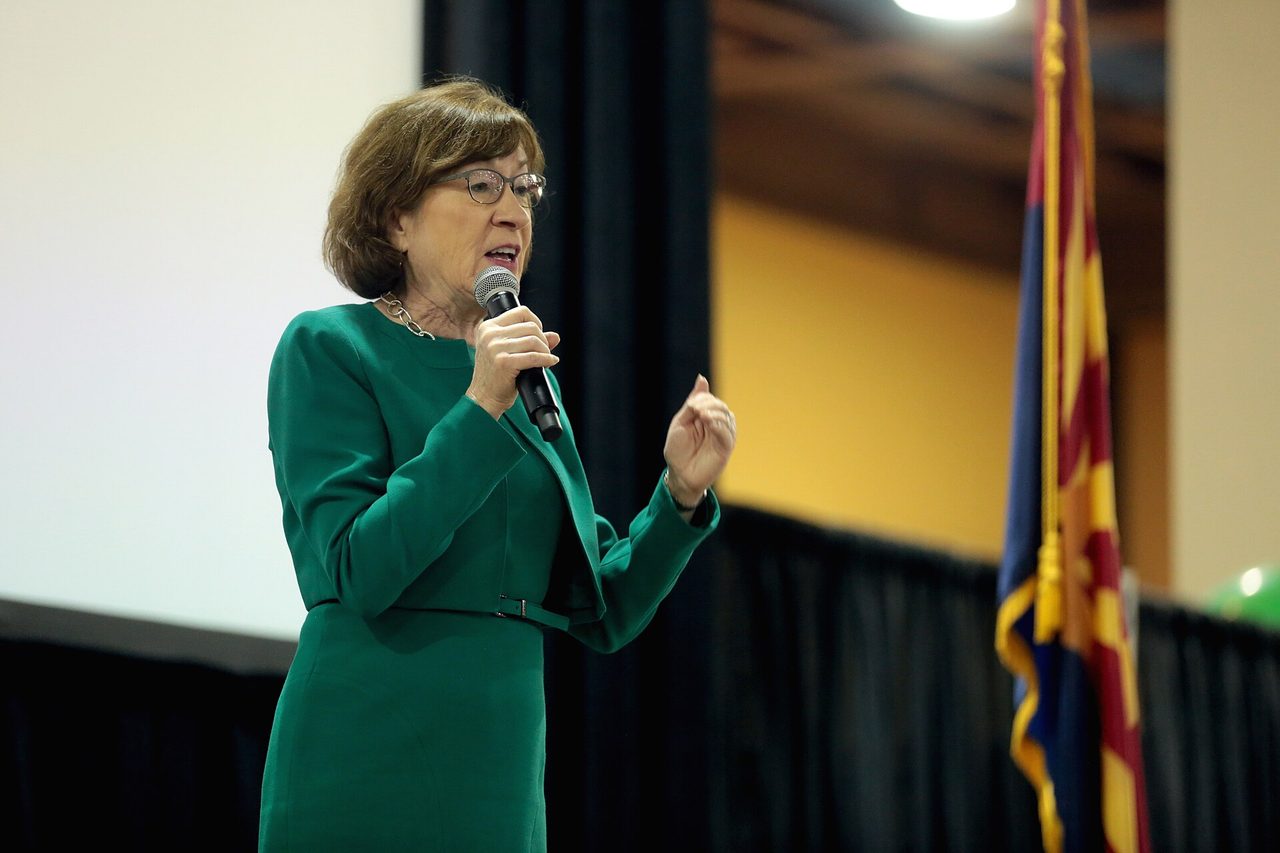
Photo: Gage Skidmore from Peoria, AZ, United States of America / CC BY-SA 2.0 · via Wikimedia Commons
Maine's Last Republican Standing Faces the Fight of Her Life
Three Decades of Survival on an Independent Brand
Susan Collins, first elected in 1996 and now serving her fifth term, is seeking a sixth term that no Maine senator has won before. Her reputation as an independent-minded moderate has carried her through cycle after cycle even as Maine drifted blue around her: in 2020 she won reelection by nearly nine points while Joe Biden carried the state by a similar margin.
A Dead Heat in Every Poll That Matters
Every major survey describes the same nail-biter. A Fox News poll conducted in mid-October put Collins and Democrat Troy Jackson at 49 percent each. A Suffolk University survey had Jackson ahead 49 percent to 47 percent, and a Washington Post-Schar School poll put the margin at 50 percent to 46 percent for Jackson. Collins's path runs through crossover voters: she leads independents by 13 points, and one in five likely voters who disapprove of Donald Trump backs her anyway.
A Logger Takes Up the Democratic Banner
Jackson, a fifth-generation logger and former president of the Maine State Senate, became the Democratic nominee in July after Graham Platner resigned from the race. He has framed the contest as a check on Trump, arguing that Collins cannot vote to fund the president's agenda in Washington and then come home to voice concern about it.
A Tariff Lifeline From the White House
In the closing stretch, the Trump administration lowered its 50 percent tariffs on nine categories of Canadian goods used by Maine agriculture, covering packaging, equipment and materials relied on by the state's blueberry, potato, apple and seaweed producers. Collins said she had repeatedly pressed senior administration officials for the relief, telling voters during their debate that Canada is not China but America's neighbor, closest ally and biggest trading partner, and that she had been working behind the scenes.
The Appropriations Gavel Against a Money Wave
Since 2025 Collins has chaired the Senate Appropriations Committee, the first Republican woman to hold the gavel, and says she has secured 1.5 billion dollars for Maine roads, bridges and infrastructure projects. Yet the money race favors her challenger: in the third quarter Jackson raised 20.4 million dollars and spent 16.5 million, ending September with 4 million on hand and about 1 million in debt to a vendor, while Collins raised 5.2 million, spent 10.9 million and held 5.4 million with no debt. Outside groups have spent 85.3 million dollars on advertising backing Collins since late July against 53.9 million backing Jackson.
Manchin Stumps While the Race Turns Personal
Former Senator Joe Manchin campaigned alongside Collins and publicly called Chuck Schumer crazy for targeting her, calling Collins the soul of the Senate. The air war has turned ugly: Republican-aligned attack ads mocked Jackson's personal life, and when asked whether the mother of his children was relevant, Collins replied that she was not going to bring up the fact that the woman is his second cousin.
Four Seats Decide the Senate
Democrats need a net gain of four seats to take the 100-seat Senate back from Republicans, and Maine could decide it. Collins is the only Republican incumbent running in a Democratic-leaning state. If she survives this nail-biter, it may be because Maine voters decided she is not Republican enough.
Sources
- Fortune: Republican Sen. Collins promotes her independence and ‘true blue-blooded Maine’-ness by partnering with ex-Dem. Joe Manchin and breaking from Trump
- CBS News: Trump lifts 50% tariffs on some Canadian goods in boon to Maine Sen. Susan Collins
- Politico: Trump to lower Canada tariffs for certain agricultural goods, Collins says
- Bangor Daily News: Fox News poll shows Susan Collins and Troy Jackson tied less than 2 weeks out
- The Washington Times: Jackson tries to tie Collins to Trump, high cost of living amid war with Iran in Maine Senate debate