Trump's Arch Would Throw a 280-Day Shadow Over Arlington's Dead
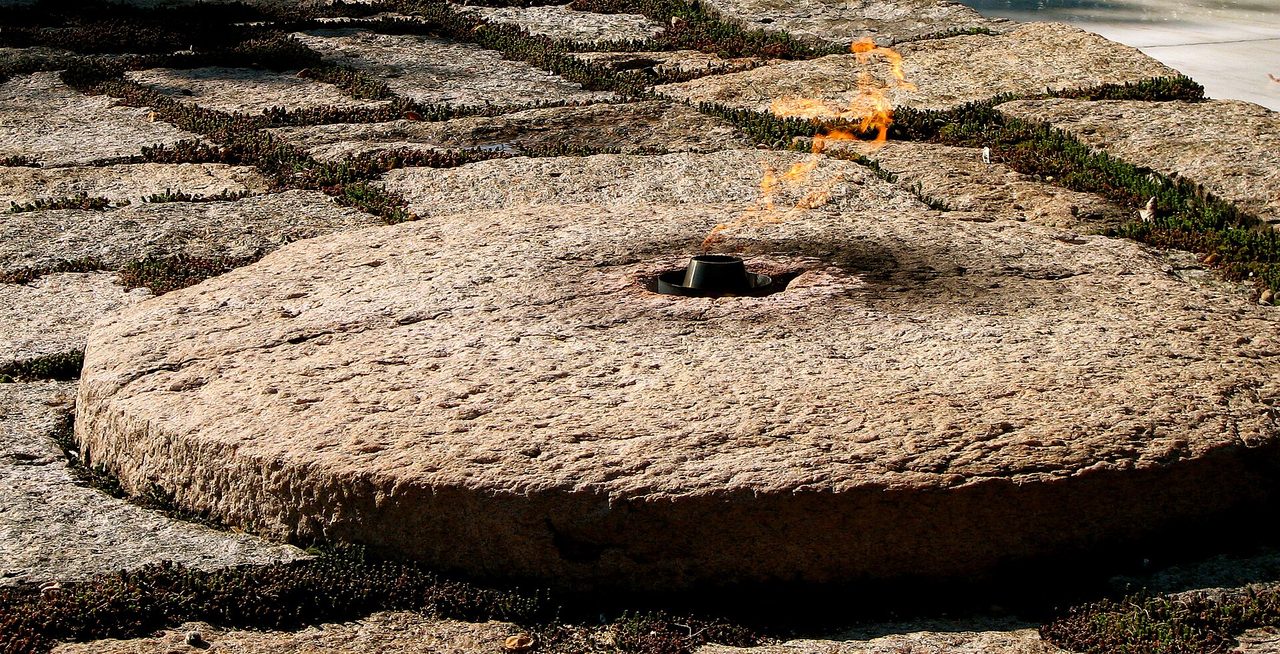
Photo: Scrumshus / Public domain · via Wikimedia Commons
Trump's Arch Would Throw a 280-Day Shadow Over Arlington's Dead
A Post Model Finds Morning Darkness on More Than 280 Days
A to-scale 3D model built by The Washington Post finds that the 250-foot triumphal arch would darken Arlington National Cemetery early in the morning on more than 280 days a year. At sunset on many days, the shadow would stretch across the congested Arlington Memorial Bridge toward monuments to the east. On 110 days a year, it would touch one of the memorials to the assassinated presidents.
75,000 Graves, Then Kennedy's Flame, Then World War Veterans
The analysis finds the shadow would slide over more than 75,000 graves in a year. Minutes after looming over the Kennedy memorial, it moves to the resting places of World War I and II veterans, lingering for more than 15 minutes. The final plans crown the arch with its own eternal flame held aloft by a 60-foot gilded winged Lady Liberty. So on days such as July 28, Jacqueline Kennedy's birthday, the arch's flame would burn bright while its shadow covers the Kennedy flame and grave below.
A 250-Foot Colossus at the Foot of 430,000 Graves
The arch would rise at Memorial Circle, directly across the Potomac from the Lincoln Memorial and at the foot of the national cemetery where nearly 430,000 service members, veterans and family members are buried. The synopsis describes a reinforced concrete structure clad in stone, 166 feet wide with a 55-foot opening and an observation deck, ornamented by a central figure and two eagles. At 250 feet it would stand roughly two and a half times the height of the 99-foot Lincoln Memorial, breaking the axis that was designed to unite North and South across the river.
The White House Line: An Icon That Enhances the Visit
White House spokesman Davis Ingle said the arch would "enhance the visitor experience" at the cemetery and called it one of the most iconic landmarks in Washington and the world. Interior Secretary Doug Burgum, who has publicly promoted the project, wrote to the National Capital Planning Commission on Oct. 9 that no final decision would be made until the commission completes its review.
The Government's Own Paperwork Admits Adverse Effects
A National Park Service assessment says the arch is likely to harm the integrity of dozens of historic properties by altering the sightlines that tie together the Lincoln Memorial, Memorial Bridge and Arlington House. Plaintiffs challenging the project cite the agency's own findings of significant adverse effects on more than 40 historic sites, arguing the administration has not faltered in its commitment to build anyway. Veterans group VoteVets noted the Park Service's 133-page assessment never contains the words "shadow," "sunlight" or "solar," and calculated the arch would block the full disk of the rising sun at President Kennedy's grave for about 29 minutes a year across 17 dawns.
The "Top Grade" Military Complex Vanishes From the Plans
On Sept. 20 the president said the arch would become a "top grade" military complex storing large numbers of drones, hosting snipers and holding ammunition. The final plans released in mid-October omit all of that and describe a "ceremonial gateway" instead, with gilded lettering reading "ONE NATION UNDER GOD." Review of any military use was split off into a separate process that can only begin if the Defense Department requests it, which it has not done.
Veterans Sue: No Congressional Authorization, No Construction
Three Vietnam War veterans, Michael Lemmon, Shaun Byrnes and Jon Gundersen, plus retired architectural historian Calder Loth, sued in February under the Commemorative Works Act of 1986, which they say requires congressional approval. They asked U.S. District Judge Tanya Chutkan to rule by Nov. 4 barring work without that authorization, after the Justice Department said construction could start as early as Nov. 5. Chutkan had already ordered the government in September to give at least 48 hours' notice before any activity at the site. Arlington County filed a separate suit alleging the administration skipped required environmental review and warning of traffic and public-safety harms. Public Citizen attorney Wendy Liu said the law is clear that the arch cannot proceed without Congress.
A Nov. 5 Vote and a Public Against the Project
The National Capital Planning Commission takes up final approval on Nov. 5, two days after the midterms, and Interior Department sign-off could follow the same day. The project is estimated to cost at least $100 million, and an April Washington Post-ABC News-Ipsos poll found Americans opposed it by more than two to one: 52 percent opposed, 21 percent in favor, with strong opposition at 41 percent against 9 percent strong support.
Sources
- The Washington Post: Trump's arch would cast shadow on Arlington Cemetery
- The Daily Beast: Trump Arch's Jaw-Dropping Impact on JFK Memorial Revealed
- CNN: Construction on Trump's 250-foot triumphal arch in DC could begin in just two weeks
- ABC News: Veterans ask federal judge to block Trump's arch unless Congress approves it
- FOX 5 DC: Arlington County files lawsuit to stop Trump's triumphal arch