Cape Canaveral Enters Its Boom Cycle
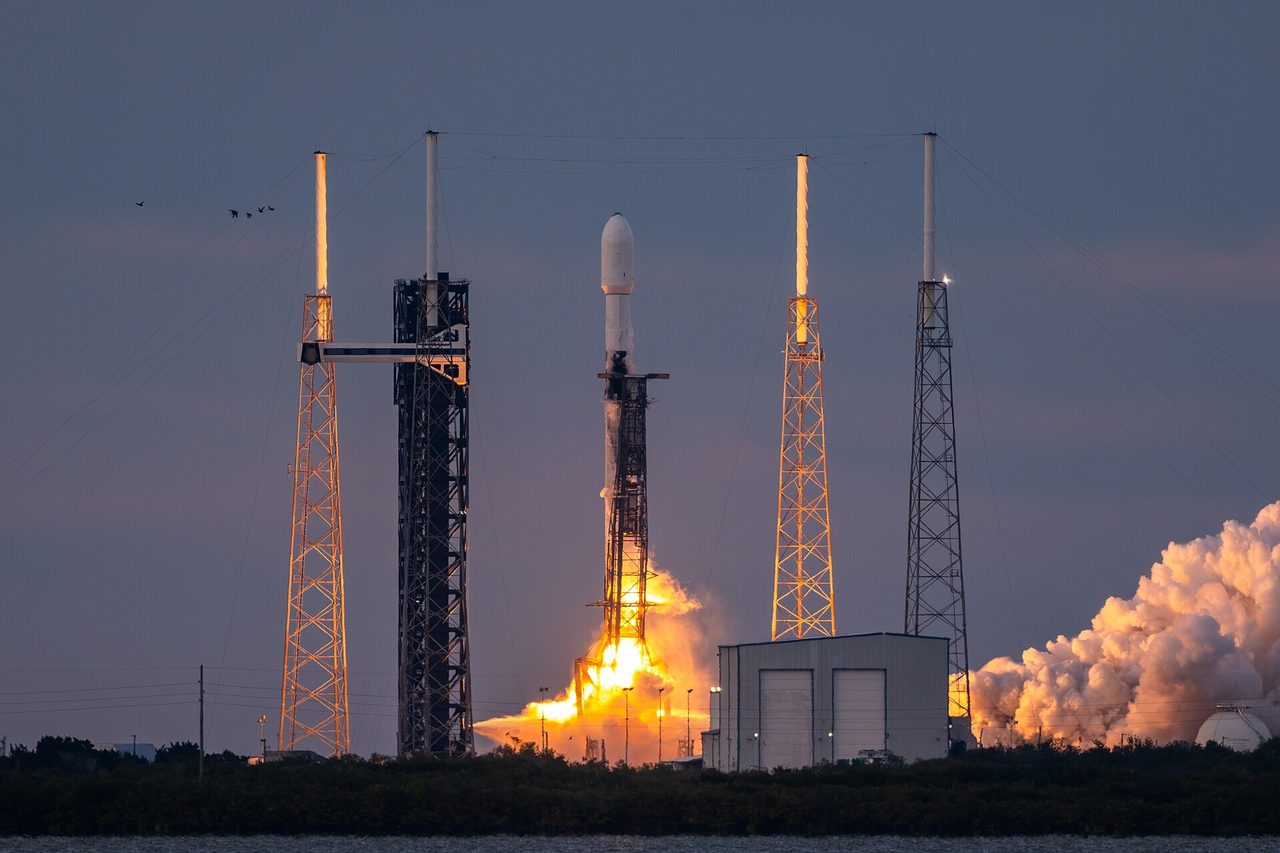
Photo: U.S. Space Force photo by Joshua Conti / Public domain · via Wikimedia Commons
Cape Canaveral Enters Its Boom Cycle
A Cold War record falls on the Florida coast
Cape Canaveral is living through a surge that looks less like a busy year and more like a full reset of America's launch industry. Space Launch Delta 45, the military command that runs the Florida range, supported 109 orbital launches last year, the most ever from the site. In April it handled five launches for separate missions in a single month, breaking a record set at the height of the U.S.-Soviet space race in the 1960s.
The official plan calls for a thousand launches a year
The official message is expansion. Under the Space Force's vision plan, annual launches from the Cape would grow from 109 in 2025 to approximately 1,200 by 2036. Behind that sits a White House mandate to support 1,000 U.S. launches a year by 2030. With real estate at the existing ranges running short, a senior Space Force commander has said the country needs a third heavy-lift spaceport operating by 2030 to relieve pressure on the Florida and California sites, which together hosted 175 orbital launch attempts last year and may need to support 700 a year by 2036.
A Moon race and a commercial order book drive the rush
Two forces explain the timing. One is strategic: China plans to land a crew on the Moon by 2030 or sooner while building satellites and rockets at speed, and Washington treats launch capacity as part of the answer. The other is commercial and concrete: almost all of last year's 100-plus Cape launches were SpaceX Falcon 9 missions, and newcomers Relativity Space and Stoke Space are building out facilities at the Cape with first launches for military and commercial customers targeted for late 2026 and 2027.
Blue Origin rebuilds and aims for weekly flights
The most dramatic subplot belongs to Blue Origin. On May 28 a 320-foot New Glenn rocket exploded during a hotfire test at Launch Complex 36, destroying the lightning tower, transporter-erector and hydraulic cylinders at a pad that had hosted three New Glenn liftoffs since January 2025. The rebuild plan is ambitious: the company has asked the Federal Aviation Administration to raise its licensed rate from 12 launches per year to 50, add two more launch pads, and finish a 330 million dollar Rocket Park expansion in the summer of 2027 capable of producing up to 150 New Glenn upper stages a year. The stated goal is multiple flights per week by the end of the decade, and chief executive Dave Limp has framed the trajectory bluntly: from about 100 flights a year out of the Cape today, to 1,000, and eventually to 10,000.
Infrastructure strains as the real boom waits
Growth is outrunning its foundations. In 2021 only 36 rockets left the Cape; last year it was more than 110, plus 65 from Vandenberg, and one industry analysis warns the ranges could face up to 3,000 launches a year by 2036. As of late October 2026, Florida had logged only 60 launches on the year, well short of last year's record of 109, with a six-week Falcon 9 pause under way. The Space Force has licensed SpaceX for 44 Starship launches a year from Kennedy Space Center with another 76 possible from Launch Complex 37, while Relativity's 565 million dollar expansion prepares 284-foot Terran R rockets at Launch Complex 16. The boom cycle, in other words, is still spooling up.
Sources
- ENMNews: Cape Canaveral hits launch fever pitch
- Florida Today: Cape Canaveral could see future surge of Blue Origin New Glenn launches
- Orlando Sentinel: Blue Origin expansion plans aim for multiple Space Coast launches a week
- Ars Technica: Senior commander says Space Force needs new spaceport by 2030 - Ars Technica
- SpaceNews: Rockets are scaling faster than the infrastructure beneath them