Winning Big on Tuesday Would Not Give Democrats a Message
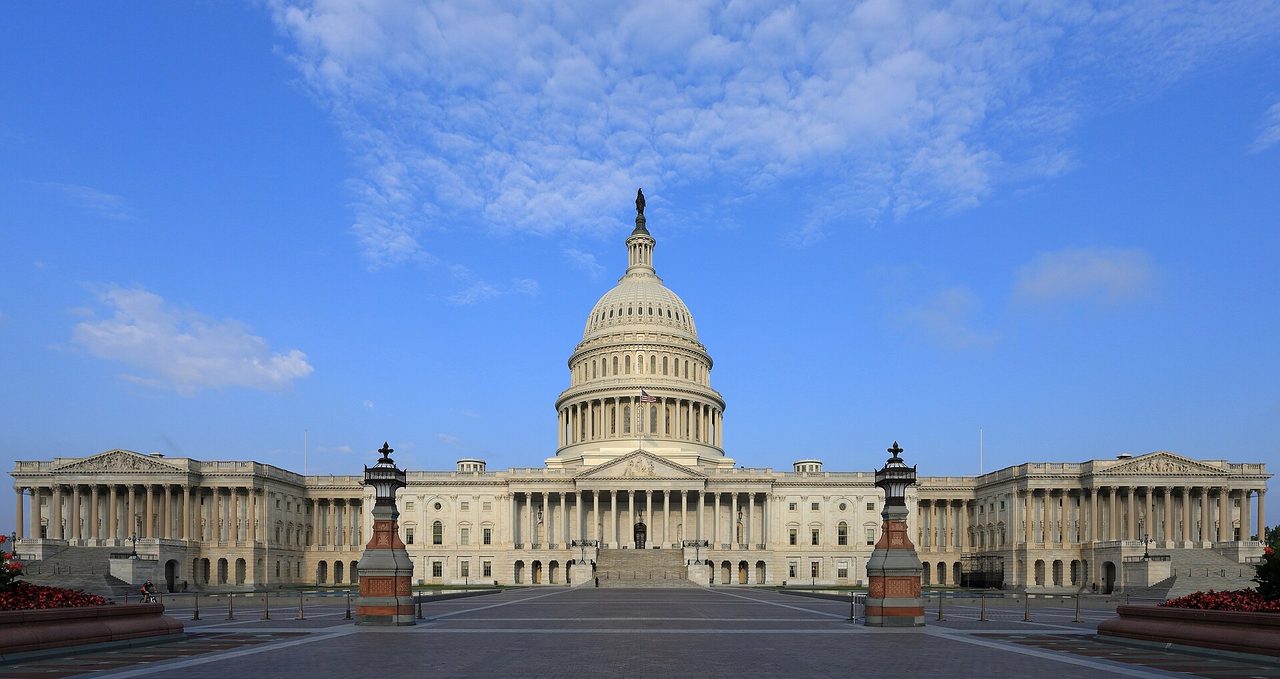
Photo: Martin Falbisoner / CC BY-SA 3.0 · via Wikimedia Commons
Winning Big on Tuesday Would Not Give Democrats a Message
Polls point to a Democratic wave
The Nov. 3 midterms will fill all 435 House seats and 35 of the 100 Senate seats. According to Al Jazeera, Republicans hold the House 218 to 214, with one Republican-aligned independent and two vacancies; 218 is a majority. In the Senate, Republicans hold 53 seats against 45 Democrats plus two independents who caucus with them; Democrats need a net gain of four to reach 51, since a 50-50 tie is broken by Vice President JD Vance in Republicans' favor. Polls favor Democrats. The New York Times/Siena national poll released Oct. 21 found Democrats ahead 52 percent to 41 percent on the House ballot among likely voters, an 11-point lead. President Donald Trump's job approval stood at 36 percent among likely voters and 34 percent among registered voters, with 59 percent disapproving — the worst reading of his two terms in that series. An NPR poll also found a Democratic midterm edge, with 55 percent of likely voters saying it matters more to elect candidates with new ideas who will bring change.
A double-digit lead in North Carolina still leaves strategists nervous
North Carolina shows both the opportunity and the anxiety. A High Point University/YouGov poll of likely voters conducted Oct. 1-20 put Democrat Roy Cooper at 54 percent against Republican Michael Whatley at 40 percent. An Elon University poll of 800 adults conducted Sept. 29-Oct. 8, with a margin of error of 4.03 points, gave Cooper a 13-point lead. Politico noted Cooper has consistently led by wide margins in a state Trump won three times. Democrats warn against reading too much into it. "Don't confuse them losing with us winning," Morgan Jackson, senior adviser to Cooper's Senate campaign, told Politico. Party figures concede a friendly environment has papered over unresolved problems since the 2024 presidential loss.
Affordability first, corruption as a pocketbook issue
House Democratic leader Hakeem Jeffries has set the governing pitch. The Associated Press reported that if Democrats retake the majority, they plan a first-100-hours agenda once the new Congress is seated in January, hyper-focused on lowering living costs and fixing the health care system, including reversing the Medicaid cuts in the Republican H.R.1 (One Big Beautiful Bill Act) and restoring ACA subsidies. Anti-corruption is the companion message. CNN reported Democrats believe they can win the House and even the Senate on it, while Republicans answer with candidate-specific scandals, welfare-fraud controversies and a congressional stock-trading proposal Democrats call inadequate. Politico reported a national survey by Blue Rose Research and Winning Jobs Narrative Action finding that messages tying corruption to housing, health care and living costs lifted support for Democratic congressional candidates by about 3 percentage points.
Voters care about costs: health care, gas and groceries
Cost dominates voter concerns. An Oct. 6 KFF poll found health care costs tied with gas prices as the top midterm worry; six in ten voters worry about affording health care, and about half say it is extremely important for candidates to talk about it, tied with the cost of living. Support for a national health plan reached about two-thirds, or 66 percent, the highest since KFF began asking in 2016, with 84 percent of Democrats and 72 percent of independents in favor and 66 percent of Republicans opposed. Other polls agree. Politico reported this week that half of Americans call the cost of living too high a top issue, and an August poll found 60 percent say government should prioritize lowering costs over raising incomes. In the Times/Siena poll, Trump stood at 29 percent approval to 69 percent disapproval on the cost of living and 24 percent to 73 percent on gas prices.
The most expensive election: $801 million on affordability
Campaign spending follows the issue. Politico's analysis of AdImpact data found more than $801 million spent on nearly 10,000 ads tied to affordability. CNN put the corruption ad fight at about $275 million. Rahm Emanuel, quoted by The Hill, gave Democrats a "B+" on messaging and urged them to fuse affordability with corruption as "heads and tails of the same coin": "The president of the United States gets a $450 million gift from Qatar — Air Force One — and you're getting $4.50 a gallon of gas." An Associated Press/NORC survey found about half of voters want substantial change and about 3 in 10 want complete upheaval.
A win settles Tuesday, not 2028
Politico's central finding is that even a big Tuesday win would not settle what Democrats should say heading into 2028. The progressive wing argues economic pain comes from corporate and billionaire greed and wants confrontation with big business; moderates fear overreach in Trump-won states. CNN quoted Jeffries saying the agenda would be hyper-focused on living costs, while noting his challenge in uniting democratic socialists, progressives and moderates after divisive primaries. Rep. Debbie Dingell told NOTUS the party plans both a 100-hour and a 100-day agenda: reversing health and Medicaid cuts that left children and seniors hungry, while holding corrupt officials accountable because their conduct raised costs. Democrats may take the gavel on Tuesday; the message for 2028 remains unwritten.
Sources
- NPR: New poll shows Democrats have midterm edge, with caution signs : NPR
- The New York Times: Democrats Have a Wide Lead in Our New Poll as Trump Slides
- KFF: Poll: Cost of Health Care and Gas Top Voters’ Midterm Concerns; Democrats Hold Significant Advantage on Health Care Costs and Cost of Living
- Al Jazeera: US midterm elections 2026 in maps and charts
- The Hill: Rahm Emanuel says Democrats' midterm messaging should focus on affordability, corruption