Four Volunteers Leave Mock Mars After 378 Days Locked Inside
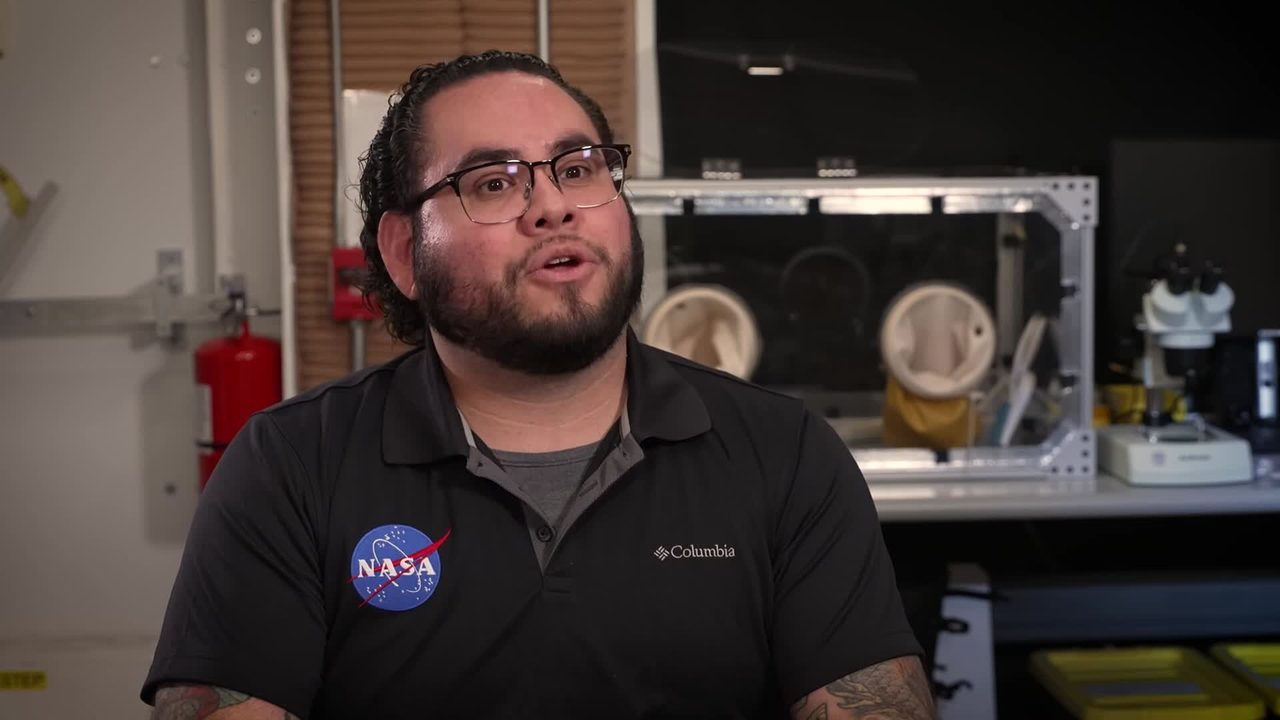
Photo: NASA Johnson Space Center / Public domain · via Wikimedia Commons
Four Volunteers Leave Mock Mars After 378 Days Locked Inside
Four volunteers walk out after 378 days behind closed doors
Four volunteers walked out of NASA's simulated Mars habitat on Saturday, Oct. 31, ending 378 days of isolation inside a hangar at the Johnson Space Center in Houston. According to NASA, the egress ceremony was streamed live starting at 3 p.m. Eastern time, as the three men and one woman embraced family members they had not touched since 2025.
Elder commands a crew of four with defined roles
According to NASA, the Mission 2 crew consisted of commander Ross Elder, medical officer Ellen Ellis, science officer Matthew Montgomery and flight engineer James Spicer. They entered the habitat on Oct. 19, 2025, and did not step outside for more than a year, living entirely inside the sealed facility.
A 1,700-square-foot printed habitat hosts crops and spacewalks
The crew lived in Mars Dune Alpha, a 3D-printed structure of about 1,700 square feet inside a hangar-like building at Johnson Space Center. According to NASA, the habitat holds private crew quarters, a kitchen, a medical area, exercise equipment, work rooms and a crop area. Over the year the crew simulated Mars mission operations, conducted suited extravehicular activities on a mock Martian surface, exercised, maintained the habitat and grew plants including peppers and tomatoes.
Delayed email and tight supplies stand in for deep space
According to NASA, the crew operated under the stressors future deep-space crews will likely face: communication delays, resource limitations and isolation. They spoke with their families only by email sent with a Mars-like time delay. The windowless habitat offered no real view outside; one crew member later described a television screen serving as a window, showing a simulated Martian sunrise and the shadow of the habitat sweeping across the ground.
Second CHAPEA mission ends with two weeks of debriefs
This was the second Crew Health and Performance Exploration Analog mission. According to multiple outlets, the first CHAPEA mission also kept a four-person crew in isolation for 378 days across 2023 and 2024. Johnson Space Center Director Vanessa Wyche greeted the Mission 2 crew at egress, saying they had learned to live with limited resources and carry out simulated Mars operations. According to NASA, the crew now begins two weeks of post-mission evaluations and debriefs with agency scientists, and the health and performance data collected will feed into planning for future Moon and Mars missions.
Sources
- NASA: NASA Invites Media to Crew Completion of Yearlong Mars Simulation - NASA
- NPR: 4 volunteers who lived in a Mars simulation for a year are back to the real world
- Engadget: NASA's Second Year-Long Mars Simulation Mission Ends Today
- The Straits Times: Crew from NASA's simulated Mars mission emerges after 378 days in isolation
- The Independent: NASA crew emerges after 378 days in isolation for simulated Mars mission