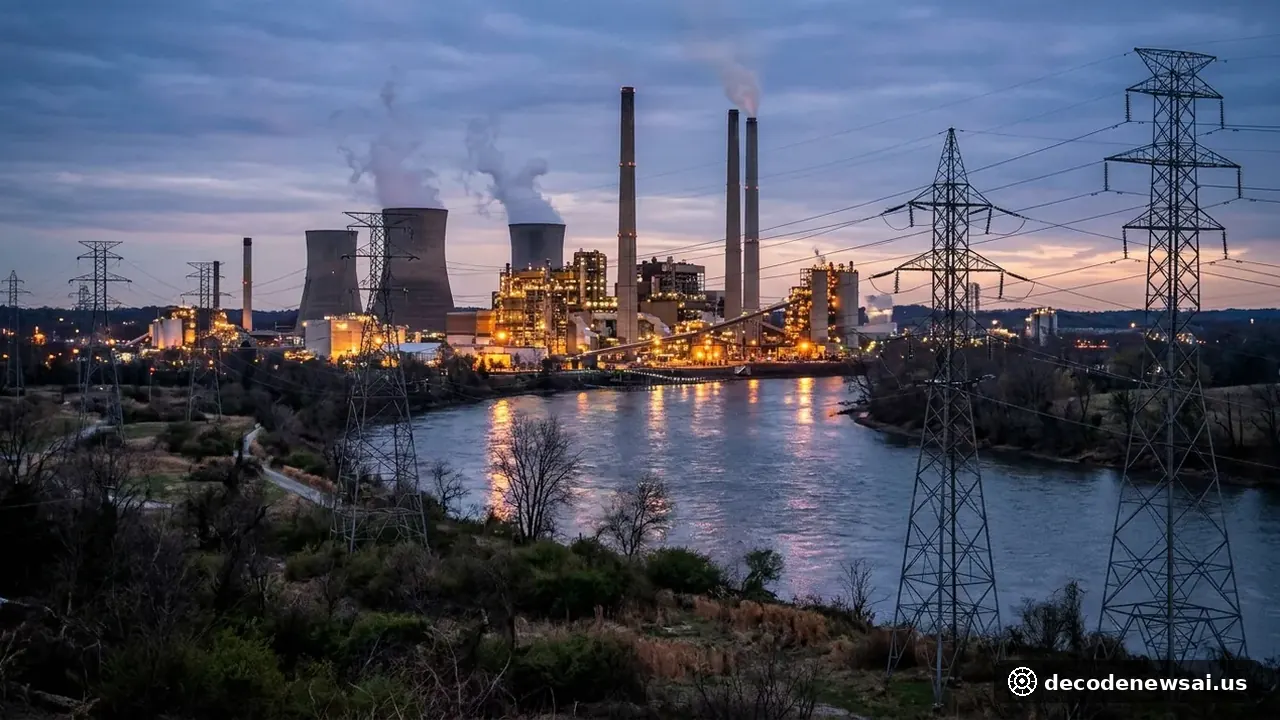
WASHINGTON - The U.S. Environmental Protection Agency's partial repeal of 2024 greenhouse gas standards for fossil fuel-fired power plants took effect on Nov. 16, eliminating carbon capture mandates for existing coal plants and new baseload gas turbines.
90% Carbon Capture and Co-Firing Dropped
Published in the Federal Register on Sept. 17, the rule concludes that 90% carbon capture and storage has not been adequately demonstrated at reasonable cost and that 40% natural gas co-firing constitutes unlawful generation shifting.
"Specifically, the EPA is repealing the emission guidelines for existing fossil fuel-fired steam generating units, the carbon capture and sequestration/storage (CCS)-based standards for coal-fired steam generating units undertaking a large modification, and the CCS-based standards for new base load stationary combustion turbines," the final rule states. The agency estimates compliance cost savings of $160 billion at a 3% discount rate and $95 billion at 7% from 2026 through 2047, while leaving Phase 1 efficiency rules for new gas turbines intact.
21-State Lawsuit Continues in Federal Court
Signed by EPA Administrator Lee Zeldin, the rollback faces an Oct. 1 legal challenge in the U.S. Court of Appeals for the D.C. Circuit from 21 states, the District of Columbia, New York City, Chicago, and Denver.
Challengers argue the Clean Air Act obligates the agency to regulate power sector carbon emissions rather than rescind limits without replacement. Public comments on a separate EPA supplemental proposal to repeal all remaining power plant greenhouse gas standards closed on Nov. 2.