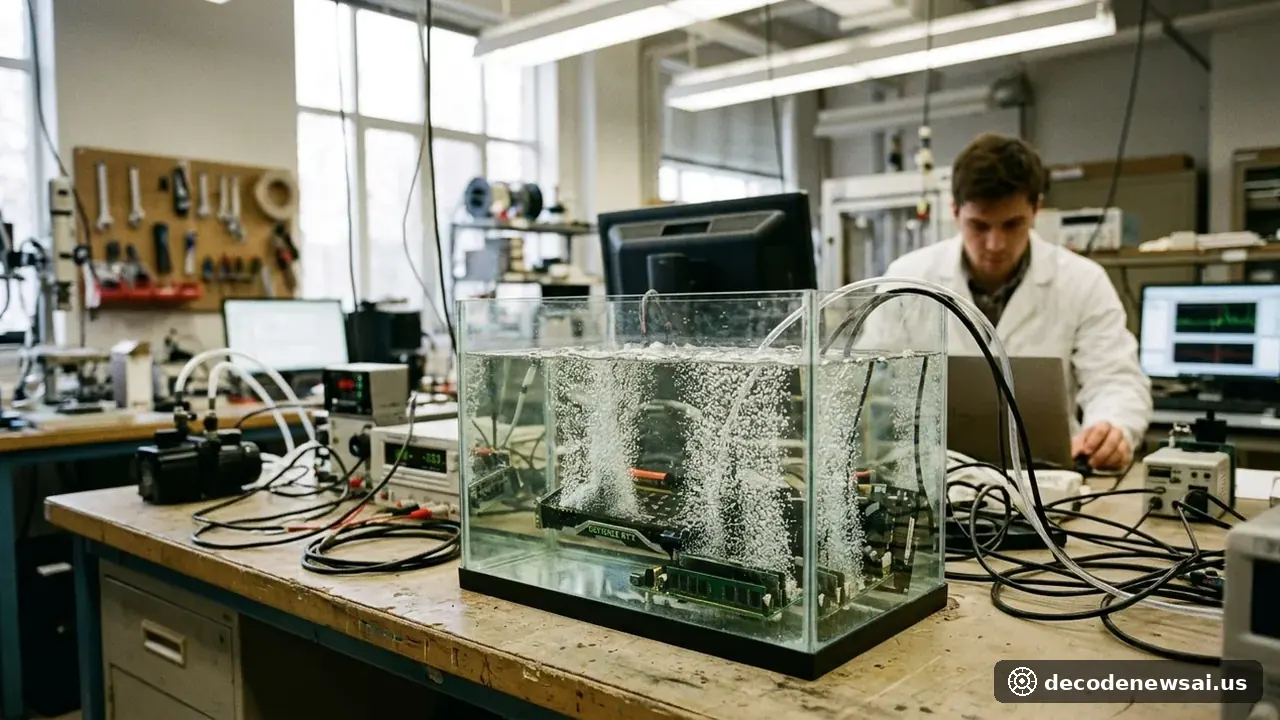
WATERLOO, Ontario - University of Waterloo engineers published findings in the Journal of Colloid and Interface Science detailing a hybrid immersion cooling system for AI data centers. In laboratory tests, a single drop of specialized coolant lowered a simulated computer chip hotspot by up to 17°C in 15 seconds.
Deionized Water Paired With Boiling Drops
Led by Prof. Sushanta Mitra alongside postdoctoral researcher Dr. Tian-Yu Zhang and PhD student Arnav Banerjee, the team paired inexpensive deionized water for steady heat with denser, low-boiling coolant droplets aimed at sudden temperature spikes. Because the droplets are heavier than water, they stay localized on overheated chip zones rather than dispersing. "Boiling soaks up a lot of heat and the rising bubbles stir the surrounding water so it carries heat away faster. We get the punch of boiling, but only where and when it's needed," Mitra said.
Encapsulated Coatings and Commercial Testing Limits
To control when droplets vaporize, the researchers wrapped the coolant in a thin silicone oil shell embedded with heat-conducting ceramic particles. The team envisions circulating droplets or sensor-guided delivery, with potential uses in electric vehicles, batteries, lasers, and LED lighting. However, the team has not yet demonstrated specific electricity or operating-cost savings inside commercial data centers.