Seven Reasons Mizuho Says CXMT's 4F² Claims Pose No Threat to Micron or SanDisk
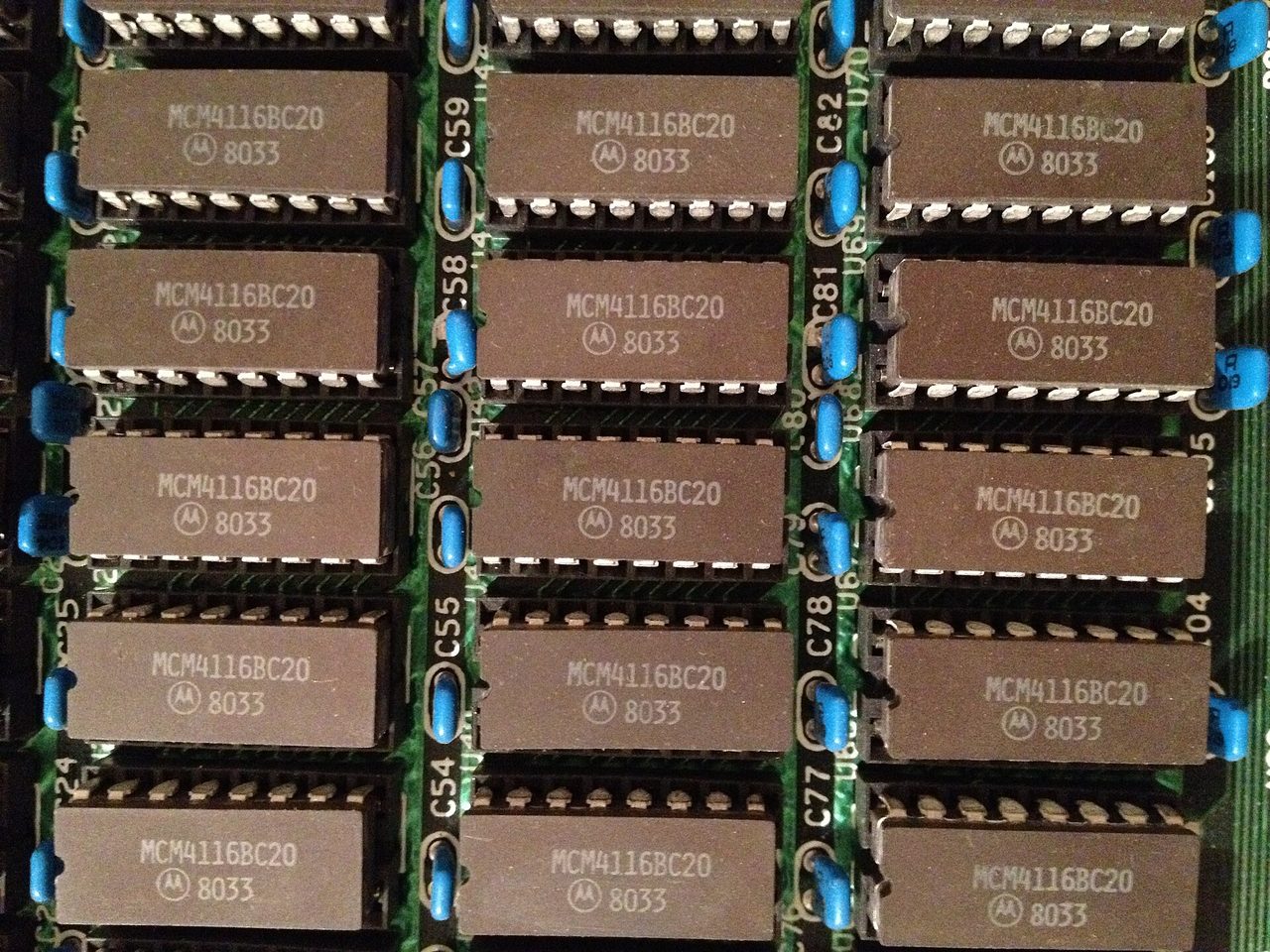
Photo: ArnoldReinhold / CC BY-SA 4.0 · via Wikimedia Commons
Seven Reasons Mizuho Says CXMT's 4F² Claims Pose No Threat to Micron or SanDisk
Mizuho tells clients not to sell in a panic
On October 13, Mizuho TMT specialist Jordan Klein circulated a note arguing that ChangXin Memory Technologies' advanced DDR5 roadmap "changes nothing near term" for investors in Micron, SanDisk, SK Hynix or Samsung Electronics. "I would not be selling or in a panic if I owned MU, SNDK, SKHY or Samsung over comments yesterday by CXMT senior management about their new advanced DDR5 design roadmap," he wrote. "Something to watch and monitor closely, but that is about it." The note is the first structured pushback against two sessions of threat-driven selling in memory shares.
What CXMT actually announced
At a Shanghai chip conference on October 10, CXMT president Cao Kanyu said the company will ship its first 4F² product, a server DDR5 RDIMM, by the end of the year. The design uses a vertical surrounded gate transistor to shrink a memory cell's footprint by roughly one-third against today's 6F² layout, which vendors say can lift density by 30% to 50% in the same area; CXMT claims more than 300 patent families. Coverage by Yicai and Tom's Hardware stressed that no speeds or capacities have been published.
No specs, no verified yields, no customer qualification
Klein's first cluster of reasons is about missing evidence: no complete specifications, no verified yields, no customer qualification results and no commercial-scale shipment commitments. "A year-end product introduction can't be directly compared with Samsung's reported 2028 mass-production target. A launch doesn't establish manufacturing maturity, yields, or cost competitiveness." A Digitimes report he called "more balanced" likewise poured cold water on the advancement claims.
Smaller cells do not automatically mean cheaper bits
He rejected the assumption that a smaller cell translates into a lower-cost chip: process complexity, yields and integration all feed the final cost equation, areas where CXMT has yet to demonstrate competitive parity. A companion market wrap added that CXMT is reportedly already at its 2026 wafer capacity, with costs at or above those of incumbents.
The supply-glut argument is premature
On the fear that new Chinese supply will break the pricing cycle, Klein was blunt: CXMT "hasn't shown mass-production success or verified yields and performance for its 4F² products, so it's premature to assume an imminent supply glut." He stressed the product is conventional server DRAM, not the high-bandwidth memory central to AI accelerator racks, and that US technology-transfer limits keep HBM out of reach for now. A Reuters assessment dated September 18 expects AI-driven tightness to last through at least 2027 — meaning CXMT would be adding supply into a growing market.
SanDisk sells NAND, so the hit lands differently
Product mix matters. SanDisk's core business is NAND flash, while the CXMT announcement targets DDR5. Cantor Fitzgerald called the selloff a case where the headline is worse than reality, and BMO's Harsh Kumar reiterated that NAND should stay undersupplied through 2027 and possibly into 2028. The Motley Fool noted that CXMT chips still largely feed the low-end mobile market and that the company is not yet a volume NAND maker, concluding the risk to Micron is greater than to SanDisk. Klein did not dismiss the longer game: "You do not want to dismiss CXMT or their NAND peer YMTC. And I am not doing that," he wrote, adding that CXMT is investing aggressively to serve domestic Chinese customers.
Four straight down sessions anyway
The note did not stop the slide. Monday's close left Micron down 3.88% at $989.04 and SanDisk down 5.97% at $1,487.33, with roughly $108 billion wiped from memory stocks in one session. On Tuesday, Micron touched $931 in early trading and finished at $953.19, off 3.62% for a fourth consecutive decline and its lowest level since September 16; SanDisk fell as low as $1,401 and was still down more than 3%. In Seoul, SK Hynix lost 10% and Samsung 7.4%, while the Philadelphia semiconductor index posted a fifth straight session of losses.
Share gains are real, but so is the distance
Skepticism is not dismissal. Counterpoint estimates CXMT held about 10% of global DRAM revenue in the second quarter, up from 4% a year earlier; another estimate puts it at 7% and fourth globally. Morningstar's Jing Jie Yu said an earlier, successful 4F² ramp would "vastly improve" CXMT's competitive position, while expecting a considerable gap between an unveiling and commercial production at viable yields. One cited figure puts CXMT's DDR5 yield near 50%, short of the 80% to 90% usually required for commercial viability.
Three checkpoints: published specs, verified yields and export controls
Three checkpoints follow: whether CXMT publishes speeds, capacities and verifiable yields before year-end; whether Samsung's 2028 mass-production timetable moves; and whether US export controls widen to advanced etch and atomic-layer-deposition tools. On the other side, Micron's board has authorized a record $35.16 billion buyback starting December 9, and Mizuho raised its Micron price target to $1,400 from $1,300 on October 1. With ASML and TSMC earnings approaching, Klein argued the pressure reduces risk rather than adding it.
Sources
- Investing.com: Analyst lists 7 reasons why China CXMT's claims don't threaten Micron and Sandisk
- Tom's Hardware: CXMT president says company's first 4F² DRAM will be a server DDR5 RDIMM due by year-end
- TrendForce: CXMT Accelerates 4F² DRAM Push, Eyes Year-End Server DDR5 RDIMM Launch
- The Motley Fool: Why Sandisk Stock Dropped Again on Tuesday
- Morningstar: Samsung and SK Hynix Lead Chip Sell-Off as China Competition Fears Grow