China's September Exports Jump 36.3% as AI Chip Shipments Do the Heavy Lifting
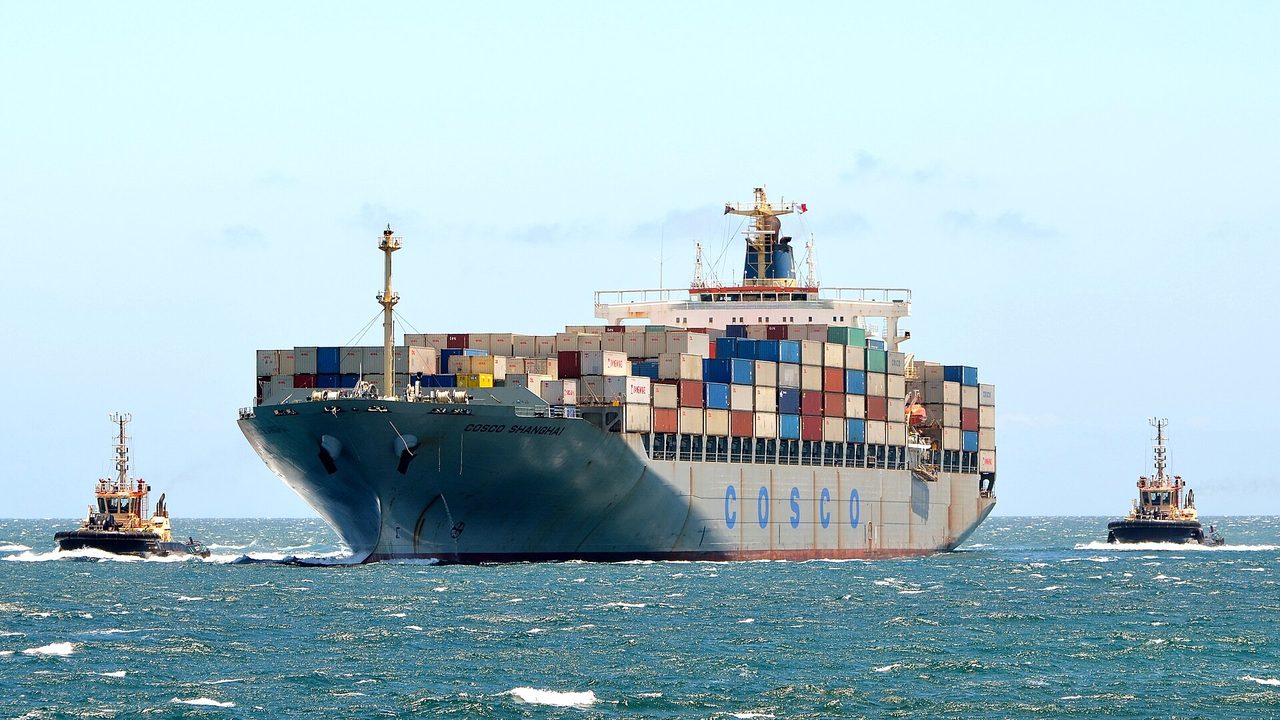
Photo: Bahnfrend / CC BY-SA 4.0 · via Wikimedia Commons
China's September Exports Jump 36.3% as AI Chip Shipments Do the Heavy Lifting
Exports Beat Forecasts by a Wide Margin
China's General Administration of Customs said on October 14 that exports reached $447.18 billion in September, up 36.3% from a year earlier. That was the fastest pace since February, when shipments grew 39.6%, and it easily outran the 25.5% rise economists had forecast in a Reuters poll. August's growth was 25%. Imports climbed 31% to $313.65 billion, also accelerating from 28.2% in August and far above the 24.5% expected. The gap produced a monthly trade surplus of $133.5 billion, versus a median estimate of $117.8 billion in a Bloomberg survey. In yuan terms, September imports and exports totaled 5.16 trillion yuan, the first month above that threshold, up 27.5%, with exports of 3.03 trillion yuan rising 29.6%.
Customs Says the Fundamentals Haven't Changed
At a State Council Information Office briefing the same day, customs deputy commissioner and spokesman Wang Jun said trade in the first three quarters reached 39.94 trillion yuan, up 18.8% — the fastest start in five years. Growth accelerated each quarter, from 15.3% to 18.3% to 22.3%, and third-quarter exports passed 8 trillion yuan for the first time, up 22%. Wang credited a complete industrial chain, a strengthening advanced-manufacturing base and rising innovation and competitiveness, and he answered the question everyone was asking about the rest of the year in one line: the fundamentals supporting exports have not changed.
Price, Not Volume, Is Driving the Chip Numbers
The headline is really a chip story. Customs data show September integrated-circuit export value surged 136% year on year while shipment volume rose just 1% — the money is coming from prices, as the global AI build-out keeps bidding up DRAM, HBM and related components. Caixin reported the same pattern a month earlier: August IC export value jumped 129.8% even as volumes fell 7.9%. Wang Jun noted that industrial robots, electronic components, computer parts and electrical equipment together accounted for more than 10 trillion yuan of trade in the first nine months, up 58.9% and contributing 11.3 points of overall trade growth. Imports tell the same story, with integrated circuits up 56.6% and memory components up 1.5 times.
Cars Provide a Second Engine
Semiconductors are not alone. According to the China Association of Automobile Manufacturers, passenger vehicle exports hit about 919,000 units in September, up 64% from a year earlier, as automakers lean on overseas demand to offset sluggish domestic sales. Analysts broadly attribute the upside surprise to demand for data-center components combined with a stabilization of U.S.-China tensions. Hao Zhou, chief economist at Guotai Junan International, said the record monthly surplus underscores the continued strength of China's external sector despite lingering concerns over domestic demand.
A $938 Billion Surplus sharpens the Friction
For January through September, exports totaled $3.37 trillion, up 21.3%, and imports $2.43 trillion, up 27.5%, leaving a surplus of about $938 billion. Bloomberg reported that at this pace the annual figure could cross $1 trillion this month — a threshold not reached until November last year. By destination, trade with ASEAN reached 6.84 trillion yuan, up 22.7%, with the European Union 4.78 trillion yuan, up 8.4%, and with the United States 3.18 trillion yuan, up 4.1%. Bloomberg also reported that China's monthly goods surplus with the EU widened to $34.8 billion, up almost 21%, as exports to the bloc topped $60 billion for the first time.
The Rebalance Pressure Is Already Here
The surplus is feeding directly into trade friction. The Financial Times has reported that the EU is asking China to voluntarily cap hybrid vehicle exports at about 15% of its market, down from more than a third now, or face higher tariffs; European Commission President Ursula von der Leyen has put the EU's trade deficit with China at roughly €1 billion a day and warned that the bloc will use every tool available. The Associated Press noted that a weaker yuan is also cited by policymakers as a factor making Chinese goods cheaper abroad and adding to trade imbalances.
What to Watch Next
The official line is continuity; the real variable is AI capital spending. Max Zenglein, senior economist for Asia-Pacific at The Conference Board, warned that a slowdown in the global AI investment cycle could pose a greater threat to China's export growth than trade restrictions imposed by other countries. With AI infrastructure spending still expanding, chips and data-center equipment will keep underpinning the numbers. If that cycle turns, the same component of demand will be the first to stall.
Sources
- Reuters: China's September exports blow past forecasts, imports accelerate
- Bloomberg: China's Trade Surplus Nears $940 Billion as Export Growth Surges
- Associated Press: China's exports surge 36.3% in September from a year ago
- China's export engine steams ahead with September shipments up 36%
- 中国前三季外贸增长18.8% 9月进出口首超5万亿人民币