Roche Pays Up to $1.16 Billion for China's Rona ALK7 Candidate, Joining the Fat-Targeting Obesity Race
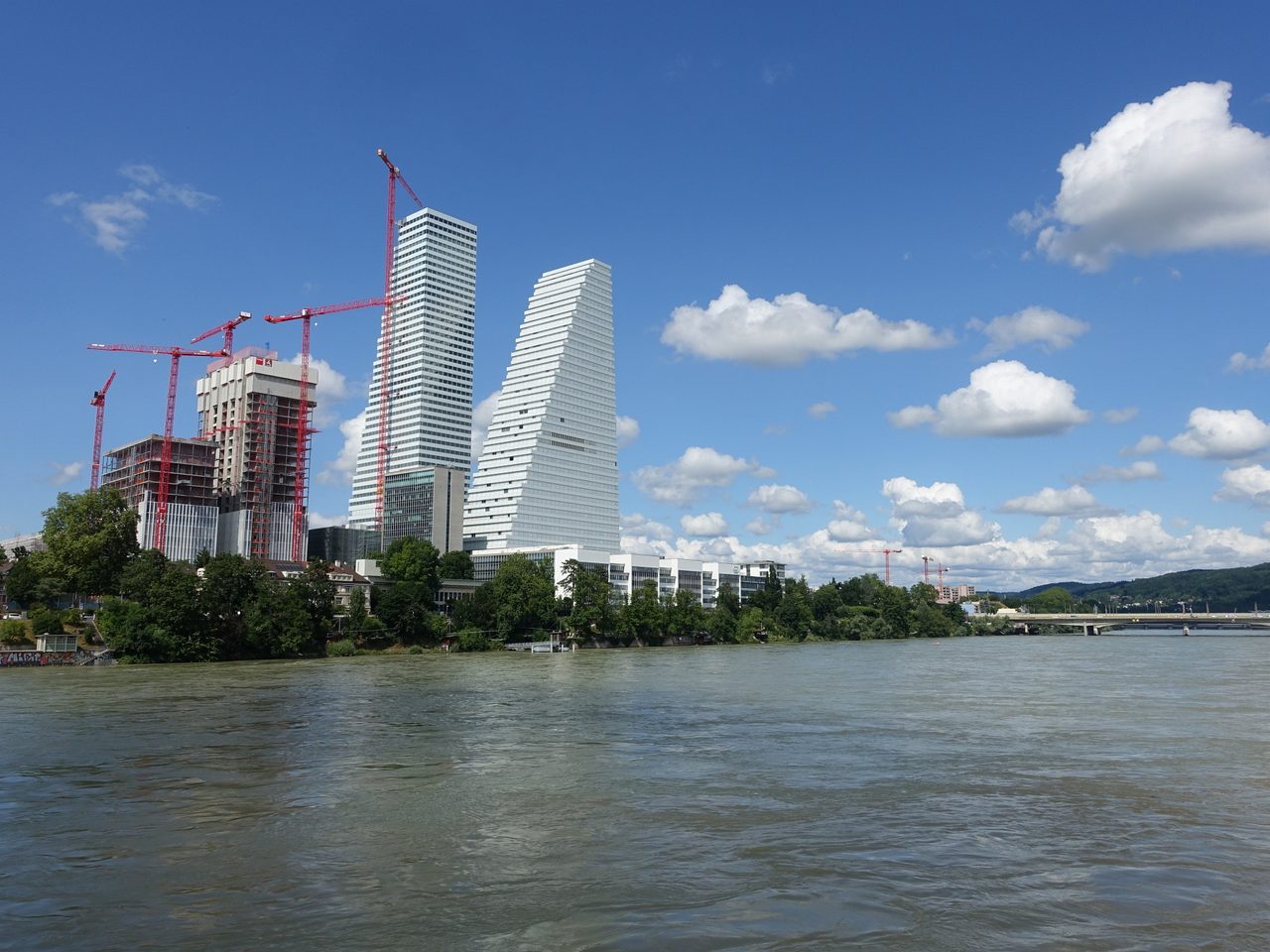
Photo: EinDao / CC BY-SA 4.0 · via Wikimedia Commons
Roche Pays Up to $1.16 Billion for China's Rona ALK7 Candidate, Joining the Fat-Targeting Obesity Race
Roche takes worldwide rights to an RNAi drug that targets fat tissue
On October 13, Roche and Rona Therapeutics announced that the Swiss drugmaker has secured an exclusive worldwide license to Rona's investigational RNA interference candidate targeting activin receptor-like kinase 7, or ALK7, for obesity and metabolic disease. Several outlets rounded the headline number to $1.2 billion; the company figure is up to $1.16 billion. Rona is headquartered in Shanghai with a U.S. unit in Santa Barbara, and was founded in 2021.
The price tag: $100 million now, $1.06 billion if it works
Rona receives up to $100 million in upfront and near-term milestone payments, plus up to $1.06 billion in development, regulatory and commercial milestones, and tiered royalties on global net sales. Reuters and The Wall Street Journal both reported the deal as worth up to $1.16 billion. Neither the codename of the licensed program nor its stage of development was disclosed.
ALK7 is a bet on adipose biology, not appetite
ALK7, encoded by the ACVR1C gene, is a member of the TGF-beta receptor superfamily expressed predominantly in adipocytes, where it regulates lipid storage, lipolysis and energy homeostasis. Rona says human genetics show that people with reduced ALK7 activity have favorable fat distribution and metabolic phenotypes, making direct silencing of the receptor in fat cells a way to cut visceral and other ectopic fat while preserving lean mass — the central weakness of today's incretin drugs.
Both CEOs framed it as filling a gap
Rona founder and CEO Stella Shi said obesity is a complex chronic disease with significant unmet needs for mechanisms that can improve the quality and durability of weight loss, calling ALK7 a compelling target with the potential to address adipose tissue biology directly. Roche's head of corporate business development, Boris Zaïtra, said obesity requires differentiated treatment options and that the partnership complements the company's pipeline and its commitment to next-generation metabolic therapies.
Roche needed a new leg after killing emugrobart
Roche has said it aims to be among the top three players in obesity. It advanced oral GLP-1 CT-996 into Phase 3 at its Pharma Day in late September, and reported positive mid-stage data for enicepatide, formerly CT-388, the same month. But it also discarded emugrobart, a muscle-sparing anti-myostatin therapy, after an interim mid-stage analysis suggested it was unlikely to deliver meaningful weight loss, returning the rights to subsidiary Chugai Pharmaceutical. ALK7 offers a mechanism that does not work through appetite.
GSK moved first, and Novo is close behind
Fierce Biotech, BioPharma Dive and MedCity News all placed the deal in a crowded field. GSK licensed SiranBio's ALK7 candidate SA030 in May for $55 million upfront and up to roughly $1 billion. Alnylam began a trial of ALN-2232 in March and has phase 1 data on its roadmap for the second half of 2026. Novo Nordisk Chief Scientific Officer Martin Holst Lange told investors last month that the company has a number of ALK7 assets, with the most advanced entering the clinic this year. Arrowhead is also on the list.
What China's RNAi sector gets out of it
For Rona, the deal is a large validation of a liver-delivery-dependent field: its platform is built on extrahepatic delivery, multivalency and novel oligo chemistry, backed by blue-chip healthcare investors. MedCity News noted that Rona's public pipeline lists just two obesity programs, both preclinical and aimed at undisclosed targets. Chinese outlets such as PharmCube led with "more than $1.1 billion" and "a $1.2 billion outing," treating it as a landmark for domestic small-interfering RNA assets going global.
Three signals to watch
Three signals matter: when Roche reveals the candidate's name and clinical stage, how milestone payments are structured, and whether ALK7 silencing works in combination with incretin therapies. Wall Street forecasts cited in the press put the obesity market at $100 billion to $150 billion by 2030, still dominated by Eli Lilly and Novo Nordisk. For Roche, durability of weight loss without loss of muscle is the test that decides whether $1.16 billion was a bargain or a stretch.
Sources
- Reuters: Roche strikes obesity drug licensing deal worth up to $1.16 billion with Chinese Rona Therapeutics
- Fierce Biotech: Roche inks $1.16B Rona deal to enter emerging obesity race
- BioPharma Dive: 罗氏-大睿 ALK7 交易报道
- MedCity News: ALK7 赛道盘点
- The Wall Street Journal: 交易金额按最高 11.6 亿美元报道