Hot CPI Turns Futures Lower: September Inflation Hits 3.7%
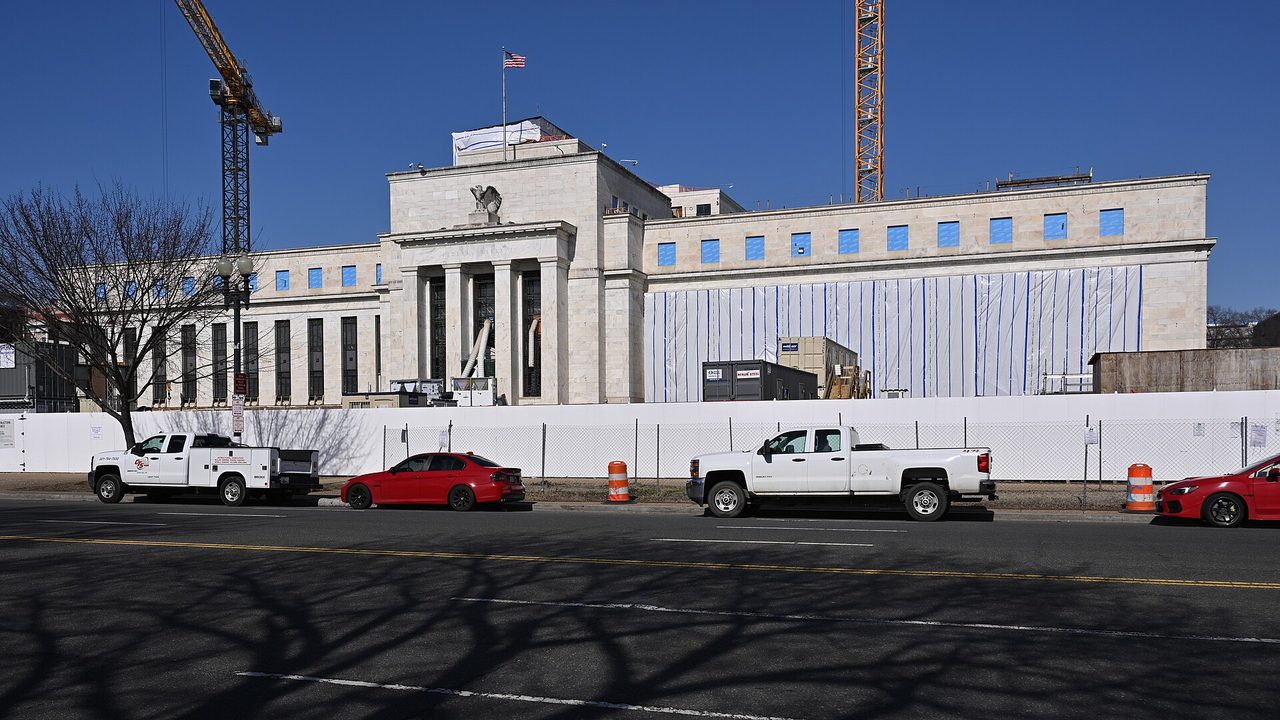
Photo: G. Edward Johnson / CC BY 4.0 · via Wikimedia Commons
Hot CPI Turns Futures Lower: September Inflation Hits 3.7%
Futures Flip Within Three Minutes of the Print
The Bureau of Labor Statistics released the September Consumer Price Index at 8:30 a.m. ET on Wednesday, and the reaction was nearly immediate. By 8:33 a.m. ET, Dow Jones E-minis were down 83 points, or 0.16%, S&P 500 E-minis were down 18.75 points, or 0.24%, and Nasdaq 100 E-minis were down 156.5 points, or 0.49%, according to Reuters. Half an hour earlier the tape had looked completely different: at 7:28 a.m. ET, Dow futures were up 141 points, or 0.27%, and S&P 500 futures were up 11.5 points, or 0.15%, while Nasdaq 100 futures already lagged 50.75 points, or 0.16%, on continued chip weakness. At 5:41 a.m. ET the Dow had been higher by 234 points, or 0.45%.
Headline 3.7%, Core 2.6%: Both Above the Street
Economists polled by Reuters had forecast an annual rate of 3.6%, up from 3.4% in August. The actual number was 3.7%. Monthly prices rose 0.6%, matching expectations after August's 0.4% gain. Core CPI, which strips out food and energy, rose 0.3% on the month against a 0.2% consensus, and 2.6% year over year versus a 2.5% expectation and 2.4% in August. Shelter rose 0.4% after 0.3% in August. Food prices were flat overall, with food away from home up 0.2% and food at home down 0.1%.
Gasoline Did Most of the Work
The gasoline index jumped 9.1% in September and accounted for more than half of the monthly increase, the BLS said. The broader energy index climbed 5.2% after a 2.1% gain in August and stands 20.4% higher over the past 12 months, with gasoline up 34.2% in that period. Quartz and Fox Business reported the same figures; CNN and The Hill led with them as well. The national average price of a gallon of regular gasoline reached $4.3413 on Tuesday, compared with roughly $2.98 before geopolitical tensions escalated in late February, according to oilprice.com.
Why Core Matters More Than the Pump
Energy is volatile, and strategists routinely look through a gasoline-driven headline. That argument gets harder when core prices also beat: a 0.3% monthly core print means the pressure is no longer confined to the fuel tank. "Inflation rose faster than expected last month, with price pressures extending beyond gasoline," CNN wrote. Cleveland Fed President Beth Hammack had already warned on Monday that persistent inflation may "require a more restrictive policy," blaming energy shocks, tariffs and the artificial intelligence buildout.
The Fed Math Has Not Moved Much — Yet
Before the number, the CME FedWatch tool showed investors pricing roughly a 22% chance of a quarter-point hike at the Oct. 27-28 meeting; LSEG data put the odds of an October hold at 78% and a December hike at 88%. The Fed raised its target range by 25 basis points on Sept. 16 to 3.75%-4.00%, its first increase since July 2023. New York Fed President John Williams has called inflation "unquestionably too high" while saying one more move "may be appropriate late this year." A hot print keeps October alive as a live meeting — October hike odds jumped from 22% to over 40% after the release — and the 10-year Treasury yield, which touched 5.35% on Oct. 7 for a 24-year high, sets the discount rate backdrop.
Bank Earnings Split the Scorecard
Inflation was only one of Wednesday's headlines. Morgan Stanley posted equity trading revenue of $5.8 billion, a nearly 41% rise from a year ago, beating profit estimates, while fixed income trading fell 7.3% to $2.01 billion; its shares were flat before the bell. Bank of America fell 4.2% in premarket trading after quarterly profit declined and it set aside $1.2 billion to cover regulatory fines tied to failures in detecting illicit activity. A day earlier, JPMorgan reported net income of $15.31 billion, or $5.57 per share, against a $5.90 LSEG estimate — its first revenue and earnings miss in nearly three years — while Goldman Sachs beat comfortably with $17.01 per share and $18.68 billion of revenue. The S&P 500 closed Tuesday down 1.8 points at 7,805.45; the Dow shed 180 points, or 0.35%.
Who Pays: Drivers, Borrowers, and Long-Duration Bets
Three groups feel this print. Drivers pay at the pump, where gasoline is up 34.2% in a year. Borrowers pay through the 10-year yield, which sits above 5%. And holders of long-duration growth stocks pay first in futures: the Nasdaq 100 fell 0.49% in the three minutes after the release versus 0.16% for the Dow, the classic rate-sensitivity split. FactSet expects S&P 500 earnings to grow 29.6% in the third quarter, but bank executives have already tied slower deal and trading activity to the bond market rout.
What Comes Next: PPI, More Earnings, Oct. 28
Thursday brings the September producer price index, with CNBC reporting consensus expectations of 0.6% monthly and 5.5% annual growth. Johnson & Johnson and UnitedHealth are among the nonfinancial companies reporting this week. Then the FOMC meets Oct. 27-28, with the decision at 2 p.m. ET on Oct. 28. December hikes are already close to fully priced; a hot PPI would force markets to reprice October all over again.
Sources
- Reuters
- Yahoo Finance
- Quartz
- Fox Business
- CNN