IMF Chief to Washington: Growth Alone Won't Dent a 0 Trillion Debt
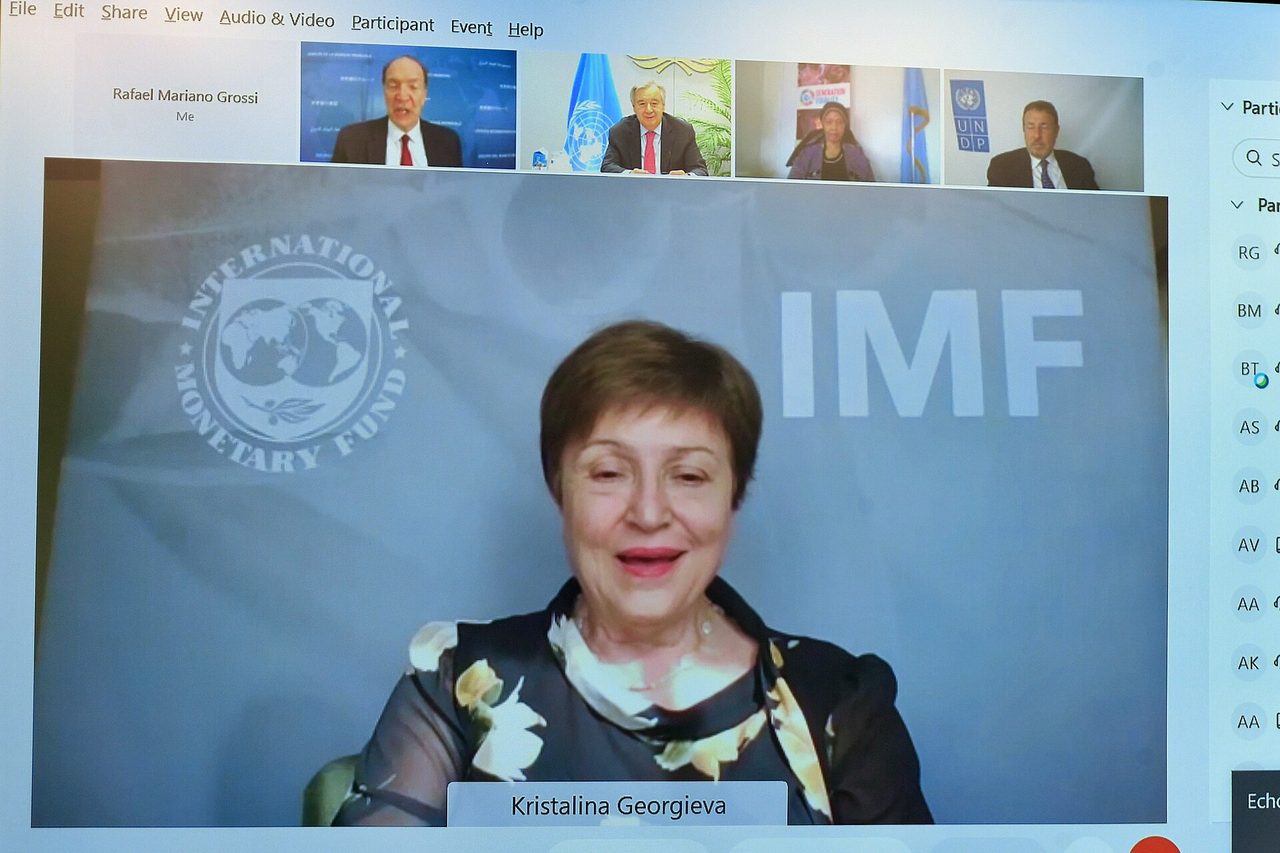
Photo: IAEA Imagebank / CC BY 2.0 · via Wikimedia Commons
IMF Chief to Washington: Growth Alone Won't Dent a $40 Trillion Debt
Debt Moves to the Top of the Agenda
IMF Managing Director Kristalina Georgieva used a press conference at the fund's annual meetings in Bangkok on Wednesday to deliver a blunt message to the United States and other wealthy economies: the debt is too big, and time is running short. This year's meetings, held at the Queen Sirikit National Convention Center from Oct. 12 to 18, are the first outside Washington in three years, and they are unfolding under the shadow of a widening Middle East war and rising borrowing costs.
'Growth Cannot Deliver Fast Enough'
Georgieva's central objection is to the idea that faster expansion can outrun the debt. "Growth of course helps, but it cannot deliver fast enough the necessary adjustments," she told reporters. "There is no magic," she added, saying "you have to go in a direction of tightening, bringing it down, bringing the deficit down."
Bessent's Growth-First Strategy Under Fire
The remark was aimed squarely at Treasury Secretary Scott Bessent, who has argued that sustained growth above 3% plus spending restraint can bend the debt-to-GDP curve lower. Georgieva said Bessent and other U.S. leaders recognize the federal deficit and the national debt — now above $40 trillion — have grown too high. Bessent missed this week's meetings, reportedly to attend to domestic engagements.
The Deficit Is Set to Top 6% of GDP
Bessent said before taking office that he wanted the deficit cut below 4% of GDP by the end of Trump's term, and in August he said the deficit had likely peaked. Final figures for the fiscal year that ended Sept. 30 have not been published, but the deficit is expected to top 6% of GDP, up from 5.8% in fiscal 2025. The IMF projects U.S. gross debt at 142% of GDP by 2031. Benn Steil of the Council on Foreign Relations calculated in a Sept. 25 note that at a 6%-of-GDP deficit, "the debt will rise another $7 billion by the end of today — and each subsequent day."
Global Public Debt Nears 100% of GDP
The IMF's latest Fiscal Monitor, "Taxing Better to Boost Growth," warns that global public debt is on track to pass 100% of GDP before the end of the decade — the highest since World War II. Rodrigo Valdes, director of the IMF's Fiscal Affairs Department, said the response so far is inadequate: "Fiscal risks are rising, and a proper reaction is largely absent in many countries. And in major advanced economies, the effect of fiscal indiscipline does not stop at the border. It travels to the rest of the world."
Rich Countries Called the Worst Offenders
Georgieva singled out advanced economies, led by the United States, as the "worst offenders," carrying heavier debt loads relative to output than emerging markets or low-income countries. The cost of that borrowing is climbing: the effective average cost of government financing is projected to rise to 3.7% by 2031 from 2.3% in 2021, and G7 10-year yields climbed more than 110 basis points between February and September, touching their highest level in nearly two decades.
The Bill Lands on Poorer Economies
The burden falls hardest on countries with the least room to maneuver. Interest payments in low-income countries now consume more than 15% of tax revenues, against an average of roughly 9% between 2011 and 2019. On average, nearly 10% of government spending goes to servicing debt. The IMF notes that among the world's poorest countries, interest payments have reached record highs relative to revenue while declining aid creates gaps some cannot finance. Separate CEPR data put 75 of 119 rated low- and middle-income countries in debt distress or at significant risk of it.
America's Interest Bill Rivals Social Security
For the U.S., interest costs are on track to reach 5.3% of GDP, up from 2.8% before the pandemic — roughly equal to projected spending on Social Security. Press reports note the U.S. will spend more servicing its national debt this year than on its military.
Miliband Presses a 'New Deal on Debt'
Britain's foreign secretary, Ed Miliband, amplified the developing-country case from the sidelines. "The Global South is paying the price for rising interest rates in wealthier countries," he said, calling for "a new deal on debt" that lets countries repay over longer horizons and refinance at better rates. He spoke at the launch of a Rockefeller Foundation report urging a "surge" in affordable financing, invoking the 2005 Gleneagles summit.
'China Spends, America Saves, Europe Invests'
Georgieva pressed the same theme into a formula: "To put it very simply, China needs to spend more, the U.S. has to save more and Europe has to invest more." She also urged member countries to fully fund IMF facilities for low-income and vulnerable states — the Poverty Reduction and Growth Trust, whose lending has been tripled, and the Catastrophe Containment and Relief Trust.
Energy Shock and AI Raise the Stakes
The fiscal pressure is compounding an energy shock. The Gulf war is in its eighth month, oil is trading around $100 a barrel, and Brent futures point to high prices through 2027. Georgieva's earlier warning — "winter is coming" — captured the mood. The IMF says AI investment is holding global growth near 3%, and could add up to 0.5 percentage points over time, but calls the labor-market disruption a "slow-moving tsunami."
Year-End Budgets Put Promises to the Test
The IMF's counsel is to move early: "The more countries wait, the more painful the adjustment becomes," it wrote in a blog. Attention now turns to national budget plans, progress on G20 Common Framework restructurings, and whether members deliver on funding pledges for low-income-country facilities. Whether Washington produces the detailed fiscal-consolidation package Bessent has promised will show if the pressure changed anything.
Sources
- Associated Press: IMF chief urges wealthy nations to tackle debt
- Reuters: IMF's Georgieva says US growth will not be enough to shrink debt
- CNBC: Scott Bessent's growth plans aren't enough to tame surging deficit and debt pile, IMF chief says
- The Independent: IMF chief urges US to rein in $40 trillion debt as poor countries pay the price
- BNN Bloomberg: IMF chief urges wealthy nations to rein in debt to ease global economic pressure