A Boxship Sinks in Hormuz as Iran Widens Its War on Shipping
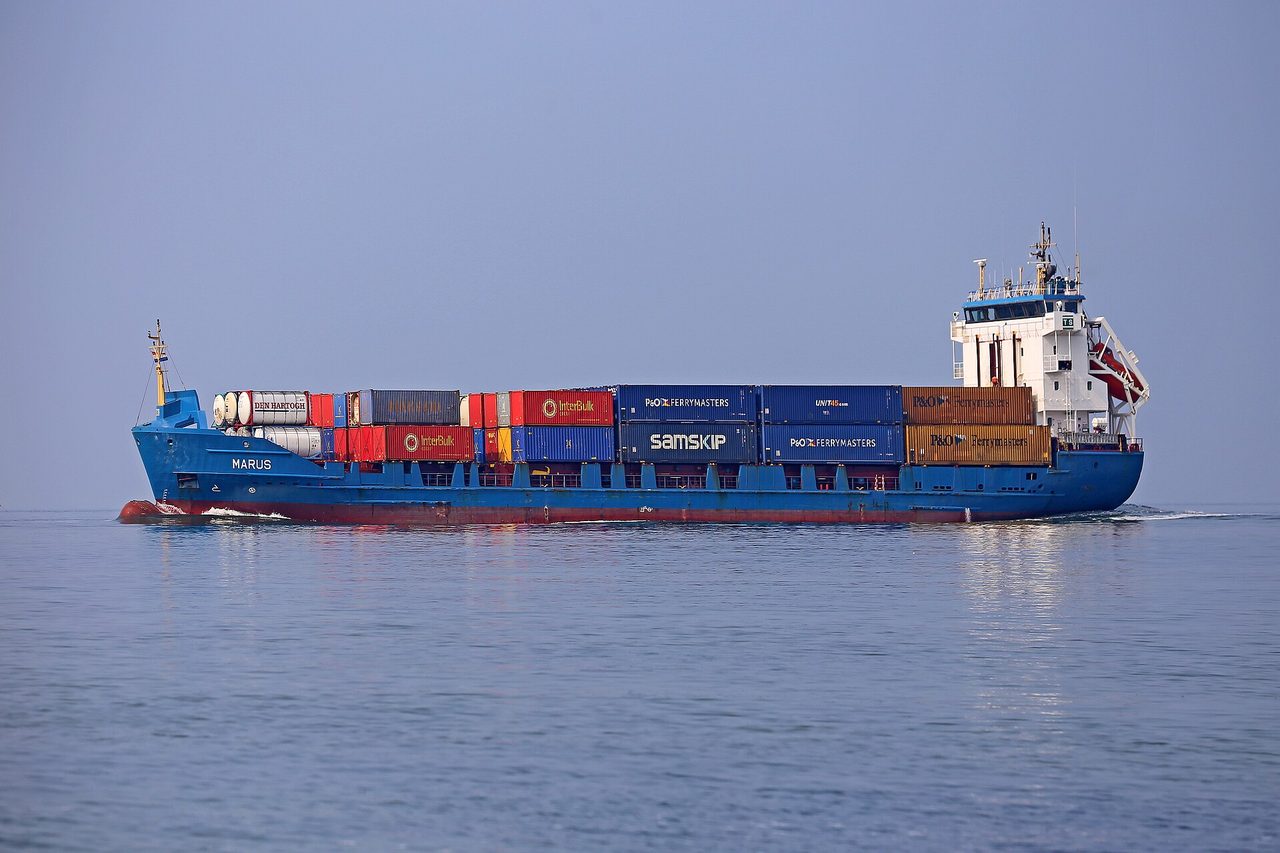
Photo: W. Bulach / CC BY-SA 4.0 · via Wikimedia Commons
A Boxship Sinks in Hormuz as Iran Widens Its War on Shipping
A Singapore-Flagged Vessel Goes Down
The Maritime and Port Authority of Singapore (MPA) confirmed that GFS Pride, a Singapore-flagged container ship, sank after being struck by an unidentified projectile while transiting the Strait of Hormuz. The ship sustained damage and caught fire, then went under. All 21 crew members were safely evacuated and no injuries were reported; no Singaporeans were on board. GFS Pride was a 2,824 TEU vessel built in 2008 and managed by Dubai-based GFS Ship Management FZE. According to International Maritime Organization (IMO) records, it is the second merchant ship to sink since the US-Iran war began on 28 February.
Singapore Calls the Strike Unlawful
The MPA said it was "deeply concerned" about the continued attacks on commercial shipping in the strait, calling them "unprovoked, unjustifiable, and a breach of international law." Singapore did not identify who fired. Britain's United Kingdom Maritime Trade Operations (UKMTO) logged two separate incidents on 13 October: a roughly 50,000-tonne container ship inbound was hit at 1640 UTC, and a 19,000-tonne container ship outbound was struck at 1700 UTC. Both, it said, suffered only minor damage, reported no casualties and continued their passages.
Tehran Says It Was a Mine, Not a Missile
Iran's Revolutionary Guards Navy offered a different account: a vessel carrying more than 2,500 containers tried to cross via an "unauthorised and dangerous" lane, struck a naval mine, exploded and caught fire, sinking in the south of the strait. The Guards released footage of black smoke and dozens of containers drifting on the water, and warned nearby vessels and fishermen to take care. On 10 October the same force claimed a supertanker had hit a mine on an unauthorised southern route, warning that ships ignoring its "rules" would face a "horrific fire."
A Second Boxship Is Hit the Next Day
GFS Giselle, another Singapore-flagged container ship under the same Dubai manager, was struck on 14 October; all 22 crew were safe and it reached anchorage under its own power.
A Bulker Sinks Weeks After Being Hit
The Antigua and Barbuda-flagged bulk carrier Cape Dao, first struck on 23 September, was reported to be sinking after an unsuccessful rescue attempt; one crew member was killed.
Seven Months of War and a Record Wave of Attacks
The war began on 28 February, when US and Israeli strikes killed Supreme Leader Ali Khamenei; Iran shut the strait and traffic fell roughly 70 percent at one point. Ceasefires came and collapsed through the spring and summer. Late September brought a sharp escalation — three tankers hit on 16-18 September, Cape Dao on 23 September, the Kuwaiti tanker Al Funtas on 28 September, three more tankers on 29 September, and the Kuwaiti-flagged VLCC Kazimah III, carrying about 2 million barrels, on 1 October. Reuters counted at least 12 attacks on oil and gas tankers in the week of 28 September to 5 October, the highest weekly total since the war started.
Tehran's Aim: Keep Oil Dear Until the Midterms
Two Iranian officials told Reuters that Tehran began switching tactics about ten days ago, aiming to frustrate US efforts to push global oil prices down and to influence the US midterm elections on 3 November. "Just when they think they are getting close to the point where prices will fall, we will push them away from it. This is a game of chess," one official said. "Such vessels would be safe nowhere, even outside the Strait of Hormuz."
Iran's New Playbook: Spotters on Small Boats
A US military official told Reuters that after American strikes destroyed much of Iran's radar capacity, the Revolutionary Guards began using unarmed spotters on small boats to identify targets, including US warships. US forces confronted one such dhow, told its occupants to abandon ship and destroyed it. The US Navy-led Joint Maritime Information Center still rates the threat to merchant shipping in the strait as "severe," the second-highest level, citing continued attacks, attempted attacks and harassment, including drone overflights, targeted surveillance and VHF hailing.
Brent Above $106 and War-Risk Cover at 10 Percent of Hull Value
Markets reacted quickly. On 14 October Brent rose 0.6 percent to $106.32 a barrel and WTI gained 0.7 percent to $94.80, per Reuters. The shipping economics are starker still: the Financial Times reported that tanker day rates for Hormuz transits have reached about $1.3 million, against $20,000-50,000 before the crisis, while war-risk premiums have climbed to 6-10 percent of a ship's hull value — as much as $20 million for a supertanker on a single Gulf voyage.
Fewer Crossings, Suspended Services
Traffic has thinned sharply. Kpler data showed just seven tankers transited the strait on 6 October, and crude flows in the week to 3 October were roughly 23 percent below the prewar benchmark. The Financial Times said 24 ships were attacked in the two weeks to 11 October, with daily oil exports through the strait falling to about 2.9 million barrels on 11 October from a September peak of about 15.5 million. In September, Maersk, Hapag-Lloyd and CMA CGM suspended Hormuz transits. Before the war, about a fifth of the world's oil and liquefied natural gas passed through the waterway.
Talks Stalled, and "Complete Closure" in Sight
Iran insists the strait will not reopen to Washington until its seven conditions are met, while the US keeps its blockade of Iranian ports. The IMO has verified at least 93 attacks on international shipping and 24 seafarer deaths since 28 February. As long as the strikes spread beyond the strait, the waterway that carries a fifth of the world's energy will struggle to return to normal.
Sources
- BBC: Container ship sinks in Strait of Hormuz after being hit by projectile, Singapore says
- Reuters: Two Singapore-registered vessels struck in Strait of Hormuz; one sinks
- The Guardian: Container ship sinks near strait of Hormuz amid surge in Iranian attacks
- CNBC: Container ship sinks in Strait of Hormuz as Iran steps up attacks
- Al Jazeera: Hormuz attacks intensify as efforts to end war on Iran stall