Venus Finally Gets Its Turn: NASA's Two Long-Delayed Venus Missions Have Launch Dates
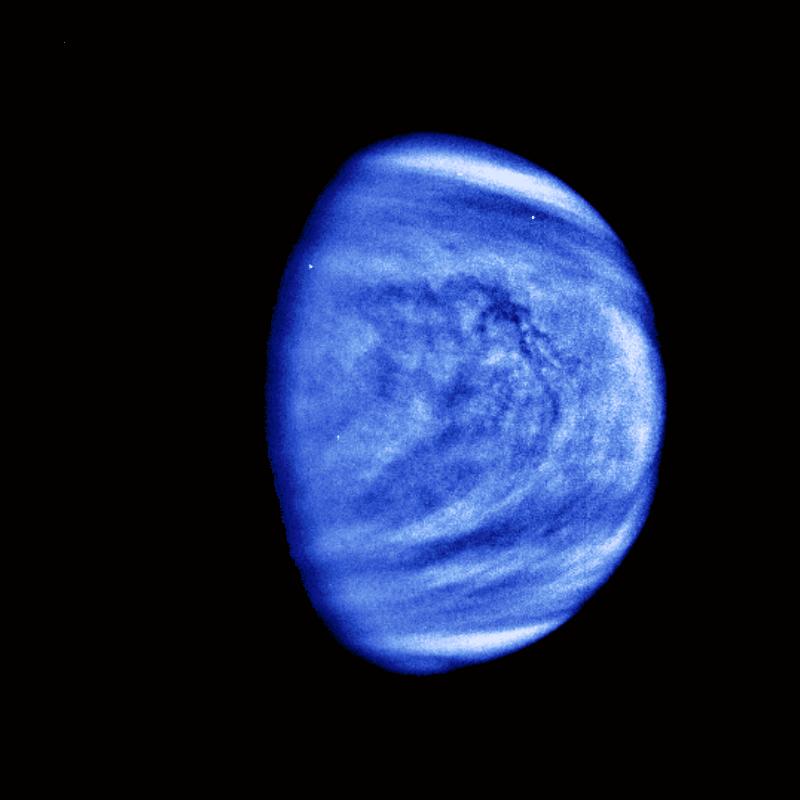
Photo: NASA/JPL-Caltech / Public domain · via Wikimedia Commons
Venus Finally Gets Its Turn: NASA's Two Long-Delayed Venus Missions Have Launch Dates
Both missions are back on track
After two years of budget scares and slipping schedules, NASA's two Venus missions now have launch dates that scientists no longer describe as provisional. The update came at last week's meeting of the Venus Exploration Analysis Group (VEXAG). "We have some good news for Venus," said Jim Garvin, a planetary scientist at NASA's Goddard Space Flight Center and principal investigator for DAVINCI.
DAVINCI launches in December 2030
DAVINCI — Deep Atmosphere Venus Investigation of Noble gases, Chemistry, and Imaging — is now slated to launch in December 2030, a full year earlier than its previous plan. The mission pairs a carrier spacecraft that makes two Venus flybys for remote sensing with a descent sphere that parachutes through the atmosphere toward the surface.
VERITAS follows in November 2032
Its sister mission, VERITAS (Venus Emissivity, Radio science, InSAR, Topography, And Spectroscopy), will launch in November 2032, the month after DAVINCI arrives at Venus, to radar-map the planet from orbit. "VERITAS is now funded with a launch date of November 2032, so this is great news for us," said Dan Nunes, the mission's deputy project scientist at JPL. "We're staffing up." VERITAS reaches Venus around mid-2033 and goes through a phase of aerobraking before routine science observations begin.
Six furnace runs at 465 degrees Celsius
Between Aug. 28 and Sept. 10, an engineering model of the DAVINCI probe — a yoga-ball-sized vessel with a titanium shell — was placed in a furnace at Rex Heat Treat in Bedford, Pennsylvania, one of the few U.S. facilities that can heat hardware as rapidly as a Venus descent would. Six times it climbed to 465 C (869 F) over about an hour, matching the mission's 55-to-60-minute descent timeline, with more than 100 sensors watching instrument simulators inside. The unit survived intact. "There hasn't been such a complete assessment of spacecraft-scale hardware at Venus temperatures in the U.S. since the mid-1970s," Garvin said.
The first surface images since 1982
DAVINCI's cameras will return the first direct images of the Venusian surface since 1982, targeting Alpha Regio, one of the oldest regions on the planet, at scales from 100 meters down to finer than a meter — lander-grade geology without landing. Data is relayed by radio to the carrier flying 5,600 miles (9,000 kilometers) overhead. NASA's last Venus mission, Magellan, launched in 1989 and ended in 1994, resolving features no smaller than a football field.
The budget knife almost finished them
Both missions came close to cancellation. The White House proposed deep cuts to NASA science twice: its FY2027 request would take the agency to $18.83 billion, down 23 percent from 2026, with the Science Mission Directorate cut 46 percent. The Planetary Society counted roughly 53 missions the request would terminate or stop funding, naming DAVINCI, VERITAS and the U.S. contribution to Europe's EnVision among them.
Congress held the line
Lawmakers rejected the deepest cuts for fiscal year 2026, appropriating $2.54 billion for planetary science — about $220 million below the previous year but well above the request — which rescued DAVINCI. A continuing resolution now funds the government into December, leaving the FY2027 outcome open; the Planetary Society expects Congress to reject the proposal again.
Giving up EnVision support bought back time
The money came from elsewhere: NASA withdrew from Europe's EnVision orbiter, dropping the $50 million synthetic-aperture radar it had promised, and cancelled Mars Sample Return. That freed enough funding to move DAVINCI and VERITAS forward and buy back part of their past delays. ESA will now build the radar itself, with EnVision still targeting a 2032 launch.
What to watch next
DAVINCI still needs approval to enter final design and fabrication; NASA's own documentation keeps a provisional window stretching to 2032, with June 2029 listed as an earlier tentative date. VERITAS, meanwhile, has to keep hiring. And private Venus science is not waiting: MIT's Sara Seager and Rocket Lab hope to drop a cloud-sampling probe carrying an autofluorescence nephelometer into the planet's clouds as early as next year.
Sources
- Ars Technica: Things are finally looking up for NASA's first missions to Venus in a generation
- NASA Science: NASA's DAVINCI Beats Heat in Preparation for Blistering Venus Descent
- The Times of India: NASA heated a yoga-ball-sized Venus probe model to 869°F in a Pennsylvania furnace, running the test 6 times
- Newsbriefing.eu: ESA builds own Venus radar after NASA withdraws $50m instrument
- The Planetary Society: The Space Advocate Newsletter, September 2026