Europe’s Record EV Month Meets North America’s 44% Slide: Reading One Data Set Two Ways
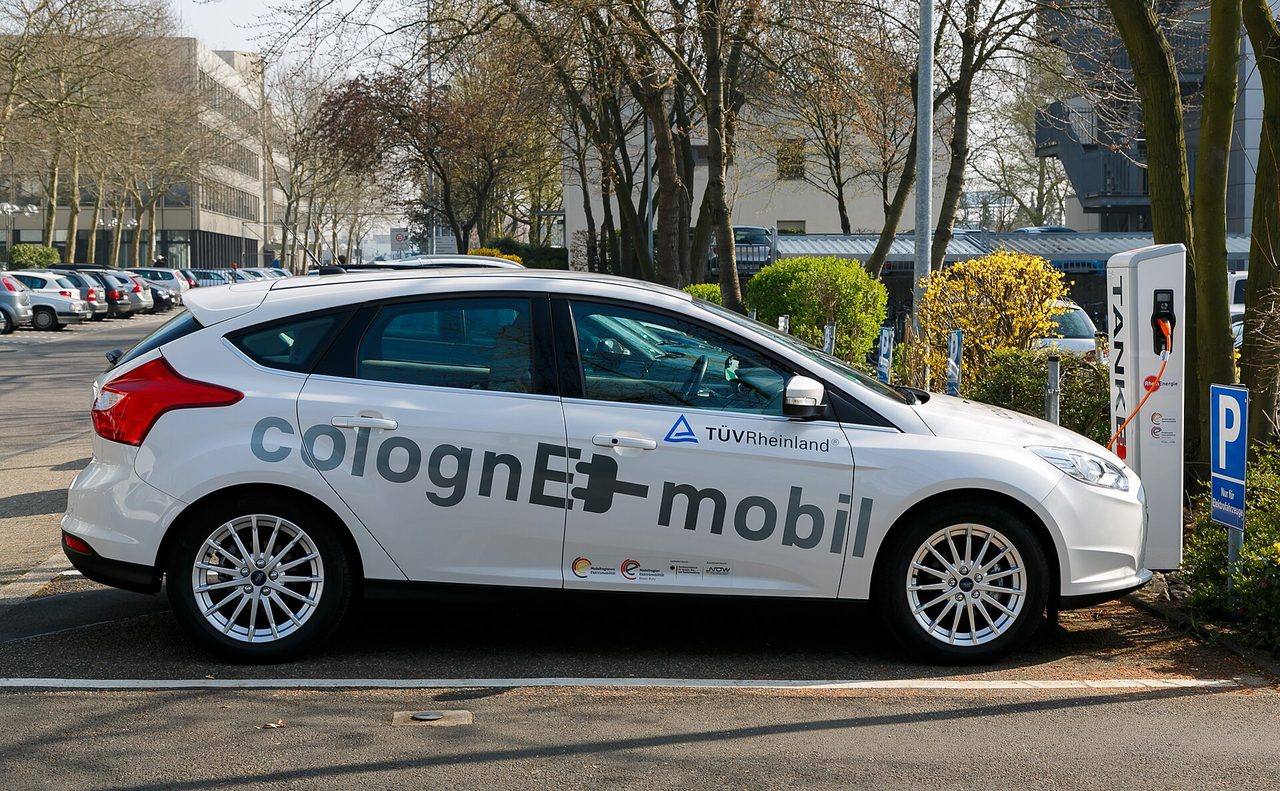
Photo: CEphoto, Uwe Aranas / CC BY-SA 3.0 · via Wikimedia Commons
Europe’s Record EV Month Meets North America’s 44% Slide: Reading One Data Set Two Ways
Global sales dip 2% as markets split
Global electric-vehicle sales — battery-electric plus plug-in hybrid — reached 2.15 million units in September, up 17% from August but down 2% year over year, ending six consecutive months of growth, according to UK research firm Benchmark Mineral Intelligence (BMI). Year-to-date volume came to 15.5 million, up just 3%.
Europe posts its strongest month on record
Europe bought almost 600,000 EVs in September, up 39% year over year and 10% above the previous record set in June. Battery-electric vehicles did the heavy lifting, rising 50% year over year against 16% growth for plug-in hybrids. Registration data from the European Automobile Manufacturers’ Association tells the same story: EU battery-electric registrations hit 1.64 million in January–August, a 21.7% share versus 15.8% a year earlier, with France up 74.2% and Germany up 53.1%. The EU’s September BEV share rose to 23.2% from 17.7%. Norway registered 98.8% electric, and the UK set a monthly record of 99,199 EVs.
The 44% is mostly a base effect
North America’s roughly 130,000 September sales were down 44% year over year — the region’s steepest decline this year — and 8% below August. The caveat matters: September 2025 was the final month before the $7,500 US federal EV tax credit expired, and buyers rushed to dealerships. BMI data manager Charles Lester said comparisons will ease from the fourth quarter as the market laps that post-credit slump. In other words, the collapse is largely statistical.
Policy is the real fork in the road
Germany relaunched a €3 billion subsidy aimed at low- and middle-income households: €3,000 base support for battery-electric cars, up to €6,000 for lower earners with children, applied retroactively to registrations from January 1. By September 1, 52,473 applications had been approved — over 90% of them for fully electric cars. France opened a social leasing round letting low-income households lease an EV for under €200 a month with no deposit, alongside up to €5,700 in purchase support. Britain has offered up to £3,750 for cars under £37,000 since July 2025, and Italy is deploying charging infrastructure funded by its recovery plan.
In the US, the credit is a year gone
America went the other way. The 2025 One Big Beautiful Bill Act ended the federal purchase credit at the close of September 2025, killing up to $7,500 for new EVs and $4,000 for used ones. Sales fell 36% in late 2025 and 27% in the first quarter of 2026, and the market has settled at 5–6% share, against a September 2025 peak of 11.4%. Prices moved the other way too: Kelley Blue Book put the average US EV transaction price at $55,879 in September, with discounts at 11% of transaction price — the year’s lowest.
Fuel prices reframed the math
The Iran war and Strait of Hormuz disruption kept oil near $100 a barrel, pushed German petrol to a record €2.31 a litre and lifted US pump prices above $4 a gallon at points. Fuel costs widened the ownership-cost advantage of an EV to 33% or more. In the US that demand flowed to hybrids instead — Edmunds data show hybrid sales up roughly 27% over the past year, with a record 16.3% market share.
More models, lower prices, tariffs that don’t bite
Transport & Environment counts more than 150 EVs on sale in Europe in the first half of 2026, up from about 100 in 2024, many priced below €25,000. Chinese brands are taking share: BYD’s combined EU, EFTA and UK share reached 3.1% in August, up from 1.4%. Even with countervailing duties that can reach 45.3%, BYD’s Dolphin lists at €22,990 in Germany and lands near €12,990 after a €4,000 maker discount and the €6,000 German subsidy — cheaper than a comparably sized VW Polo at €20,380. Brussels is now looking at Chinese plug-in hybrids, which still pay only the 10% baseline tariff.
China’s domestic slump, export lifeline
China’s September EV sales fell 18% to 1.11 million, per BMI. The China Passenger Car Association reports retail NEV sales of 1.084 million, down 16.7% for a ninth straight monthly decline, while penetration hit a record 67%. CAAM’s domestic-sales measure shows a milder 9.4% drop to 1.25 million — a reminder that the headline depends entirely on whose numbers you cite. Exports carried the load: passenger-vehicle exports rose 73.7% to 917,000, with NEV exports up 163.5%.
Europe’s record rests on reversible things
Europe’s boom leans on a subsidy-plus-oil-price combination that can turn. Germany’s pot is finite, and lower crude would flip the ownership math again. Regulation adds a deeper risk: the European Commission proposed in December 2025 to soften the 2035 combustion-engine ban from a 100% cut to 90%, allowing offsets via low-carbon steel, e-fuels and biofuels. On October 15, France and Germany backed further softening, scrapping the requirement to offset the residual 10% and opening the door to counting renewable-fuel cars as zero-emission.
What to watch next
Base effects will flip in the fourth quarter: North America compares against a post-credit trough, while Europe faces its own strong autumn. Then come the policy verdicts — the final shape of the EU’s 2035 rules, whether Berlin and Paris renew their subsidy budgets, and how Brussels treats Chinese plug-in hybrids. And watch the third bloc: markets outside China, Europe and North America bought about 310,000 EVs in September, up 81%, and 2.3 million year to date, up 93% — nearly twice North America’s total.
Sources
- Reuters: Global EV sales fall 2% in September, ending six-month growth streak
- Electrek: Europe EV sales soar as North America drops 44%
- CnEVPost: China September NEV retail sales fall 16.7%
- electrive.com: September: 1.3 million BEVs sold in China
- NPR: One year after the end of the EV tax credit, is the future still electric?