China Can't Afford to Lose Europe, So It Traded a Car Quota for Time
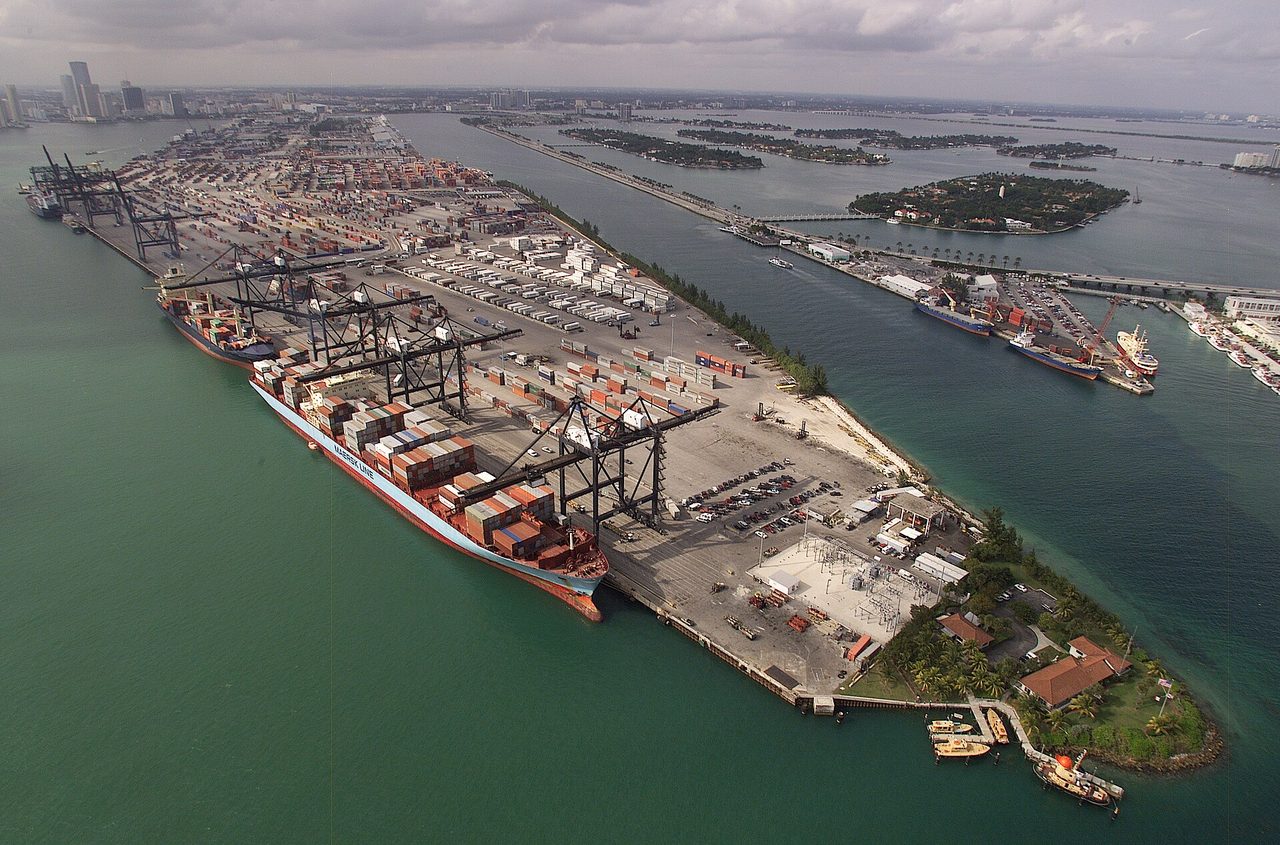
Photo: James R. Tourtellotte / Public domain · via Wikimedia Commons
China Can't Afford to Lose Europe, So It Traded a Car Quota for Time
Beijing and Brussels land on 16 points
Chinese Commerce Minister Wang Wentao and EU trade commissioner Maroš Šefčovič met in Beijing on 8-9 October for the second round of the EU-China Trade and Investment Consultations and emerged with understandings on 16 items, spanning hybrid-car exports, tariff relief, export licensing and intellectual property. The Wall Street Journal's read is blunt: with trade barriers multiplying, Beijing can ill afford to lose Europe. EU leaders will take stock at their Brussels summit on 15-16 October.
Hybrids capped at 350,000 a year
The European Commission has confirmed it will limit imports of Chinese hybrids and plug-in hybrids to 350,000 vehicles a year from December, under a four-year arrangement that rises 6% annually from the second year. Brussels expects the cap to cut China's share of the segment from 12% to roughly 6%. Šefčovič said it "opens the prospect of cutting China's exports by more than a half" — several million vehicles over four years against the no-deal projection. The base is small and recent: the EU imported 107,000 Chinese hybrids in 2024 and 302,000 in 2025, while Chinese hybrid shipments to the EU could reach about 800,000 this year. The quota runs through WTO safeguard rules, far quicker than an anti-dumping case.
Beijing calls the cap an 'upward arrangement'
China tells it differently: a quota built upward from 2025 levels, no lower than any other supplier's, not aimed specifically at Chinese firms, and still leaving room for "stable growth". Chinese customs data put hybrid exports to the EU at $7.5bn in the first half of this year, against $2.5bn a year earlier and $845m for all of 2021. The commerce ministry warned Brussels against "new tricks" in the talks and said Beijing reserves the right to WTO dispute settlement and trade compensation.
A €1bn-a-day deficit drives Europe
The pressure comes from the imbalance. The EU's goods deficit with China reached €359.8bn in 2025 — €559.4bn of imports against €199.6bn of exports — roughly €1bn a day and up 15% year on year; the first eight months of 2026 ran at €242bn. China's exports to the EU grew 15.3% over that stretch, versus 6.2% the other way. China's overall surplus keeps widening: September exports rose 36.3%, the monthly surplus reached $133.5bn (including $34.8bn with the EU), and the January-September surplus stands at $938.1bn, on track to beat last year's record $1.189 trillion.
Paris and Berlin want a 301-style switch
Europe's patience peaked before the talks. France and Germany, long at odds over China policy, floated a joint paper for a fast-track instrument modelled on America's Section 301, able to shut Chinese goods out of the single market within days — even 24 hours — if a partner is judged to cause "severe distortions", plus heavier use of the never-deployed Anti-Coercion Instrument. Beijing answered on 30 September with a promise of a "resolute response", then opened an anti-dumping probe into EU p-nitrotoluene on 3 October.
Rare earths keep flowing, controls stay
Rare earths are China's lever. Under the understanding, Beijing keeps a "green channel" for licences covering rare earths and permanent magnets bound for Europe, while the EU helps resolve dual-use licensing cases. Export controls are not being lifted. On 15 October, commerce ministry spokesman He Yadong told CNBC that China would keep approving licences for Europe regardless of whether the US trade truce survives its January deadline. It cuts both ways: the Carnegie Endowment noted that hitting too hard would cost Beijing Europe itself.
French cosmetics sit in Chinese customs
The friction is landing on individual shipments. Marc-Antoine Jamet, head of the French cosmetics association Cosmetic Valley, said on 14 October that roughly 15% of French cosmetics exports are delayed in Chinese customs and registration — fallout, he said, from France's fast-fashion penalty and the EU tax on low-value parcels, a law China's commerce ministry called discriminatory in July. China is the second-largest market for French cosmetics.
Nvidia still fills China's compute gap
Technology is the second front. Of roughly 2 million accelerators shipped in China in the first half, non-GPU designs overtook traditional GPUs for the first time at 1.016 million units, up almost 80%, with Huawei, T-Head, Kunlunxin and Cambricon taking 95%. Nvidia's share of China's AI chip market has slipped to 34% while Huawei's has risen to 28%. Yet Chinese firms still bought more than 1 million Nvidia gaming and workstation chips this year to plug the gap, the Financial Times reported on 13 October. Domestic supply is put at about 3.5m chips this year against faster-growing demand, and DeepSeek has shipped tools to run models on Huawei's Ascend stack.
Next: the summit, then December
Two dates matter now. EU leaders meet in Brussels on 15-16 October to weigh a deal that needs all 27 to sign off, and the quota takes effect on 1 December, with the next consultation round set for March 2027. What Beijing bought is breathing room, not rebalancing: the €1bn-a-day deficit, Europe's deindustrialisation anxiety, and the contradiction of wanting fewer Chinese cars but steady Chinese rare earths all remain.
Sources
- The Wall Street Journal: With China Facing More Trade Barriers, It Can't Afford to Lose Europe
- Commissioner Šefčovič at the second meeting of the EU-China Trade and Investment Consultations
- The Guardian: EU deal with China limits imports of hybrid electric vehicles
- Reuters: French cosmetics facing delays clearing China customs, says industry association
- China September exports soar, $1 trillion trade surplus in sight