Wholesale Inflation Hits a Four-Year High, and Gas Is Doing Most of the Damage
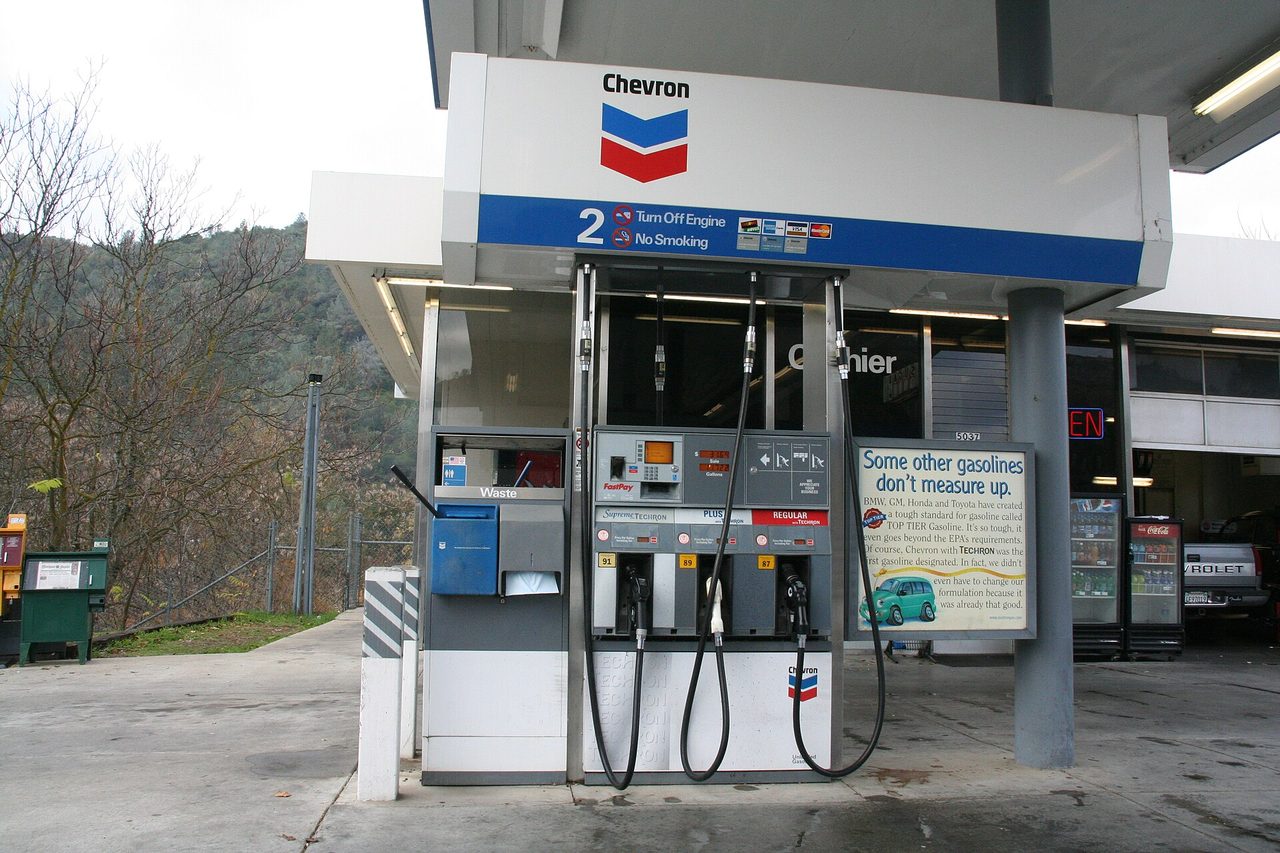
Photo: Person Lin from Taoyuan, Taiwan / CC BY-SA 2.0 · via Wikimedia Commons
Wholesale Inflation Hits a Four-Year High, and Gas Is Doing Most of the Damage
Producer prices jumped 1.3%, the fastest since March 2022
U.S. wholesale inflation shot higher in September. The producer price index for final demand climbed 1.3% from August and 6.3% from a year earlier, the Bureau of Labor Statistics reported Thursday. That is the largest monthly gain since March 2022 and the biggest 12-month increase since December 2022, when the reading was 6.4%. August came in at 0.5% on the month and 5.6% on the year. Forecasters were nowhere close: FactSet's consensus was 0.5% monthly and 5.3% annual, while economists polled by The Wall Street Journal expected 0.6%.
Energy accounted for more than 80% of the goods surge
Final demand goods prices rose 2.6%, the largest monthly advance since the series began in December 2009, while services climbed 0.8%. Energy did the heavy lifting. More than 80% of the goods increase came from energy prices, which jumped 10.8%; gasoline alone accounted for half of it after surging 20.3%. Diesel rose 21.0% and crude petroleum 28.3%. The pressure was broad within intermediate demand too: processed goods rose 2.5%, unprocessed goods 8.4% and services 0.9%. Food prices rose 1.2%, though chicken eggs fell 39.7%.
Core producer prices accelerated to 5% a year
Stripping out food and energy, core PPI rose 0.7% on the month, its fastest pace in five months, lifting the annual rate to 5% — the highest since January 2023. On the narrower measure that also excludes trade services, core PPI was up 0.5% monthly and 5% annually. CNN noted that businesses are now contending with price pressures well beyond energy.
Wednesday's CPI had already run hot
The PPI report magnified the previous day's surprise. The consumer price index rose 0.6% in September and 3.7% over the year, above the 3.6% economists expected. Core CPI, which excludes food and energy, rose 0.3% on the month and 2.6% annually, up from 2.4% in August. Gasoline jumped 9.1% in the month and accounted for more than half of the monthly CPI increase; it is up 34.2% over 12 months. AAA puts the national average for a gallon of regular unleaded at $4.33, up from $3.08 a year ago.
The Iran war is the common thread behind both reports
The energy shock is geopolitical. The U.S. war with Iran began in late February, the Strait of Hormuz was temporarily closed, and Brent crude held above $100 a barrel for most of September, touching roughly $109. Houthi strikes on Saudi oil infrastructure and Ukrainian attacks on Russian refineries added to refined-product costs; diesel briefly hit a record $6.31 a gallon. Reuters, citing Energy Information Administration data, put September gasoline prices up 7.1%, consistent with the direction of the BLS components.
Stocks slipped while bonds stayed expensive
Higher-than-expected inflation gave Wall Street another headache. The S&P 500 closed 1.1% lower on the CPI print, the Nasdaq 100 dropped 2% and the Dow Jones Industrial Average slipped just 0.09%. The bond market had already moved: earlier in the month the 10-year Treasury yield reached its highest levels since 2007, and the 30-year touched between 5.49% and 5.64%. Chris Hodge, chief U.S. economist at Natixis CIB Americas, told MarketWatch the risk is "definitely two-sided" — which is exactly what Fed Chair Kevin Warsh wants, live meetings where the market cannot be sure of the outcome.
A hike on October 28 is back on the table
The Fed raised its benchmark rate a quarter point to 3.75%-4.00% on September 16, its first increase since 2023, with Warsh saying "the plain fact is that inflation is too high and has been for too long." After Wednesday's CPI, traders roughly doubled the odds of another increase at the October 27-28 meeting, from about 20% to more than 40%, touching 45% on LSEG data at one point. A hold is still the base case, but no longer a comfortable one. PPI components feed directly into core PCE — portfolio management fees, airfares, physician and hospital services among them — and September PCE is not due until October 29, the day after the decision.
Retail sales only looked strong at the pump
Thursday's retail sales report was strong on the surface and softer underneath. Sales rose 0.8% in September against a 0.3% forecast, after an upwardly revised 1.3% gain in August, the Census Bureau said. But excluding gas stations, sales rose just 0.2%, and the control group that feeds GDP rose only 0.1%, missing the 0.3% estimate. The CNBC/NRF Retail Monitor put September retail sales excluding auto dealers and gas stations at $560.8 billion, up 4.05% year over year, with electronics and appliances up 8.41%.
Affordability is now a campaign issue
With the November 3 midterm elections less than three weeks away, prices are the most visible ballot-box problem. The Associated Press wrote that rising prices remain both an economic challenge for consumers and a political problem for Republicans; CNN called the report the second hotter-than-expected inflation reading this week and framed affordability as a central campaign theme. Gas prices, the most conspicuous inflation signal, tend to drag consumer sentiment down directly.
What to watch: core PCE and the October 28 decision
The path from here depends on two things: whether energy prices retreat — if the Iran conflict and Hormuz risk persist, high fuel costs keep bleeding into transport, chemicals and electricity — and whether core components broaden the advance. Market pricing points to a pause on October 28, with December still live. For households, the near-term pain remains gasoline and electricity — precisely the two sources of this wholesale price spike.
Sources
- CNN: Wholesale inflation jumped in September by most in four years
- Associated Press: Wholesale inflation jumped last month by most in four years as gas prices soared
- Reuters: US retail sales beat expectations in September on higher gasoline prices
- The Wall Street Journal: Wholesale Inflation Hit 4-Year High in September
- Quartz: U.S. producer prices rose 1.3% in September on higher energy costs