US Futures Steady as AI Spending Questions and Fed Hike Risk Cap the Rebound
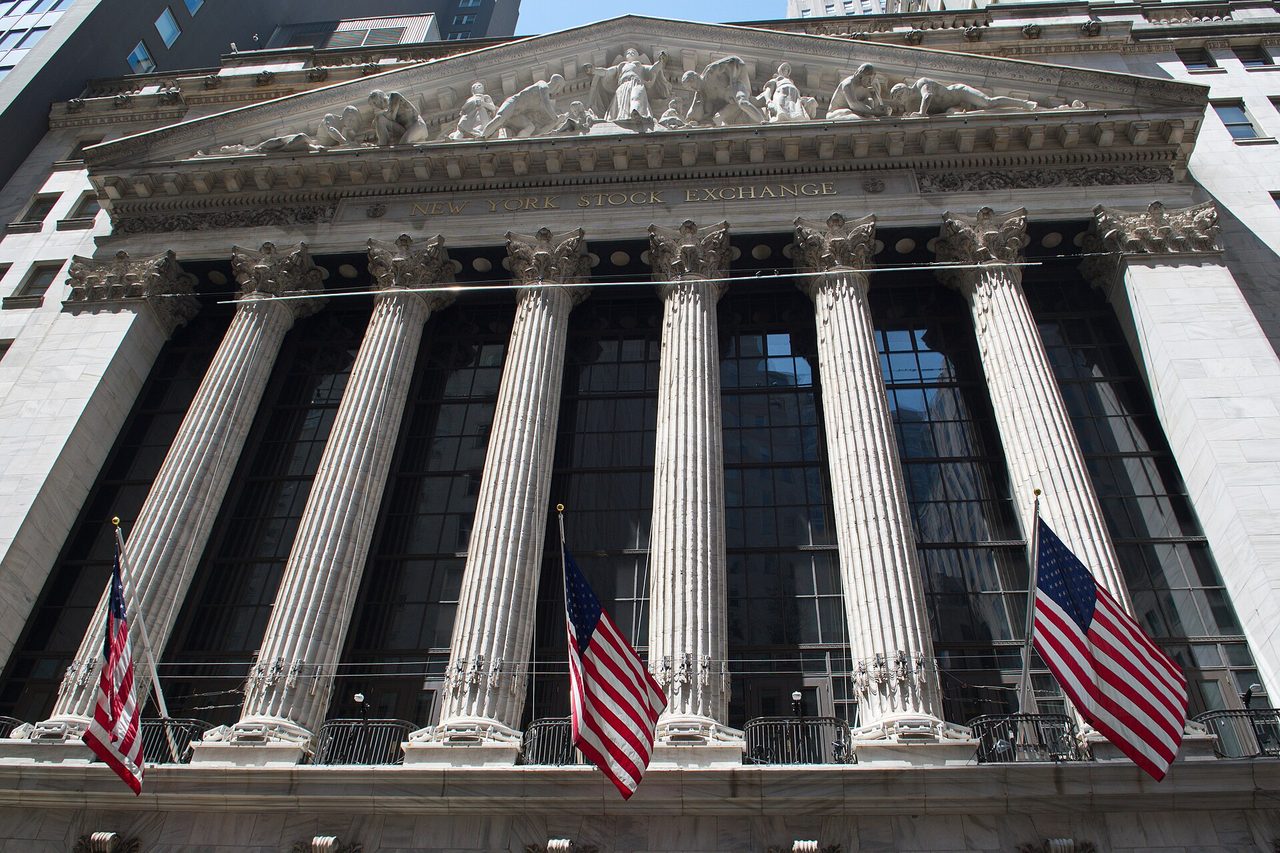
Photo: 颐园居 / CC BY-SA 4.0 · via Wikimedia Commons
US Futures Steady as AI Spending Questions and Fed Hike Risk Cap the Rebound
Futures hold steady after a one-day bounce
US equity futures were little changed before Friday's open, with S&P 500 futures up about 0.13% and Nasdaq 100 futures ahead roughly 0.10%. That follows a broad Oct. 15 advance: the Dow rose 1.08% to 52,177.69, the S&P 500 added 0.33% to 7,744.06 and the Nasdaq Composite gained 0.08% to 26,713.03, snapping a three-day losing streak for the S&P and Nasdaq. Underneath the calm, the Nasdaq remains more than 3% below the record high it set last week.
Inflation keeps beating forecasts
Labor Department data published Oct. 15 showed producer prices jumped 1.3% in September, the largest monthly increase since March 2022, and 6.3% from a year earlier against expectations near 5.4%. Core PPI rose 5.0% year over year versus 4.4% expected. The prior day's consumer price index came in at 3.7% annually, up from 3.4% in August. September retail sales rose 0.8%, well above the 0.3% consensus, but the core control group gained just 0.1% against a 0.3% forecast; a 7.1% jump in gasoline prices drove most of the headline increase, and inflation-adjusted wages fell again.
The Fed hiked in September, and may not be done
On Sept. 16 the Federal Reserve raised its benchmark rate a quarter point to 3.75%–4.00% in a unanimous 12-0 vote — the first increase since July 2023 and the first under Chair Kevin Warsh. Updated projections showed 16 of 18 officials expect at least one more hike this year, taking the funds rate to 4%–4.25%; eight see another in 2027 and only four see cuts next year. Warsh described the move as removing "a dose of accommodation." Polymarket on Oct. 11 priced an 83.5% chance of no change at the Oct. 27–28 meeting and 74.5% odds of a December hike. A month earlier, traders had priced a 53.6% chance of an October cut.
A trillion-dollar AI tab is being paid with debt
Higher rates bite harder because this rally runs on borrowed money. Goldman Sachs expects hyperscaler capital spending of $800 billion in 2026, $1.2 trillion in 2027 and $1.4 trillion in 2028, with growth slowing from nearly 100% this year to 54%, then 12%. Bank of America forecasts $860 billion for 2026 and close to $1.2 trillion in 2027. UBS puts total AI capex at about $998 billion this year, nearly double 2025's $506 billion. Alphabet is spending roughly $200 billion this year, and its president, Ruth Porat, says next year will be "significantly" higher. Wells Fargo cut its S&P 500 target to 7,700, arguing the spending math breaks in 2028.
CoreWeave: a bond yield at 15%
The clearest crack is in the credit market. CoreWeave shares fell about 15.5% on Oct. 14 to $65.78, close to a 52-week low of $60.55, after the yield on its 2032 bonds touched 15%, a level normally associated with distressed debt. Debt and lease obligations hit about $52 billion at the end of June, up from roughly $15 billion a year earlier, with about $640 million of net interest expense in Q2. The company raised its 2026 capex ceiling by $4 billion in August, to as much as $39 billion; analysts expect nearly $13 billion in revenue this year and a $2.13 billion loss. CEO Mike Intrator told staff the order backlog more than covers the company's debt obligations, adding that markets sometimes "misunderstand and act irrationally."
Chips have lost a trillion dollars in value
The damage is concentrated in AI valuations. The Philadelphia Semiconductor Index dropped 3.1% on Wednesday, its sixth straight decline and a roughly 10% slide — the longest losing run since May 2025 — then fell another 0.9% on Thursday for a seventh down session; chip stocks are on pace to erase more than $1 trillion in market value. Wednesday alone: CoreWeave lost 15.46%, Nebius 10.08%, Oracle 8.83% and Dell 11.27%, about $80 billion combined.
Money rotates out of AI, into health care
Not every tape was red. The Dow led Thursday with a gain of more than 500 points as money moved from compute names into health care and consumer stocks — Eli Lilly rose 3.55%, UnitedHealth 2.79%. Apple closed above $5 trillion in market value for the first time on Oct. 14, at $342.96 — the second company ever after Nvidia. Earnings were mixed rather than weak: JPMorgan posted $15.31 billion of net income, or $5.57 a share, short of the $5.90 consensus and its first miss in nearly three years; Goldman Sachs reported $18.68 billion of revenue and $17.01 a share against an expected $13.02, with equities revenue up 72%. Jamie Dimon said the economy "continued to be fueled by strong business investment and ongoing consumer spending," though the banks warned that higher rates and sticky inflation will bite.
What to watch: Oct. 28 and the earnings wave
Jefferies economist Mohit Kumar warns that a slowdown in AI infrastructure spending could sharply weaken US growth expectations, though he expects earnings season to show corporate demand remains robust. UBS's Ulrike Hoffmann-Burchardi calls the latest bout "more of a recalibration of expectations than a fundamental break in the AI investment story." The calendar is crowded: the Fed decides Oct. 27–28, Q3 GDP and September PCE land Oct. 29, and a heavy slate of tech earnings begins next week. Oil and geopolitics remain the other thread — the US-Iran war is in its eighth month, the Strait of Hormuz previously carried about 20% of the world's oil, and Brent fell 1.6% to $104.42 a barrel on Oct. 15 as WTI slipped 1% to $94.11.
Sources
- Reuters: CoreWeave's slump spotlights growing burden of debt behind AI boom
- CNBC: CNBC Daily Open: Is the AI sector losing its rose-colored glow?
- Fortune: The Fed just delivered a unanimous rate hike, the first in three years, and no cuts through 2027
- The Guardian: Tech market sell-off deepens amid fears over US inflation and AI debt
- Forbes: Tech Stocks Drop For Second Day Amid AI Debt Fears, Hotter-Than-Expected Inflation Data