The Screen Says $104. The Barrel Says $125
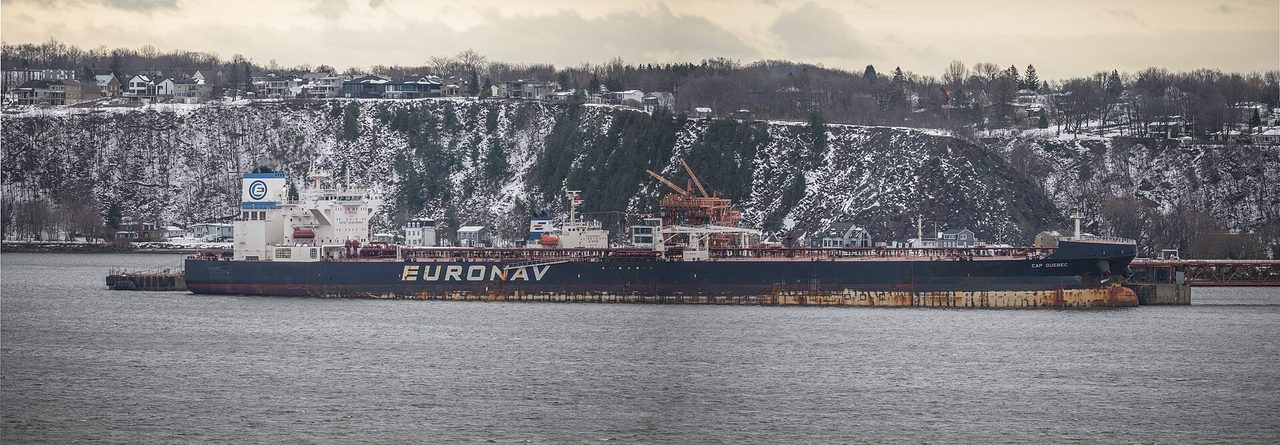
Photo: Wilfredor / CC0 · via Wikimedia Commons
The Screen Says $104. The Barrel Says $125
A column that splits oil into two prices
In a CNBC "Power Insider" column published on October 15, anchor Brian Sullivan made a blunt argument: the real price of oil is likely $30 to $40 above where it trades now. "Oil, in reality, is $125 per barrel or higher," he wrote, because buying the physical commodity is a very different story from a number on traders' screens. Futures, in his framing, are paper contracts for today, tomorrow or next month; an actual cargo is another price entirely.
$38 a barrel before the oil even moves
The column's key point is that physical crude can cost about $38 a barrel more to deliver. Tanker fixtures back that up: on October 7, CNBC reported that a very large crude carrier chartered from the U.S. Gulf Coast to China cost $76 million — roughly $38 per barrel on a two-million-barrel cargo, against a pre-war norm of $7 million to $10 million.
The physical market has already voted
Physical benchmarks are well above the screen. On October 5 the gap between dated Brent and futures hit a record $50, with dated Brent touching $154 a barrel, the highest since records began in 1991. Goldman Sachs said on October 13 that dated Brent trades at a $40 premium to comparable WTI and $24 over Dubai. The Financial Times noted futures now explain only 60% to 70% of landed crude costs in Asia, down from the usual 90%, and just half of diesel prices; the spot-futures spread has averaged $1 historically, widened to nearly $8 this year and spiked above $20 in September. Energy Aspects founder Amrita Sen told CNBC physical crude "should be closer to $150."
Official forecasts keep chasing it
The EIA raised its fourth-quarter Brent forecast by $14 to $105 a barrel in October, after September averaged $114 — $23 above August — and put full-year 2027 at $84. Forecasts compiled by CNBC TV18 cluster between $89 and $100 for the fourth quarter of 2026 and $80 to $90 for 2027. The IEA expects global oil demand to fall 2.6 million barrels a day this year and supply to drop 5.8 million, with diesel accounting for 25% of the demand decline and the squeeze lasting into 2027.
Policy is holding the screen price down
October bore that out. President Trump said on October 8-9 that the U.S. would not strike Iran before the November 3 midterms, and crude gave back about 1%. On October 15, reports that Washington may ease sanctions on the shadow fleet knocked about 2% off prices; Brent settled at $104.31 and WTI at $94.05. The G7 and IEA agreed on October 2 to release 100 million barrels of emergency stocks.
Hormuz is quieter, not fixed
Before the war, about 125 large commercial vessels a day transited the Strait of Hormuz, carrying roughly 20% of global crude and LNG. Kpler data show about 12.6 million barrels a day moving through on October 13, down from roughly 15 million at the end of September and about 17 million pre-war. In the week to October 7 flows fell to 8.5 million barrels a day, roughly 40% below normal, and the share of Gulf crude exported through the strait slid from about 83% pre-war to about 60% in September.
Eleven tankers hit in a week
Shipping risk is being priced in insurance and freight. War-risk cover has gone from roughly 0.25% of hull value before the war to 6% to 10%; a single VLCC transit has been quoted above $10 million, against about $250,000 previously. A voyage from Yanbu carries about $3 million of cover, and southern Saudi ports or Hormuz up to $7 million, versus at least $100,000 pre-war. Supertanker day rates hit a record $1.3 million, from $20,000 to $50,000 last year. Eleven tankers were attacked in the week to October 3, the war's highest weekly toll, with 12 more reported between October 5 and 11.
Diesel is where the shortage lives
U.S. diesel set a record $6.52 a gallon on September 22 and was still $6.23 to $6.28 in early October, up roughly 67% to 70% since late February, while gasoline rose about 46% to $4.37. Europeans are paying $9 to $11 a gallon for diesel. Ukrainian drone strikes have destroyed about half of Russia's diesel refining capacity, Moscow has all but banned exports since July, and the IEA sees the shortfall running into 2027.
Who ends up paying
Airlines and shippers are passing costs through: Air India added domestic surcharges of 400 to 1,200 rupees from October 9, Maersk imposed a 20% emergency fuel surcharge from October 12 and easyJet cut winter capacity and lifted fares by £2 to £3. Farmers, independent truckers and households heating with oil absorb the rest. Heating oil is up 52%, airfares 23% and groceries 2%, and the EU has approved $45.4 million in French aid for transport, farming and fisheries.
Two dates decide the next leg
The first is November 3: Trump has ruled out striking Iran before the midterms while suggesting relief may only come after them, so the question is how long policy can hold the screen price down. The second is Saudi Arabia's East-West pipeline, shut after drone strikes on September 10-11, restarted at low rates and back to roughly 3.5 million barrels a day by September 28, about half its 7 million barrel capacity, with full recovery expected to take about six weeks and Aramco targeting around 4 million barrels a day. The G7's 100 million barrels will be released over four months, about 833,000 barrels a day. Sullivan's conclusion is narrow: paper prices may lag, but they eventually converge on the physical barrel.
Sources
- CNBC: Brian Sullivan: Why the 'real' price of oil is likely $30-$40 higher than where it is now
- FT: What is the real price of oil any more?
- Goldman Sachs: Surging Middle East Shipping Costs Widen Global Oil Price Gaps
- CNN: If the Strait of Hormuz is open, why are gas and diesel so expensive?
- CNBC TV18: Crude oil prices may stay elevated in Q4 2026