Europe Closes a Bruising Week on the Front Foot as the Dollar Heads for Its First Weekly Loss in Four
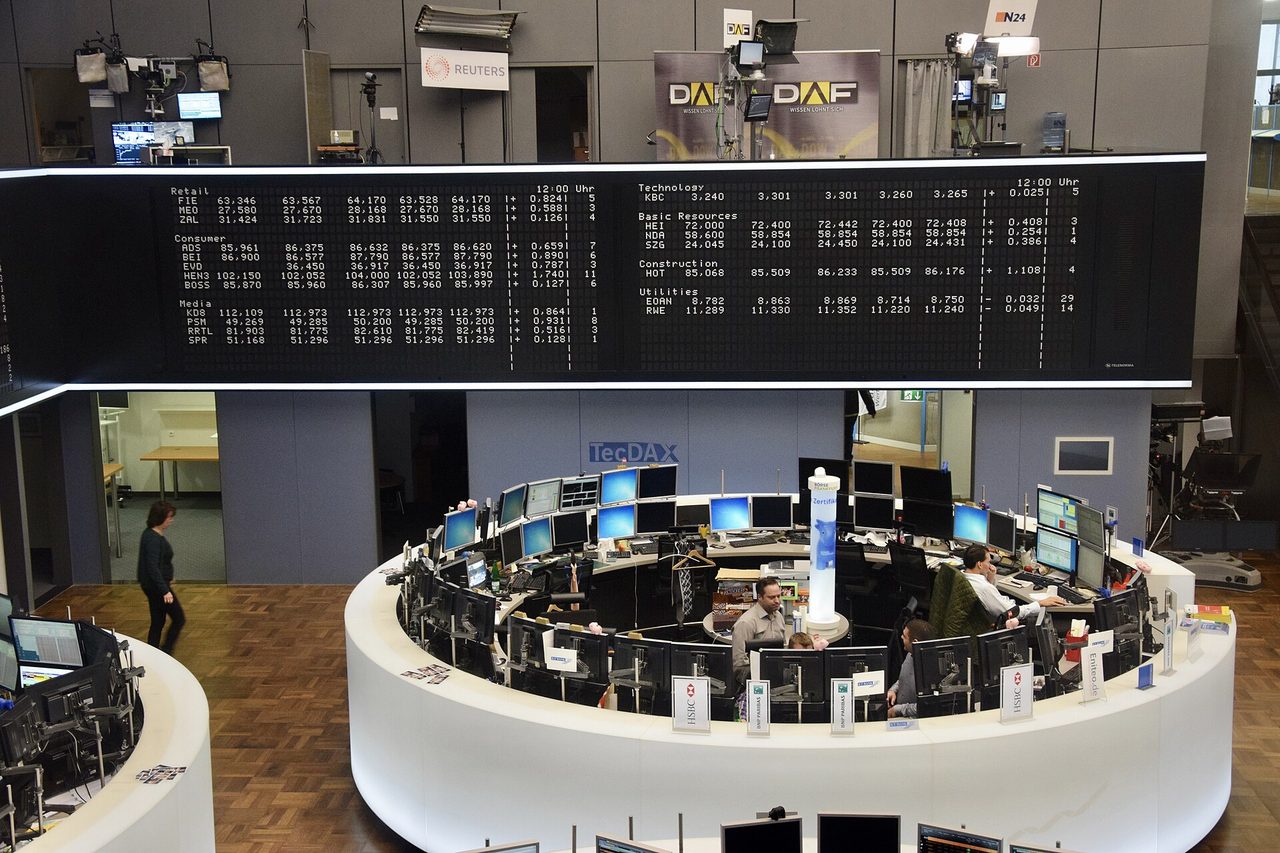
Photo: Ank Kumar / CC BY-SA 4.0 · via Wikimedia Commons
Europe Closes a Bruising Week on the Front Foot as the Dollar Heads for Its First Weekly Loss in Four
European bourses end the week at their best in over two months
European equities pushed higher on Friday, October 16, as a market rattled by a technology-led rout tried to find its footing. At 0914 GMT the MSCI World Equity Index was up 0.3% on the day but still bound for a weekly decline. Europe, which took a lighter hit in Thursday's selloff, was mostly green: the pan-European STOXX 600 added 0.6%, Germany's DAX rose around 1%, France's CAC 40 gained 0.1% and later 0.5%, and London's FTSE 100 finished roughly flat. By 0708 GMT the STOXX 600 stood at 641.75 points, near its highest in more than two weeks. Reuters put the benchmark's weekly advance at more than 1%; Investing.com went further, calling a 1.4% weekly gain the index's best five-day run since August 3.
The selloff was about debt, not just valuations
Two worries drove the week. The first was the prospect of higher interest rates. The second was the growing role of borrowed money behind the artificial-intelligence boom. Chip stocks were hit hardest on Thursday: the Philadelphia Semiconductor Index shed 11.6% over six sessions, wiping out more than $1.6 trillion in market value, while the Nasdaq fell more than 3% over the same stretch. Reuters reported that CoreWeave, the AI cloud company backed by Nvidia, slid again even as its chief executive defended its backlog. CoreWeave carries about $50 billion of debt, its June-issued bonds were yielding around 15%, and the cost of insuring its debt against default has climbed to roughly 1,000 basis points, implying a nearly 63% chance of default within five years, up from about 30% a year ago. The IMF warned this week that an AI share-price crash could ripple through global markets.
Dollar slips as Treasury yields retreat
The dollar fell 0.4% on the day, leaving the dollar index at 101.65 to 101.68 and on track for its first weekly decline after three straight weeks of gains, as lower US yields made the currency less attractive. The retreat lifted the euro from a recent 17-month low; it was last up 0.4% at $1.1257. Analysts said that further worries about AI would push the dollar down further still.
Falling yields are doing the heavy lifting
Ten-year Treasury yields dropped 11 basis points to 5.074% on Thursday and nudged back to about 5.11% on Friday, but remained poised for back-to-back weekly declines for the first time since June. In Europe, Germany's 10-year bund, the euro area's risk-free benchmark, traded at 3.404%, close to a one-month low. The pullback in borrowing costs eased discount-rate pressure on expensive growth stocks, which is the most direct reason European equities could bounce.
US inflation data ran hot on both counts
US producer prices rose 1.3% in September, the largest monthly gain since March 2022 and far above the 0.5% economists polled by Reuters had expected. Year on year, the PPI climbed 6.3%, the steepest since December 2022. A day earlier, consumer prices were reported up 3.7% from a year earlier. Both readings pointed to the same thing: price pressure is broadening beyond energy into goods and services.
Warsh declines to pre-commit on October
Federal Reserve Chair Kevin Warsh, speaking in Bangkok during the IMF's annual meetings, said he does not prejudge meetings and would not say now what he might do at the gatherings left this year. Traders responded by paring bets on an October hike to around 15% from more than 25% on October 15, with one tally putting the odds at 13%. Goldman Sachs economists read the remarks as pointing to a pause in October and a final hike in December.
Euro-area inflation at 3.8%, and the ECB is not rushing
Euro-area inflation accelerated to 3.8% in September, above the 3.6% forecast, with energy prices up 18.8% year on year from 14.3% in August. Stripping out energy, inflation was 2.3%, up from 2.1%. A Reuters poll has economists expecting the ECB to hold this month and raise by 25 basis points in December, lifting the deposit rate to 2.75% from 2.50%. President Christine Lagarde said the inflation is energy-driven, that second-round effects are not yet visible, and that higher long-term yields will slow growth and reduce cost pass-through by more than the ECB projected in September.
Oil gives back a little, gold holds above $4,150
Brent crude slipped about 0.4% to around $105.5 a barrel and US West Texas Intermediate fell about 0.55% to $97.43, though Brent was still up 0.4% on the week and WTI up 5.6%. The IEA agreed to release more than 20 million barrels of emergency reserves, while the EIA reported a crude stock draw of 8.6 million barrels in the week to October 9, the largest since February. Goldman Sachs put Brent's geopolitical risk premium at about $22 a barrel. Spot gold eased to just above $4,150 an ounce after gaining 1.6% the previous session.
Bank earnings and twin central bank meetings next
US stock index futures were mixed on Friday: Dow E-minis up 204 points, or 0.39%, S&P 500 E-minis up 0.16%, and Nasdaq 100 E-minis down 0.08%, with the S&P 500 and Nasdaq headed for weekly losses. Regional lenders Regions Financial, M&T Bank and Truist Financial reported results. The Fed's meeting ending October 29, the ECB's October 29 decision and the still-unresolved AI debt question are the three threads markets will be watching.
Sources
- Reuters: European stocks rise, dollar set for weekly loss after yields drop
- Investing.com: European stocks on course for best week since Aug on easing yields
- Bloomberg: Stocks, futures rise as Fed bets ease after Warsh
- The Guardian: Tech market sell-off deepens amid fears over US inflation and AI debt
- Forbes: Tech Stocks Drop For Second Day Amid AI Debt Fears