A Memory You Never Made: AI Content Is Rewriting What We Remember
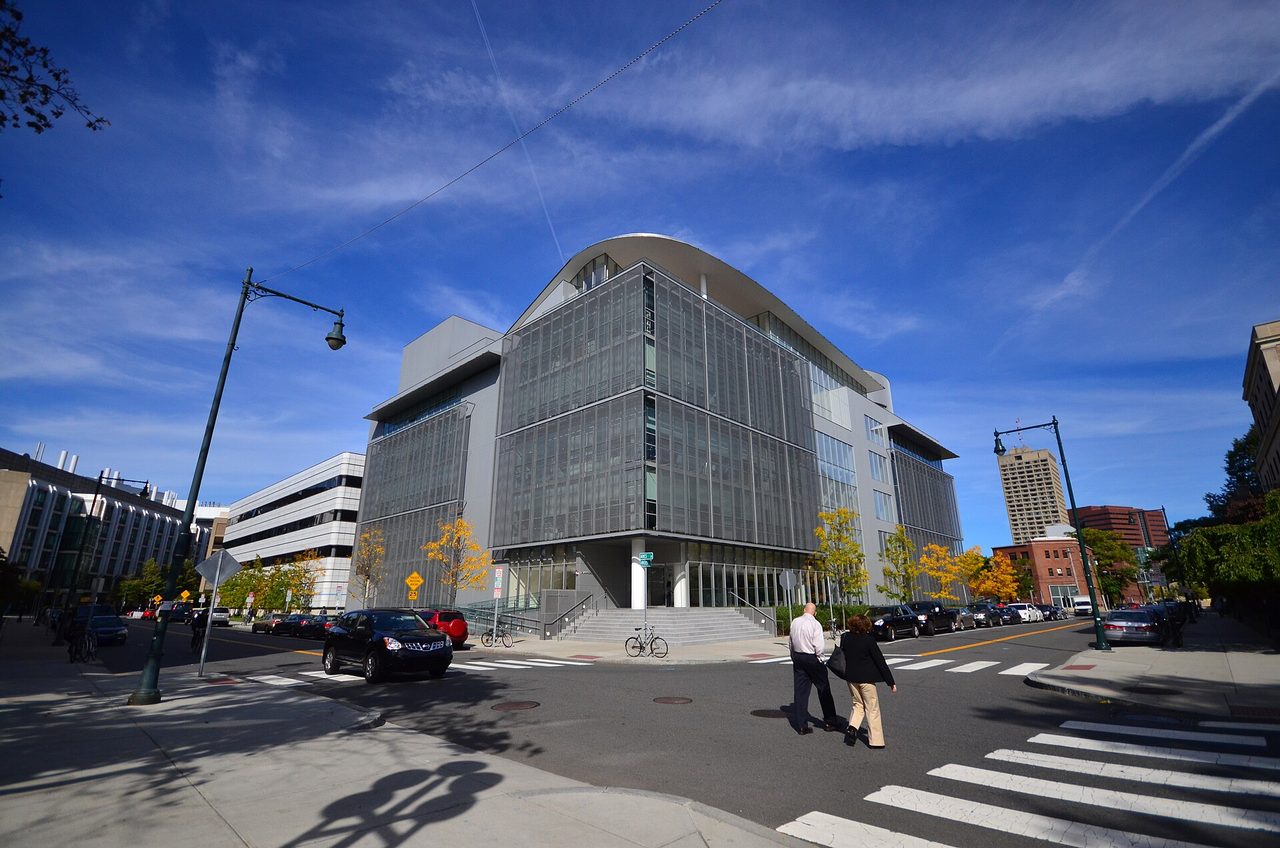
Photo: Sayamindu Dasgupta / CC BY-SA 2.0 · via Wikimedia Commons
Pattie Maes, a professor at the MIT Media Lab, showed 200 people 24 ordinary photographs: a wedding, a city street, a race. After a break they saw the images again. Some got the originals. Others got versions altered by AI — a changed expression, soldiers inserted into the crowd, signs of climate change painted onto a street. Then came the memory test. The people who saw the altered images remembered details that were never there, and they were more sure of themselves than the control group.
Two viewings, one invented detail
The study ran four conditions: untouched photographs, AI-edited stills, AI-generated video, and AI-generated video built on AI-edited stills. Participants were assigned at random and then asked what they had seen in the picture.
Maes winced at the results, she told The Washington Post. The surprise was not that people were fooled; most knew the material might have been manipulated. It was that the false memories arrived with confidence attached. Once a detail is folded into someone's account of an event, reflection rarely removes it.
Video doubles the effect
According to the MIT Media Lab's published data, the combined video condition produced false memories at 2.05 times the control rate. Confidence in those false memories ran 1.19 times higher.
The comparison is tight: same photographs, same delay, same test. The only variable was whether the second viewing had been through a generative model.
Chatbots triple the errors
In a separate simulated crime-witness experiment, Maes's group had participants watch a staged incident and then answer questions from a generative chatbot. That condition produced more than three times as many false memories as the control group, and 36.4 percent of responses were led toward false information.
That maps onto ordinary practice. Police statements, insurance interviews and news gathering increasingly delegate the questioning to models — and the framing of a question is itself a form of suggestion.
A new delivery route for misinformation
A second line of evidence comes from Georgetown University and the University of Washington, where researchers tested something humbler than deepfakes: the summary.
They asked OpenAI's ChatGPT and Google's Gemini to summarize animated traffic-collision videos adapted from classic eyewitness-reliability paradigms. Across prompts and models, the summaries omitted 51.6 percent of central scene events. In 95 percent of iterations they left out the single most important moment: a car striking a pedestrian.
Those summaries were then given to 331 participants. Among readers of accurate summaries, 83.6 percent correctly recalled whether the intersection had a stop sign or a yield sign. Among readers of misleading summaries, 44.8 percent did.
"AI is a new method of delivering misinformation, and it has the potential to create these false memories for people who are reading that information," said Mattea Sim, an assistant research professor at Georgetown's Massive Data Institute and the study's lead author. She argued that researchers and policymakers should think hard about "whether and how AI should be used to summarize information, especially in high-stakes settings." The paper, "AI-Enabled Human Memory Manipulation," is on arXiv and will be presented at the ninth AAAI/ACM Conference on AI, Ethics and Society in October 2026.
The AI label protects nothing
Participants were randomly told the summary came from an AI system or from a professional human transcriber. The warning changed little. Nor did prior familiarity with AI, or general trust in it, blunt the effect.
That undercuts the standard safeguard — the human in the loop. In this design the human was not correcting the machine. The human was absorbing its errors.
Memory was never a recording
Memory is reconstructive: each recall rebuilds the scene rather than replaying a file. Elizabeth Loftus demonstrated that a single misleading question afterwards could shift whether a witness remembered a yield sign or a stop sign.
What is new is scale and speed. A model can produce unlimited, fluent, specific post-event information, then discuss it. Vivid imagery, especially video, makes the material easier to file as experience — which is why the video condition hit hardest.
Witnesses and defendants first
Courts are already there. At a Boston meeting of the U.S. Judicial Conference's Advisory Committee on Evidence Rules in mid-October, technical experts from OpenAI and Meta warned that synthetic audio and video are becoming hard enough to authenticate that "is this real?" may soon have no technical answer; the committee has spent three years on the problem.
The damage runs both ways. Fabricated evidence can be believed, and genuine footage can be waved away as a deepfake — the "liar's dividend."
Voters are in range too
A study published last year in Applied Cognitive Psychology found that both deepfakes and AI-written text planted memories of entirely invented political scandals and reduced stated voting intention. In another experiment, nearly half of participants falsely remembered movie remakes that never existed, including a Matrix starring Will Smith.
Researchers also found that deepfakes were not consistently more persuasive than text. Text is cheap, fast and localizable — and apparently sufficient.
Labels are not enough
Platform labeling is patchy. An audit of four major platforms, posted as an arXiv preprint titled "Drowning in AI Slop," found that only 33 percent of expert-identified deepfakes in systemic-risk contexts carried a platform-applied AI label — content with a median of 160,000 views.
Content provenance — signed capture, tamper-evident edits — is the more promising fix, but it assumes cooperation from the people with the least interest in cooperating.
The mundane answer may matter more: keep the raw material, keep the edit history, and treat an AI summary as a lead to be checked rather than a source of record. Maes's lab has gone further, building wearable memory assistants called Memoro and MemPal that capture conversations and help retrieve everyday details. The same systems that remember for us can misremember for us. That is the part worth being uneasy about.
Sources
- Gizmodo
- The Washington Post
- The Seattle Times
- Georgetown University
- TechXplore