Dental floss is shedding more than plaque: the quiet retreat from Teflon
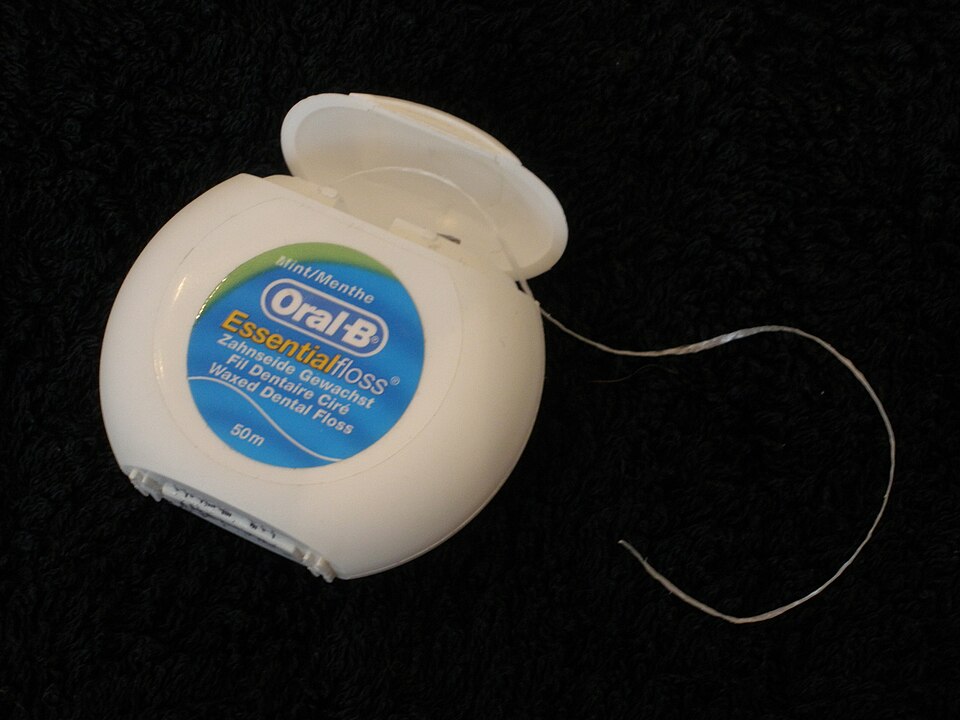
Photo: Onderwijsgek / CC BY-SA 3.0 · via Wikimedia Commons
Dental floss is shedding more than plaque: the quiet retreat from Teflon
Consumers noticed the texture change first
Earlier this year, a Reddit thread in a dental-hygiene community asked whether Oral-B had changed its floss. Users described the new thread as "more plastic-like, rougher, less smooth," and one wrote that pulling it out "feels like I'm going to take a tooth along with it." The Washington Post picked the question up on Oct. 18, under the headline "Dental floss is shedding potentially harmful chemicals," framing the shift as manufacturers trading smoothness for safety.
The ingredient in question was Teflon
What is being dropped is polytetrafluoroethylene, or PTFE — Teflon — part of the PFAS family known as "forever chemicals." In floss it does one job: cut friction so the strand slides between tight contacts. Research has linked PFAS exposure to cancer, thyroid disease, low birth weight and reduced fertility. Procter & Gamble, which owns Oral-B, says its reformulated Glide floss uses a "micro-textured fiber" and that none of its floss products are formulated with PTFE or any PFAS. Other brands now print "PFAS-free" on the box. The catch is that a new formula does not clear store shelves overnight.
A 2019 blood study ignited the debate
In 2019, researchers at Silent Spring Institute and Harvard measured PFAS in the blood of 178 women and found that those who used Oral-B Glide had higher levels of PFHxS, one type of PFAS. The team then screened 18 floss products for fluorine, a PFAS marker, and detected it in six, including all three Glide varieties. In 2024, Mamavation and Environmental Health News sent 39 flosses to a lab; 13 showed detectable organic fluorine, with a Glide product highest at 248,900 ppm. Those figures speak to detection and association, not to proven harm.
Worn fibers do break off, but nobody has weighed them
Mechanically, floss is a polymer thread dragged under tension across hard enamel edges. Microscopy of used floss confirms that filaments fray and fracture, shedding fragments from the nanoscale up to roughly 100 micrometers that are swallowed with saliva. Yet reviews concede that no study has actually weighed or counted what a single strand releases, and no evidence directly links oral-care microplastics to disease.
Most Minnesota floss samples passed
Regulators have been more concrete. Under Minnesota's Amara's Law, floss has been on the list of 11 categories barred from intentionally added PFAS since Jan. 1, 2025. In the state pollution agency's 2026 spot checks, 17 of 19 floss products complied — an 89.5% rate — and 92.8% of 84 products across three categories passed. The numbers show a real transition under way, and a handful of products still failing it.
Safety arbiters say the evidence is thin
Professional bodies have not taken sides. After reviewing the research, the American Dental Association concluded the data are insufficient to restrict any floss product, noting that finding PTFE in floss does not prove it caused higher blood levels of a given chemical. The U.S. Food and Drug Administration has issued no restrictions on PFAS in floss. Broader context cuts the other way: a "Poison Plastics" report obtained by CNN found that nearly 93% of the chemicals in hygiene and medical plastics, floss included, rank as high risk to human health, and that nearly 80% of 3,552 commonly used plastic chemicals lack enough data to judge.
Consumer testing ranked the risk
Independent consumer testing has already sorted the category. After analyzing ingredients across many flosses, Consumer Reports and the nonprofit Made Safe said ten products either failed to disclose their ingredients, contained PFAS, or included other components tied to health concerns; three were recommended as safer and more sustainable. Tom's of Maine, Dental Lace, Cocofloss and Nudge gave the group full ingredient lists and confirmed they do not intentionally add PFAS.
States have scheduled bans
Two tracks now run in parallel. Ohio's House Bill 272 would ban PFAS in floss and other products starting in 2027; New Mexico's phased rules put floss in the first phase on Jan. 1, 2027; California's SB730 stalled in early 2026. On the verification side, third-party testing of the reformulated floss has not been widely published, leaving shoppers to rely on company statements while older stock may still be circulating.
What shoppers can do
The practical move is to read ingredients rather than marketing. Skip anything sold on "nonstick" glide, and put the box back if the label lists polytetrafluoroethylene or fluoropolymer. Look for nylon, silk or plant fibers coated in beeswax or plant wax — or uncoated. Water flossers are an alternative, though usually less effective at scraping plaque than string. Whatever the brand, dentists agree on one thing: keep flossing.
Sources
- Washington Post: Dental floss is shedding potentially harmful chemicals
- Silent Spring Institute: Oral-B stops using Teflon in its popular Glide dental floss
- Harvard T.H. Chan School of Public Health: Some dental floss may expose people to harmful chemicals
- CNN: Chemicals in everyday plastics pose widespread health risks
- Consumer Reports: Dental Floss Without PFAS and Other Harmful Chemicals