Samsung Hands Nvidia's Custom HBM Base Die to Foundry Rival TSMC
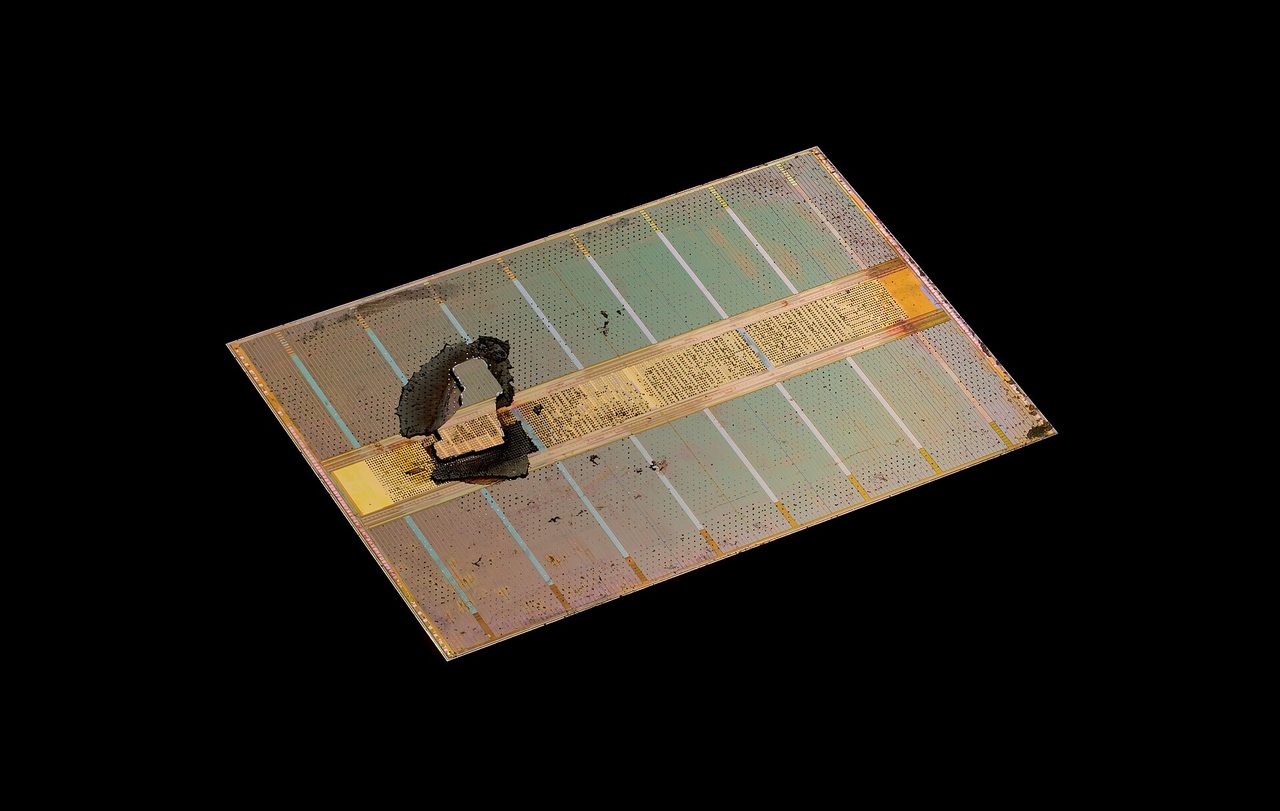
Photo: FritzchensFritz / CC0 · via Wikimedia Commons
Samsung Hands Nvidia's Custom HBM Base Die to Foundry Rival TSMC
A Sunday scoop from Seoul
Samsung Electronics will use TSMC's 3-nanometer process to build the base die for Nvidia's next-generation custom high-bandwidth memory, the Seoul Economic Daily reported on October 18, citing industry sources. It would be the first time Samsung has worked with the Taiwanese foundry at the HBM manufacturing stage. The two companies last cooperated four years ago, and only on packaging compatibility so that Samsung's memory stacks would mate cleanly with GPUs. Reuters relayed the report the same day; the Economic Times, Business Standard and Firstpost followed.
The base die is the stack's logic floor
An HBM stack is a tower of DRAM core dies sitting on one logic base die, which handles signalling to the GPU and largely sets the product's speed. Nvidia calls its version NVHBM, unveiled in August. It moves Nvidia's custom memory controller off the GPU compute die and into that base die, shrinks the physical layer by 60% versus standard HBM, and claims up to 30% more bandwidth, 15% lower HBM power and up to 25% more free area on the compute die.
One process, three suppliers
According to the report, Nvidia asked all three of its memory suppliers — Samsung, SK hynix and Micron — to build NVHBM base dies on TSMC's 3nm node, and to standardise core dies on 1c, the sixth generation of 10-nanometer-class DRAM. The logic is uniformity: three vendors building the same part three different ways means three different performance profiles and three separate qualification cycles for Nvidia.
What Samsung gives up
Samsung has run a turnkey model, making both the core die and the base die in-house. Its HBM4, in mass production since February, and its HBM4E, now in validation, use a 4nm base die from Samsung Foundry. Accepting Nvidia's terms means handing a rival a slice of high-value logic silicon on the company's most important customer programme. Industry estimates cited in Korean coverage put TSMC's 3nm yields above 90% and Samsung's 2nm at roughly 60%; TechTimes puts Samsung's SF2 at 50-60%. The processes and designs differ, so the comparison is rough.
TSMC is already adding 3nm capacity
On its October 15 earnings call, TSMC said 3nm accounted for 33% of wafer revenue in the third quarter and HPC for 68% of total revenue. It is adding two 3nm lines at Fab 18 in Tainan, ramping in the first halves of 2027 and 2028, plus 3nm at its second Arizona fab in the third quarter of 2027 and at its second Kumamoto fab in 2028. That is the pool three memory makers would be drawing from at once.
Samsung keeps a 2nm fallback
A follow-up report said Samsung Foundry is validating NVHBM base dies on its own 2nm process in case Nvidia's demand outruns TSMC's allocation. Samsung also says standard HBM, and custom parts for other customers including AMD, stay in-house. One industry official quoted in the coverage noted that TSMC's 3nm lines also serve HPC and smartphone customers, so the volume available to memory makers could hit a ceiling.
SK hynix still leads the table
Counterpoint put second-quarter 2026 HBM revenue share at SK hynix 50%, Samsung 33% and Micron 18%. SK hynix already uses TSMC's 12nm for mainstream HBM4 base dies and is moving to 3nm for premium parts; Micron targets 2027 volume production for its NVHBM modules. Staying purely on its own 2nm process risked Samsung losing the socket to both — the practical reason it conceded.
The clock runs to Feynman
Nvidia's Feynman platform, expected in 2028, is slated as the first full-scale deployment of NVHBM, and Micron's 2027 production timeline fits that ramp. Samsung began HBM4 mass production in February, has lifted yields from below 60% to around 80%, and has added 250 engineers to custom HBM teams working on Google, Meta and Nvidia programmes.
No one has confirmed it
Nvidia, Samsung, SK hynix, Micron and TSMC have all declined to confirm the report. In the week before it appeared, October 12 to 16, Samsung Electronics fell 17.8% to 215,500 won and SK hynix 24.3% to 1.272 million won — their steepest weekly drops since the 2008 crisis, driven by a broad selloff over AI spending rather than by this story.
Sources
- Reuters
- Business Standard
- TrendForce
- TechTimes
- Wccftech